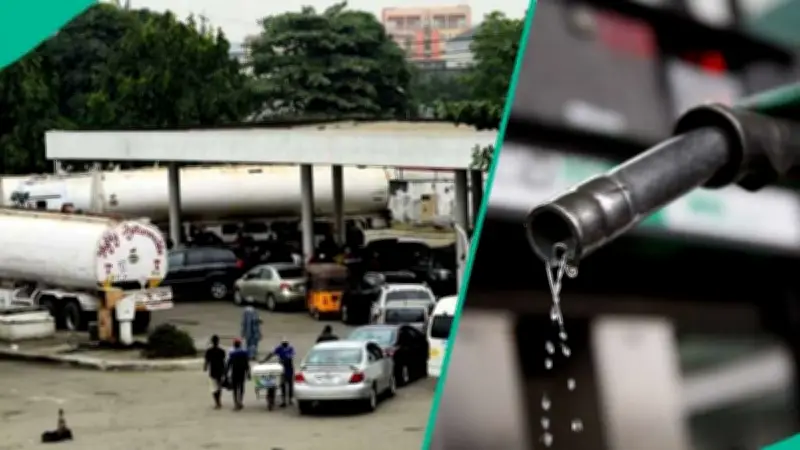
Global crude oil prices recorded one of their steepest single-day drops in recent months on Monday, raising cautious expectations that petrol prices in Nigeria may ease if the decline holds. Brent crude, the benchmark tied to Nigerian oil exports, shed more than 4.8% to settle at about $83.70 per barrel, while U.S. West Texas Intermediate (WTI) dropped over 5% to around $79.60 per barrel.
Why Crude Prices Fell Sharply
The selloff came after U.S. President Donald Trump announced that a planned military strike against Iran had been suspended in favour of continued diplomatic talks over Tehran's nuclear programme. Trump said negotiations were still active after Iran and other parties requested more time to reach an agreement, reducing immediate fears over a supply disruption in the Middle East.
Could Nigerian Petrol Prices Come Down?
Under Nigeria's deregulated downstream oil sector, pump prices are shaped by a combination of international crude costs, the naira-dollar exchange rate, freight charges, and domestic distribution expenses. A sustained drop in global crude prices generally reduces what importers and marketers pay for refined petroleum products, which can eventually filter through to consumers.
However, industry operators warn that any reduction at the pump will not happen overnight. Many fuel marketers are currently selling petrol bought when international prices were considerably higher, and they are unlikely to cut prices until they have worked through that stock. Beyond inventory costs, the naira's performance, transportation logistics, and taxes will continue to shape the final price Nigerians pay at filling stations, regardless of where crude trades internationally.
For Nigeria's government, cheaper crude carries its own risks. Lower oil prices typically shrink export earnings and reduce the foreign exchange inflows that the country relies on to support public spending.
Marketers Release New Rates
Meanwhile, on Tuesday, August 4, depots across Nigeria made little changes to their petrol prices as they monitored developments in the global oil market. Data obtained from Petroleumprice.ng showed that PMS prices ranged from N1,215 to N1,225 per litre across major depots, with Dangote, Aiteo and Pinnacle selling at N1,215 per litre, while Nepal, Optima and Rain Oil quoted the highest price of N1,225 per litre, a reduction from the average price of N1,300.
Analysts believe Dangote is preparing another price reduction, and this could trigger a new round of price changes. Depot prices on Tuesday, August 4 include:
- Dangote – N1,215 per litre
- Aiteo – N1,215 per litre
- Pinnacle – N1,215 per litre
- African Terminal – N1,216 per litre
- Ardova – N1,216 per litre
- Integrated – N1,216 per litre
- Nipco – N1,216 per litre
- Liquid Bulk – N1,217 per litre
- Sigmund – N1,217 per litre
- Lister – N1,218 per litre
- MRS – N1,218 per litre
- Mainland – N1,218 per litre
- Sobaz – N1,218 per litre
- Soroman – N1,218 per litre
- Matrix – N1,220 per litre
- Northwest – N1,220 per litre
- A.Y.M Shafa – N1,223 per litre
- Nepal – N1,225 per litre
- Optima – N1,225 per litre
- Rain Oil – N1,225 per litre
NNPC New Petrol Price
Earlier, Legit.ng reported that the Nigerian National Petroleum Company Limited (NNPC Ltd.) lowered petrol prices at its retail stations. This followed a reduction in the ex-depot price by Dangote Refinery. The refinery cut its gantry price by N85, from N1,285 to N1,200 per litre, prompting NNPC retail outlets to reduce their pump price by N75, with petrol selling at N1,255 per litre instead of N1,330.