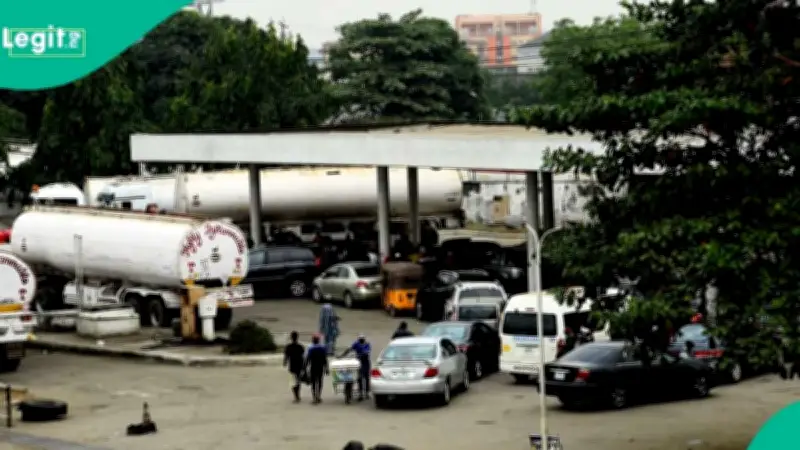
Several private depot owners across Nigeria have aligned their ex-depot petrol prices with Dangote Refinery's gantry rate of N1,215 per litre, a move that is expected to trigger further reductions in pump prices nationwide. This convergence in pricing comes as competition in the downstream oil sector intensifies, with marketers indicating that consumers could soon benefit from lower costs at filling stations.
Depot Prices Converge at N1,215
According to depot pricing data, major players including Dangote, Aiteo, Integrated, NIPCO, Matrix, and Pinnacle are all selling petrol at N1,215 per litre. African Terminal has also adjusted to this level, while Lister and A.A. Rano quoted N1,216 per litre, and MRS was selling at N1,218 per litre. This near-uniform pricing among depots is seen as a response to market dynamics and the need to remain competitive with the refinery's output.
The alignment is not limited to petrol; diesel prices have also weakened at several depots. African Terminal, Duport, and Ibeto reduced diesel to N1,590 per litre, while Matrix and Bulk Strategic in Port Harcourt recorded prices of N1,630 per litre. This reflects a broader easing across refined petroleum products, which could have a positive impact on the cost of goods and services that rely on diesel for transportation and power generation.
Marketers See Room for Further Reductions
The National President of the Petroleum Products Retail Outlets Owners Association of Nigeria (PETROAN), Billy Gillis-Harry, said the recent price cuts by the Nigerian National Petroleum Company (NNPC) Limited, MRS, and other marketers reflected lower landing costs for imported petrol. He added that the trend pointed to more reductions ahead, as competition naturally drives retailers to attract customers with better prices.
Gillis-Harry explained: "As long as the landing cost continues to decline, marketers will continue to review their pump prices. Competition will naturally drive more reductions because every retailer wants to attract customers." He emphasized that the convergence of depot and refinery prices is expected to ease procurement costs for marketers and put pressure on retailers to pass savings on to consumers.
NNPC Prices Already Adjusted
NNPC has already moved on pricing. Its Lagos filling stations now sell petrol at N1,265 per litre, down N35 from N1,300. In Abuja, the pump price dropped N15 per litre to N1,335 from N1,350. A market survey found petrol selling for between N1,265 and N1,310 per litre at many retail outlets in Abuja and surrounding areas, indicating that the reductions are being felt by consumers.
The revised NNPC price list shows significant variation by state. Bauchi records the highest retail price at N1,385 per litre, followed by Adamawa and Zamfara at N1,370 per litre, and Gombe and Kaduna at N1,365 per litre. At the lower end, Bayelsa and Akwa Ibom have the cheapest NNPC petrol at N1,235 per litre. Motorists in Ogun, Abia, Imo, and Rivers pay N1,295 per litre, while Delta, Ondo, Osun, and Taraba retail at N1,300 per litre. Sokoto sits at N1,282 per litre, according to Petroleumprice.ng reports.
Impact on Consumers and Economy
The reduction in depot prices and the subsequent adjustment in pump prices are expected to have a positive impact on consumers, who have been grappling with high fuel costs. Lower petrol prices could reduce transportation costs, which may in turn lower the prices of goods and services across the economy. This is particularly significant for small businesses and individuals who rely on petrol for daily commuting and logistics.
The move also signals a shift in the downstream oil sector, with private depots now aligning with the Dangote Refinery's pricing strategy. This could lead to a more competitive market, benefiting consumers in the long run. However, the sustainability of these price levels will depend on global crude oil prices and the stability of the naira against the dollar, as importers and refiners continue to navigate foreign exchange challenges.
Government's Dollar Swap Deal with Dangote
In a related development, the federal government has agreed to provide foreign exchange to the Dangote Petroleum Refinery in exchange for naira generated from petrol sales, a company official told journalists. This marks a fresh attempt to salvage the troubled naira-for-crude arrangement. Under the deal, the government will supply dollars to the refinery to cover the cost of crude it purchased in foreign currency, while the refinery continues selling fuel to Nigerian consumers in naira.
The official, who spoke on condition of anonymity given the sensitivity of the matter, did not provide further details. This arrangement is seen as a way to ease the pressure on the refinery's foreign exchange requirements and ensure a steady supply of petrol to the domestic market. It also underscores the government's commitment to stabilizing the downstream sector and ensuring that the benefits of local refining are passed on to consumers.