
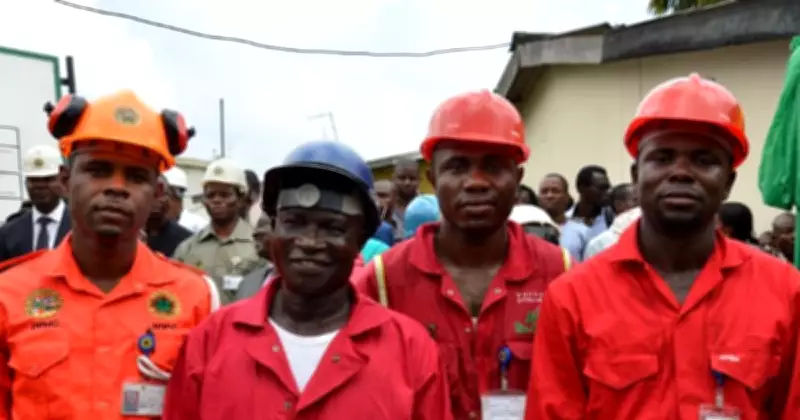
Seplat Energy Workers Launch Indefinite Strike Over Pay Disputes
Workers at Seplat Energy, Nigeria's largest independent oil and gas producer, have commenced an indefinite strike action over unresolved pay and welfare disputes. This industrial action raises significant concerns about the country's oil output and supply chain, particularly as Nigeria grapples with escalating fuel costs and mounting economic pressures.
Union Action and Operational Impact
The strike, which began on Friday, involves members of the Petroleum and Natural Gas Senior Staff Association of Nigeria (PENGASSAN), the union representing professional oil workers across the industry. In official correspondence addressed to the company's chief executive officer and reviewed by Reuters, PENGASSAN leadership confirmed that the decision followed a complete breakdown in negotiations concerning the 2026 collective bargaining agreement alongside persistent welfare concerns that remain unaddressed.
Comrade Osifo Festus, President of PENGASSAN, declared that the strike would continue "until further notice", indicating no immediate resolution in sight. As part of the industrial action, workers are suspending critical operational activities including:
- Daily production reporting
- Export coordination and documentation
- Non-essential maintenance operations
Only essential services such as safety monitoring and power generation will continue to be maintained to prevent catastrophic incidents. The strike affects Seplat's extensive portfolio of onshore and offshore assets, joint venture operations, and administrative offices nationwide. However, lower-tier workers represented by a separate union are not participating in this industrial action.
Production Significance and Economic Implications
Seplat Energy represents a crucial component of Nigeria's petroleum industry, with average production reaching approximately 132,000 barrels of oil equivalent per day according to the company's most recent audited financial results. This substantial output constitutes roughly 9 percent of Nigeria's total liquids production, making any disruption potentially devastating for national revenue targets.
The company had previously projected increasing daily production to 155,000 barrels, meaning any sustained strike action could significantly undermine both corporate and national production goals. For the broader Nigerian economy, the timing presents particular challenges as the country faces multiple pressures:
- Increasing crude production to boost foreign exchange earnings
- Managing sensitive global oil prices amid geopolitical tensions
- Addressing domestic realities where petrol prices have surged dramatically in recent weeks
These rising fuel costs have placed additional strain on both households and businesses already struggling with inflationary pressures.
Broader Industry Context and Resolution Prospects
The strike reflects long-standing concerns among oil sector workers regarding compensation, working conditions, and broader welfare issues typically addressed through collective bargaining agreements. These agreements fundamentally determine salaries, benefits, and operational conditions, making them central to labor relations within Nigeria's vital petroleum industry.
While Seplat Energy has not issued an official response to the strike announcement, the potential consequences extend far beyond corporate operations. Any sustained reduction in output could directly affect:
- National supply expectations and revenue projections
- Refining activities, including those linked to the Dangote refinery
- Nigeria's ability to capitalize on favorable global oil prices
This development underscores recurring tensions within Nigeria's oil industry, where balancing legitimate worker demands with ambitious production targets remains an ongoing challenge. As negotiations remain completely stalled, both management and labor representatives face increasing pressure to reach a mutually acceptable resolution that addresses core concerns without further disrupting the nation's critical oil supply chain.




