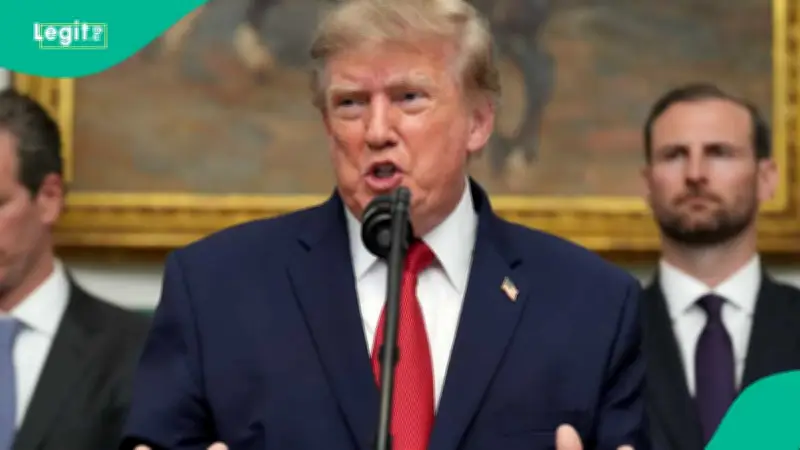
President Donald Trump announced on Friday, August 21, 2026, that his administration will temporarily allow up to 300,000 metric tons of lean beef trimmings into the United States without triggering additional tariffs, a move aimed at reducing record-high grocery prices. The imported beef must be sold at 25% below current market rates, according to Trump, who spoke on social media and to reporters. The 90-day arrangement is designed to bypass the standard "out of quota" tariff, but it has drawn sharp criticism from cattle ranchers and Republican lawmakers who typically support the president.
Details of the 90-Day Beef Import Deal
Under the arrangement, up to 300,000 metric tons of lean beef trimmings used in ground beef production can enter the country duty-free for 90 days. Trump did not name the specific countries involved but told reporters there are "a few" and that they would supply "the highest quality beef." A White House official, speaking anonymously because the plan is not yet finalised, confirmed the beef will come from foreign exporters who have agreed to the discount. Trump is expected to sign an executive order formalising the policy within two weeks.
The announcement comes as US cattle numbers have fallen to their lowest level in decades. Key factors include sustained consumer demand, restrictions on Mexican cattle imports due to a screwworm outbreak, and a 50% tariff Trump imposed on Brazil, one of the world's biggest beef exporters. The president said the import deal would help the US cattle supply grow, though ranchers and analysts disputed that claim.
Ranchers and Lawmakers Push Back
Senator Deb Fischer of Nebraska said the administration cannot reduce grocery costs "at the expense of American producers," warning that flooding the market with foreign beef would undermine efforts to rebuild domestic herd sizes. Senator Tim Sheehy of Montana said Trump's "heart is in the right place" but that importing beef will "harm our ranching families who feed the nation." Senator Pete Ricketts, also of Nebraska, cautioned that "short-term policy shifts do not equal long term solutions."
Industry bodies were equally critical. US Cattlemen's Association President Justin Tupper said the move would "weaken our markets and gamble with food safety in the process," while Colin Woodall, CEO of the National Cattlemen's Beef Association, said the announcement sacrifices "long-term stability for short-term messaging." Bill Bullard, CEO of R-CALF USA, which represents independent cattle producers, argued that imports have historically contributed to the decline in US cattle numbers and warned that adding more now "will exacerbate that decline and will prevent herd expansion."
Economists Question Impact on Prices
Agricultural economists were sceptical about both the scale and the speed of the deal. Glynn Tonsor, a professor at Kansas State University, noted that 300,000 metric tons represents roughly 3% of annual US beef consumption, calling the relative magnitude "pretty small." David Anderson of Texas A&M University questioned whether foreign exporters could realistically redirect that volume to the US within the 90-day window.
Trump, responding to the criticism on Friday evening, August 21, said: "I love the ranchers; they've done a fantastic job. But they admit that we need a little help, and, in order to get the prices down, so that's what we're doing."
Earlier, Legit.ng reported that the death of a man who opened fire near a White House security checkpoint. It was the third recent incident of gunfire in the vicinity of President Trump. The man was in the area of 17th Street and Pennsylvania Avenue when he "pulled a weapon from his bag" and began firing. Secret Service officers returned fire and hit the suspect, who died at a hospital, the agency said.