
Venezuela Approves Landmark Legislation Opening Oil Sector to Foreign Investment
In a significant legislative move, Venezuelan lawmakers have approved comprehensive reforms that open the country's oil industry to increased foreign participation. This development is widely interpreted as a strategic effort by Caracas to align with the demands of US President Donald Trump, who has consistently advocated for American investment in Venezuela's vast energy resources.
Key Provisions of the New Oil Legislation
The newly enacted law, which received strong backing from Acting President Delcy Rodríguez, substantially reduces state control over the oil sector. It grants foreign companies the authority to manage oilfields, assuming all associated risks and expenses. This marks a dramatic shift from the previous model, where the state-owned entity Petróleos de Venezuela (PDVSA) held near-total dominance over the industry.
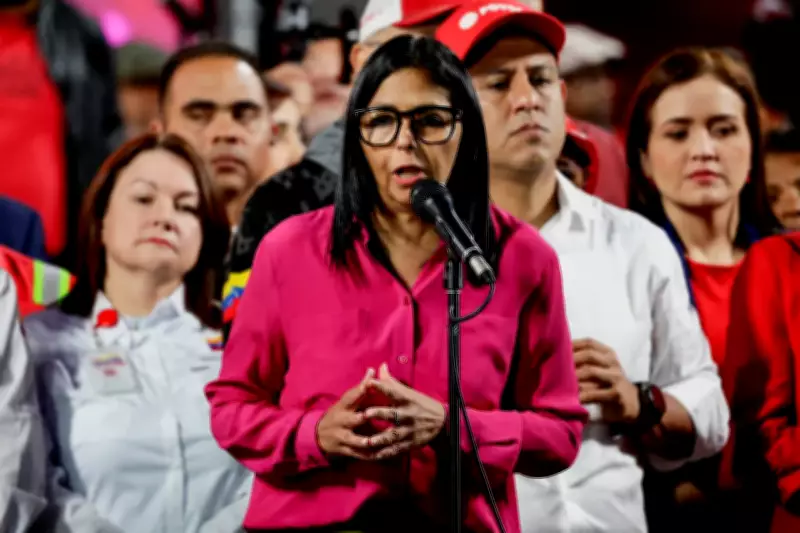
Venezuela possesses the world's largest proven oil reserves, and Rodríguez emphasized that this reform is designed to maximize profits from these abundant resources. During a public event celebrating the law's approval, she characterized the legislation as a historic milestone that will transform the nation's oil wealth into tangible prosperity for Venezuelan citizens, whom she described as the rightful owners of these natural assets.
Unanimous Legislative Support and Economic Implications
National Assembly leader Jorge Rodríguez, who is the brother of the acting president, reinforced this perspective, stating that the law will enhance energy production, facilitate the development of untapped oilfields, and ultimately improve the population's well-being through increased economic output. The National Assembly passed the reform unanimously in its second reading, though it still requires formal signing and publication before taking full effect.
This legislative action occurs against a backdrop of escalating US interest in Venezuela's energy infrastructure. Earlier this month, reports surfaced indicating that the Trump administration was contemplating the deployment of private military contractors to safeguard oil and energy facilities within the country. Despite these developments, some industry leaders remain skeptical. For instance, the chief executive of Exxon Mobil has publicly labeled Venezuela as uninvestible under current conditions.
Concurrent Easing of US Sanctions and Diplomatic Developments
The approval of the oil law coincided with a partial relaxation of US sanctions targeting Venezuela's oil industry. The US Treasury issued a general license permitting American companies to engage in specific oil-related activities with the Venezuelan government, including the export, sale, storage, and transportation of crude oil. This represents a further step in the gradual easing of restrictions, following signals from Venezuela's acting government about its willingness to cooperate with Washington.
On the same day, President Trump announced that the United States would be opening up commercial airspace above Venezuela, reversing earlier advisories that had deterred airlines from operating in the region. Trump asserted that American citizens would soon be able to travel to Venezuela safely, citing what he termed strong control over the situation. Jorge Rodríguez credited this development to his sister's diplomatic initiatives, describing it as a positive outcome of what he called peace-driven diplomacy by the presidency.
This series of events underscores a potential shift in Venezuela's economic and diplomatic landscape, as the country seeks to leverage its oil resources to foster international partnerships and stimulate economic recovery.




