Lagos Waterfront Communities Face Forced Evictions in Urban Renewal Drive
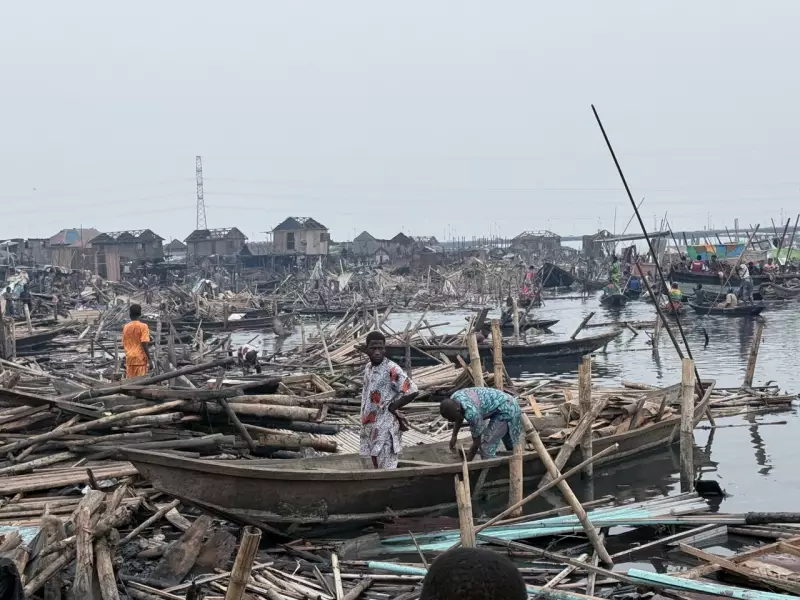
In the historic waterfront settlement of Makoko, the familiar rhythm of paddles gliding through the lagoon has been brutally silenced. It has been replaced by the deafening roar of bulldozers and the desperate cries of families watching their homes being reduced to rubble. What the Lagos State Government terms "urban renewal" is being experienced by residents as a devastating assault on their livelihoods and dignity.
Communities Uprooted and Displaced
This crisis extends far beyond Makoko, affecting numerous vulnerable communities across Lagos. In areas such as Oworonshoki, Ilaje-Otumara, Owode Onirin, and Baba Ijora, thousands of people who once lived, traded, and fished peacefully now find themselves sleeping in canoes, churches, and open spaces. They have been stripped of both security and basic human dignity by these sudden demolitions.
At a recent press briefing held at the International Press Centre in Ogba, concerned non-governmental organizations strongly condemned the state government's actions. Representatives from groups including the #Endbad Governance Movement and Corporate Accountability and Public Participation (CAPPA) indicted the government for inhuman treatment and the forceful displacement of poor citizens from their homes and workplaces.
Makoko: A Symbol of State-Created Homelessness
Makoko, home to more than 100,000 residents, has tragically become the latest emblem of state-created homelessness in Lagos. Since December 23, 2025, demolition operations have destroyed over 3,000 homes, displacing more than 10,000 people. The human cost is staggering:
- Women clutching infants and elderly men unable to swim now wander without shelter.
- Children whose classrooms once floated on water have been deprived of education.
- Residents report that demolition squads arrived with armed security operatives, firing tear gas and setting homes ablaze, sometimes while families were still inside.
- Tragically, at least 12 people, including two infants, are reported to have lost their lives during these operations.
For 38-year-old fisherwoman Funke Adeyemi, Makoko represented not just a place, but her entire means of survival. "My parents lived here. My children were born here. My canoe is my office," she stated, standing beside the charred remains of her home. "Now I have no house, no school for my children, and no place to fish from."
A Pattern of Disregard for Residents and the Law
This pattern of displacement is not isolated to Makoko. In Ilaje-Otumara and Baba Ijora, over 10,000 people were pushed onto the streets in March 2025 without prior notice. In Oworonshoki, bulldozers arrived under cover of darkness in 2025, tearing down homes while residents slept. Those who attempted to resist faced beatings and detention.
Most alarmingly, even court orders restraining these demolitions have been ignored by state authorities. This blatant disregard has deepened public outrage and raised serious questions about the government's respect for the rule of law and judicial processes.
Government Justification and Critical Counterarguments
State officials argue that these waterfront settlements are unsafe and pose significant environmental hazards. However, critics offer a starkly different perspective. They point out that it is the same government that failed for decades to provide these communities with basic amenities:
- Adequate sanitation systems
- Access to potable water
- Functional healthcare facilities
- Safe and affordable housing options
These critics assert that the government is now using its own historical neglect as a justification for destruction. Instead of pursuing community upgrading projects, the state appears to be clearing highly valuable land for elite developments, leaving the poor to bear the brutal cost of so-called progress.
Unanswered Questions on Development Funds
Human rights organizations are also raising pressing questions about the fate of development funds. There are serious concerns regarding the alleged $200 million World Bank loan that was meant for slum upgrading initiatives, including projects in Makoko. Residents are now asking whether the ongoing sand-filling and new constructions on demolished land are intended for their benefit, or for investors who have never lived on the lagoon.
The Human Toll and a Plea for Justice
The human consequences are profound and ongoing. Across the water, children who once paddled to school now miss their classes, while parents struggle daily to find food for their families. A community leader expressed a sentiment shared by many: "We are not against development. But development should not kill people and erase their lives."
Looking at global examples, cities like Nairobi and Cape Town have demonstrated that informal settlements can be successfully upgraded rather than destroyed. For Makoko's fisherfolk and other affected communities, the demands are clear and reasonable: they seek justice, fair compensation, and proper resettlement. They are calling for an end to demolition policies that effectively turn citizens into refugees within their own state.