Nigeria's Housing Deficit: From Data Clarity to Urgent Delivery
By officially setting Nigeria's housing deficit at 14.9 million units, the federal government has given the country's housing crisis a new, more precise face. This shift from speculation to evidence-based data is a welcome development, but it will mean little unless it triggers urgency, policy coherence, and measurable delivery at scale.
The Evolution of Housing Deficit Figures
For years, Nigeria's housing discourse revolved around an often-quoted deficit of 17 million homes. In 2019, then Minister of Power, Works and Housing, Babatunde Fashola, publicly questioned this figure, warning that it had been recycled without any clear methodological foundation. His concern highlighted a deeper problem: how can a country plan housing delivery without knowing the size, structure, and location of the deficit it seeks to close?
Nearly six years later, the National Housing Data Technical Committee has provided a more defensible answer. Its report, released in early 2026, puts the deficit at 14.925 million units, confirming both the magnitude of the challenge and the long-standing absence of credible sector data. While this number is lower than the previously cited 17 million, it remains staggering in a country with rapid population growth, accelerating urbanization, and shrinking household incomes.
The Pace of Response and Policy Execution
The more troubling issue is not the size of the deficit but the pace of response. Nigeria is not short of housing policies, summits, or declarations. What it lacks is execution at a scale that matches its needs. Successive governments have acknowledged the crisis, but housing delivery has remained fragmented, underfunded, and overly dependent on market forces in an economy where affordability is in free fall.
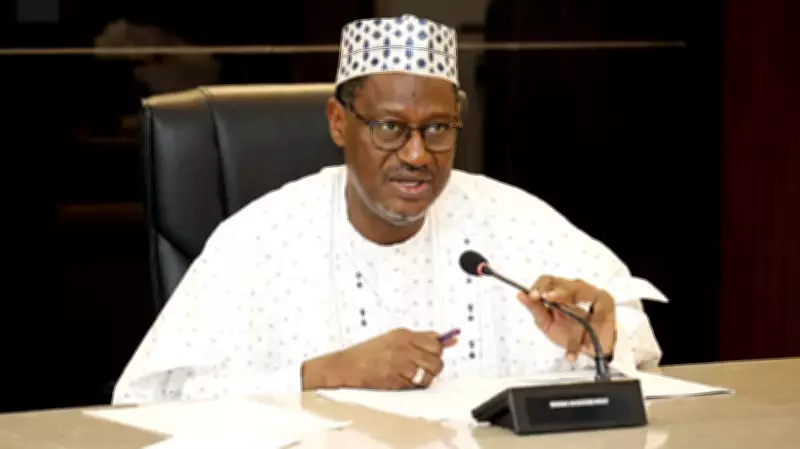
Incomes have failed to keep pace with inflation, mortgage rates remain prohibitive, and construction costs continue to rise amid currency volatility and infrastructure deficits. The Federal Ministry of Housing and Urban Development, under Minister Ahmed Dangiwa, now appears keen to reframe the approach. At the recent 14th Meeting of the National Council on Lands, Housing and Urban Development in Ilorin, federal and state actors converged around familiar pillars: effective land management, urban renewal, promotion of local building materials, and Public-Private Partnerships (PPPs).
Land Governance and Implementation Challenges
These are not new ideas, but their repeated endorsement underscores how far Nigeria still is from institutionalizing them. Permanent Secretary of the ministry, Dr. Shuaib Belgore, correctly noted that land only becomes an asset when it is properly titled, digitized, and verifiable. In a country where land administration remains opaque, slow, and vulnerable to fraud, this point cannot be overstated.
Weak land governance continues to choke housing finance, inflate project costs, and discourage long-term investment. The cost of land documentation alone can render otherwise viable, affordable housing projects commercially unworkable. However, while federal officials speak convincingly about frameworks and reforms, the reality on the ground remains sobering, especially in Lagos, Nigeria's commercial nerve center and housing pressure cooker.
Disconnect Between Production and Demand
Lagos State says it has delivered more than 11,000 housing units under the current administration. While commendable on paper, this figure is almost symbolic in a megacity that absorbs thousands of new residents weekly. Demand for affordable housing continues to outstrip supply at an exponential rate, pushing low- and middle-income earners into informal settlements, overcrowded tenements, and distant peri-urban fringes with poor infrastructure, weak transport links, and rising security risks.
These disconnects expose a central contradiction in Nigeria's housing strategy: production numbers are celebrated without reference to demand dynamics, income realities, or affordability thresholds. Building houses is not the same as delivering housing. Units that remain inaccessible to the majority merely deepen inequality while doing little to reduce the deficit. In many cases, newly built estates stand partially empty while overcrowding worsens elsewhere.
Proposed Solutions and Implementation Hurdles
The resolutions from the National Council meeting reflect a growing awareness of this complexity. The push for digital land systems, blockchain-enabled titling, smart urban planning tools, and web-based housing fraud reporting mechanisms is timely. So too is the plan to establish Building Materials Manufacturing Hubs across geopolitical zones, leveraging local content to reduce construction costs, create jobs, and cut foreign exchange exposure.
If effectively implemented, the proposed National Compendium of Standardized Local Building Components could be transformative, especially for mass housing delivery. One of the longstanding challenges with indigenous building materials has been the absence of standards, which fuels safety concerns and limits acceptance by financiers and regulators. Standardization could bridge that gap. Nigeria cannot continue to price its housing supply in dollars while paying its workers in naira.
Accountability and Future Directions
Still, history urges caution. Nigeria has no shortage of well-intentioned resolutions that fail at the altar of implementation. What is missing is binding accountability, intergovernmental alignment, and sustained financing mechanisms that survive political cycles. Too often, housing initiatives are launched with fanfare, only to stall due to bureaucratic inertia, funding gaps, or policy reversals.
The renewed emphasis on PPPs also deserves scrutiny. Private capital is essential, given fiscal constraints at all levels of government. But PPPs cannot substitute for the state's responsibility to de-risk housing delivery, provide trunk infrastructure, and protect affordability. Without clear incentives, transparent land processes, and enforceable social housing obligations, PPPs risk becoming conduits for luxury estates rather than engines of inclusive urban growth.
Minister Ahmed Dangiwa appears to recognize this risk. His call for active state participation in the National Homeownership and Housing Development Campaign reflects an understanding that housing delivery cannot be driven from Abuja alone. The emphasis on aligning federal reforms with state-level implementation, and the proposal for State Housing Reform Offices (SHROs), could help close long-standing coordination gaps, if states take ownership beyond rhetoric.
Confronting Hard Realities for Scalable Solutions
Yet even the most elegant frameworks will fail without confronting hard realities. Infrastructure deficits continue to inflate housing costs. In many locations, developers must provide roads, power, water, and drainage from scratch, costs that are inevitably passed on to buyers or renters. Urban renewal efforts remain inconsistent, often prioritizing demolition over regeneration, and rarely addressing the housing needs of displaced residents.
There is also the unresolved question of scale. Closing a deficit of nearly 15 million units will require far more than incremental gains. It demands industrial-scale housing delivery, backed by long-term finance, land pooling mechanisms, infrastructure bonds, and deep reform of the mortgage market. Nigeria's housing finance system remains shallow, serving only a fraction of the population. Until mortgage access expands meaningfully, homeownership will remain elusive for most Nigerians.
Ultimately, the 14.9 million figure should not become just another statistic in official speeches and policy documents. It should be a benchmark for accountability. Each year, Nigerians should be able to measure how much of the deficit has been closed, where progress has occurred, and why failures persist. Data clarity is a necessary first step, but without urgency, discipline, and delivery, it will change nothing. Nigeria's housing crisis is no longer a mystery; it is a test of political will. If, years from now, the country is still debating deficit figures while millions remain without decent shelter, then the failure will not be technical; it will be moral and institutional. Homes, not headlines, are what Nigeria urgently needs.