Real Estate Mogul Comfort Olugbami Highlights Inflation, Rates, and Talent Gaps
Real estate mogul Comfort Olugbami has identified significant challenges facing Nigeria's real estate sector, including rising inflation, volatile interest rates, and shifting investor expectations. She emphasizes that these economic and structural headwinds are forcing developers to rethink traditional business models, diversify operations, and adopt innovative strategies to remain competitive in an increasingly complex market.
Navigating Macroeconomic Instability
Olugbami, the Chief Executive Officer of 1159 Realty, stated that one of the most significant hurdles in recent years has been navigating macroeconomic instability while maintaining delivery timelines and quality standards. According to her, the volatility in interest rates and the rising cost of construction materials have compelled firms to take greater control of their value chains.
"The biggest shift for us has been diversification and building more control within the value chain. Rather than remaining purely a real estate services company, we expanded into construction and development. This allows us to respond more effectively to economic shifts," Olugbami said.
Changing Investor Behavior and Sustainability Pressures
The sector is also witnessing a major shift in investor behavior, with buyers increasingly prioritizing returns on investment over long-term asset holding. "Today's investors are far more return-focused. They want assets that generate measurable income and yield, not just properties to hold indefinitely," she added. This changing demand has influenced the design and delivery of projects, with developers focusing more on high-yield segments such as student housing and professionally managed residential apartments.
Beyond economic pressures, sustainability concerns are reshaping the industry. Olugbami noted that developers are now under increasing pressure to adopt environmentally responsible building practices amid the growing impact of climate change. Unpredictable weather patterns and energy challenges in Nigeria have made green building solutions not just desirable but necessary.
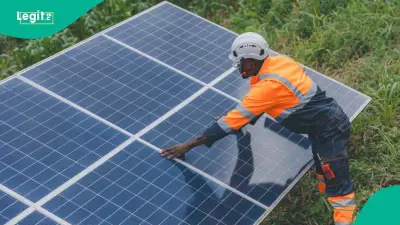
"Sustainability is no longer a trend. It is an inevitability. Developers must begin designing buildings that are resilient, efficient, and environmentally responsible," she said. She further stated that despite the cost implications, firms are exploring ways to balance sustainability with affordability by integrating solar energy systems, efficient materials, and smart design to reduce long-term operational costs.
Technology Adoption and Human Capital Development
Technology adoption is another area transforming the traditionally conservative sector. The integration of PropTech solutions, digital platforms, and automation tools is helping companies improve efficiency and enhance customer experience. "At 1159 Realty, internal platforms have been developed to allow clients monitor their investments and enable sales teams track performance through digital tools," Olugbami explained.
She also highlighted human capital development as a critical factor in sustaining growth, noting that attracting and retaining skilled professionals remains a challenge in a competitive market. Olugbami said the company had prioritized investment in training and mentorship, even at the risk of losing talent, as part of a long-term strategy to build a strong organizational culture.
"It would have been easy to limit investment in people, but we chose to build a culture centered around development and continuous learning," she said.
Optimism for Future Growth
Amid these challenges, operators remain optimistic about the long-term prospects of the sector, citing Africa's rapid urbanization, population growth, and widening housing deficit as key drivers of future demand. Olugbami noted that over the past five years, 1159 Realty has focused on bridging the gap between capital-intensive real estate investment and young investors, enabling broader participation in the property market.
Projects such as Dias Crest, a smart student residence in Kwara State, and Villa Manor, which offers flexible land ownership plans, were cited as examples of innovation aimed at expanding access to housing and investment opportunities. Looking ahead, she said the firm's next phase of growth would focus on scaling operations, expanding into new regions, and deepening its footprint in key markets, including Lagos.
"The ambition for the next five years is to become a defining real estate brand in our market, driving innovation and delivering modern housing solutions," Olugbami added.