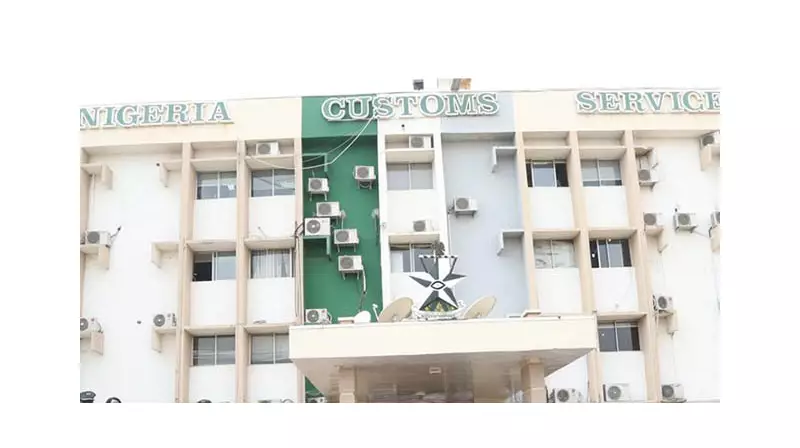
The Nigeria Customs Service (NCS) has announced an unprecedented revenue collection by its Port Harcourt Area I Command, marking a significant leap in the country's non-oil revenue generation efforts.
Record-Breaking Revenue Collection
In a stunning performance for the month of October 2025, the Port Harcourt Area I Command, under the leadership of Comptroller Salamat Atuluku, collected a whopping ₦33.753 billion. This figure represents the highest monthly revenue in the Command's history and shows a massive 272 per cent increase compared to the ₦9.079 billion collected in the same month of 2024.
The service confirmed this achievement in a statement released over the weekend, highlighting it as a key milestone in the Federal Government's ongoing push to enhance domestic revenue mobilisation and achieve greater fiscal sustainability.
Surging Year-to-Date Performance
According to the released data, the Command's cumulative revenue from January to October 2025 stood at an impressive ₦247.461 billion. This is a substantial jump from the ₦164.080 billion recorded during the same ten-month period in 2024, reflecting a robust growth rate of 51 percent.
This exceptional performance means the Port Harcourt Area I Command has already surpassed its annual target of ₦216 billion by over ₦31 billion, with two months still remaining in the year.
Drivers of the Revenue Success
Comptroller Atuluku credited this outstanding result to a combination of strategic factors. She pointed to the ongoing reforms within the Nigeria Customs Service, a renewed sense of operational discipline among officers, and the strategic deployment of digital technologies designed to enhance transparency and accountability.
"This achievement is not accidental," Comptroller Atuluku stated. "It is the result of strategic leadership, renewed discipline, and the unwavering dedication of our officers and men. Through teamwork and innovation, we have blocked leakages, promoted legitimate trade, and contributed significantly to national development."
A major technological innovation behind this success is the Unified Customs Management System, popularly known as Bodogwu. This homegrown digital platform tracks and analyses revenue processes in real time, which has significantly strengthened revenue assurance, improved data integrity, and minimised manual errors. This system is a cornerstone of the NCS's broader digital transformation agenda.
The Comptroller also praised the Comptroller-General of Customs, Bashir Adewale Adeniyi, MFR, for his pivotal leadership and support, noting that the reforms under his administration have significantly strengthened operational capacity across all Commands in the country.
Furthermore, she highlighted the critical importance of collaboration between Customs, port operators, shipping companies, and other government agencies. She emphasized that these enhanced stakeholder relations have directly improved trade facilitation, compliance, and overall operational efficiency.
"When we talk about revenue, we are not merely speaking of statistics," she explained. "We are talking about the resources that power our roads, schools, hospitals, and security infrastructure. That is why we take our mandate very seriously."
Looking ahead, Comptroller Atuluku pledged that the Port Harcourt Area I Command would sustain this positive momentum. The strategy will focus on intelligence-driven enforcement, continuous staff capacity building, and an expanded deployment of automation tools to further curb smuggling and revenue leakages.
This record-breaking performance by the Port Harcourt Command underscores the growing and vital role of the Nigeria Customs Service in financing national development. It is particularly crucial as Nigeria continues its push to diversify government revenue away from its traditional reliance on oil, with customs duties and levies remaining one of the most reliable sources of non-oil income for the Federation.