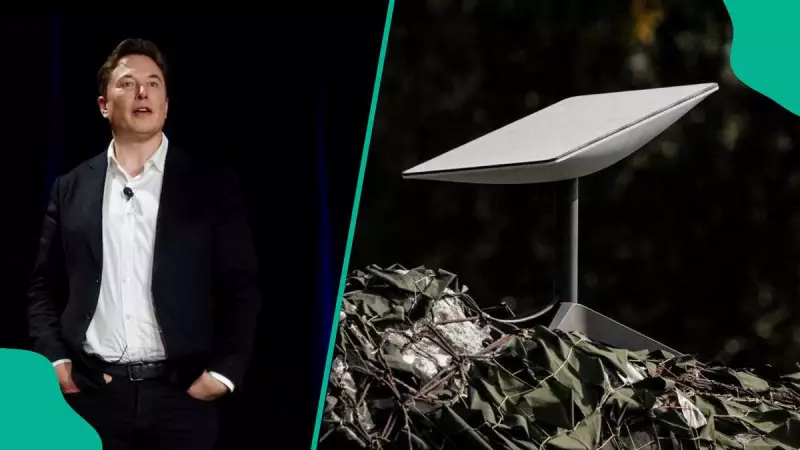
The landscape for high-speed internet in Nigeria is poised for a dramatic shift as a new heavyweight enters the ring. The Nigerian Communications Commission (NCC) has officially granted Amazon's Project Kuiper a licence to operate, setting up a direct confrontation with Elon Musk's Starlink in the country's burgeoning satellite broadband market.
Regulatory Green Light for a New Competitor
In a decisive move dated February 28, 2026, the telecoms regulator issued a seven-year landing permit to Kuiper Systems Nigeria Limited. This authorization allows the Jeff Bezos-backed venture to commence its satellite broadband services from 2026, operating its space segment as part of a massive global network of up to 3,236 low-Earth orbit (LEO) satellites.
This approval marks a significant policy direction, reflecting Nigeria's commitment to embracing next-generation connectivity providers and fostering a competitive market rather than one dominated by a single player. Starlink, which launched earlier, has rapidly amassed over 66,000 subscribers in Nigeria, but now faces its most formidable rival yet.
Kuiper's Multi-Pronged Service Strategy
The NCC permit is comprehensive, allowing Kuiper to offer three core service categories. These are designed to cater to a wide spectrum of needs, from fixed locations to moving vehicles.
Fixed Satellite Service (FSS) will provide the backbone for home, business, and government facility internet, similar to traditional broadband. Mobile Satellite Service (MSS) focuses on portable connectivity crucial for emergency services, maritime safety, and remote operations. Perhaps most innovatively, Earth Stations in Motion (ESIM) will enable high-speed internet on aircraft, ships, and trains using advanced tracking antennas.
This diverse portfolio signals Kuiper's intent to be a holistic connectivity provider, targeting not just rural gaps but also enterprise, government, and mobility sectors.
Why Nigeria is a Prime Battlefield
Nigeria represents a strategic and high-potential market for satellite internet giants. With a population exceeding 200 million and an official estimate of over 23 million people in unserved or underserved areas, the demand for reliable broadband is immense. Mobile broadband penetration stood at roughly 50.58% as of November 2025, leaving a vast connectivity deficit.
LEO satellites like those from Kuiper and Starlink are particularly attractive because they offer much lower latency than traditional geostationary satellites. This enables real-time applications like video conferencing, online gaming, and digital financial services, which are critical for economic growth.
Kuiper plans to operate in the Ka-band spectrum, which supports high data capacity and speeds. While this band can be affected by heavy rainfall, modern LEO systems use sophisticated technology to mitigate such disruptions.
Consumers Set to Reap the Benefits
The entry of a deep-pocketed competitor like Amazon's Kuiper is ultimately positive news for Nigerian consumers and businesses. The competition is expected to drive improvements in service quality, coverage expansion, and competitive pricing. Furthermore, Kuiper's potential integration with Amazon Web Services (AWS) could offer unique bundled solutions for enterprises.
This development coincides with the NCC enforcing stricter regulations on all operators, including a mandate for Starlink's existing subscribers to complete a biometric registration by a past deadline to avoid service disruption.
As both tech billionaires, Elon Musk and Jeff Bezos, turn their focus to Nigeria, the country's digital transformation journey is entering a new and intensely competitive phase, promising better connectivity for millions.