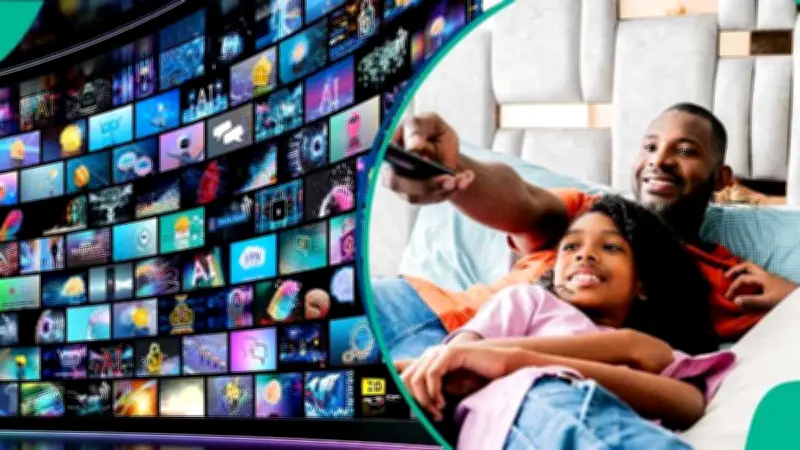
Nigeria has officially launched its long-awaited FreeTV platform, promising viewers access to more than 100 television channels without monthly subscription fees. The initiative, unveiled under the country's Digital Switchover (DSO) programme, has been promoted as a major step toward expanding digital television access nationwide.
What Exactly Is FreeTV?
FreeTV is the federal government's new television platform designed to offer Nigerians access to free-to-air channels through a hybrid satellite and mobile broadcasting system. The initiative is being driven by the National Broadcasting Commission (NBC) in collaboration with the Nigerian Communications Satellite (NIGCOMSAT). According to government officials, the service is expected to provide over 100 channels spanning entertainment, sports, news, education and children's programming. Unlike subscription-based pay-TV services, users are not expected to pay monthly fees once the equipment is installed. However, "free" does not necessarily mean cost-free.
The Hidden Costs Nigerians Need to Know
One of the biggest surprises surrounding the rollout is the cost of setting up the service. Unlike conventional Digital Terrestrial Television (DTT) systems, where viewers can simply connect a decoder to a regular indoor antenna, FreeTV relies heavily on satellite transmission. This means households may need:
- A compatible FreeTV decoder or set-top box
- A satellite dish
- Professional installation services
- Dish mounting and alignment equipment
For many families, these upfront costs could amount to tens of thousands of naira, even before watching the first channel. Critics argue that while monthly subscriptions are eliminated, the initial setup expenses could discourage low-income households that the programme is meant to benefit.
Why Digital Switchover Matters
The Digital Switchover, or DSO, is Nigeria's transition from analogue television broadcasting to digital broadcasting. Under the old analogue system, one frequency band could only carry a single television channel. Digital technology, however, allows broadcasters to compress signals and transmit numerous channels over the same frequency. The benefits are substantial. Viewers enjoy clearer images and better sound quality. Broadcasters spend less on transmission infrastructure, while more specialised television stations can emerge at lower costs. Perhaps most importantly, digital migration frees up valuable radio spectrum previously occupied by analogue television signals. This spectrum can then be sold to telecom companies to improve broadband services, including 4G and 5G networks, generating significant revenue for the government.
Nigeria's Long and Difficult Digital Journey
Nigeria's digital migration has been decades in the making. In 2006, the country signed the International Telecommunication Union's agreement to switch from analogue to digital broadcasting by June 2015. To support the transition, the Federal Executive Council approved the DSO White Paper in 2012, creating a framework that separated broadcasters, signal distributors and regulators. However, funding challenges, policy changes, and infrastructure gaps slowed progress. Pilot projects were introduced in selected states, including Plateau, but nationwide rollout remained elusive. Billions of naira were invested over the years, with limited coverage achieved. Faced with these setbacks, the government shifted toward a satellite-first approach, leading to the recent FreeTV launch.
Why Broadcasters Are Raising Concerns
Despite the official launch, the new model has attracted criticism from industry stakeholders. The Broadcasting Organisations of Nigeria (BON), which represents television and radio stations across the country, argues that the project differs from the original digital migration framework. According to the group, the use of a satellite-based direct-to-home system does not fully replace analogue terrestrial broadcasting and therefore does not immediately release the valuable spectrum expected from a conventional digital switchover. BON has also questioned whether NBC should operate a branded television platform while simultaneously acting as the industry's regulator. Other industry groups have warned that implementing the new structure without an updated legal framework could trigger regulatory disputes in the future.
What This Means for Nigerians
For viewers, FreeTV presents an attractive opportunity to access a wide range of channels without recurring subscription fees. However, the reality is more complex. While the service promises free television content, households may still bear the cost of decoders, satellite dishes and installation. At the same time, debates over legality, implementation and long-term sustainability continue to cast a shadow over what is otherwise one of Nigeria's most ambitious broadcasting projects. For now, Nigerians are getting more channels, but whether FreeTV delivers on all its promises remains a question that only time can answer.