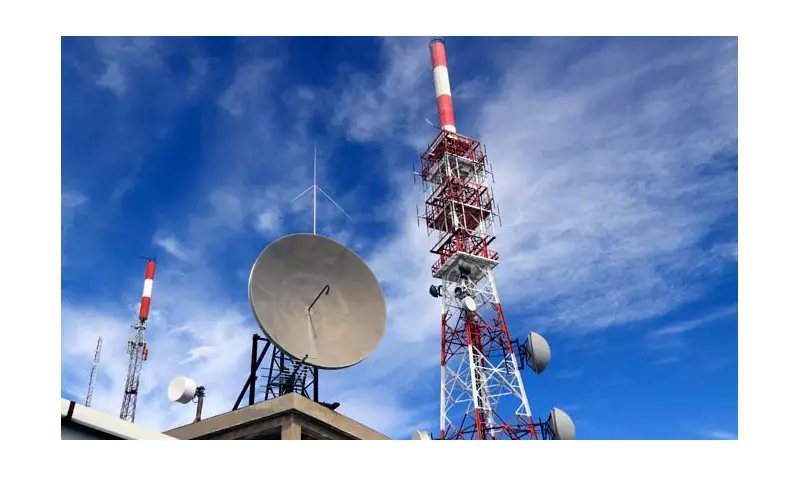
The Nigerian telecommunications industry has once again proven to be a cornerstone of the national economy, recording a significant increase in its contribution to the Gross Domestic Product (GDP).
Solid Growth Amid Economic Challenges
Fresh data from the National Bureau of Statistics (NBS) reveals that the telecoms sector contributed 9.1 per cent to the country's GDP in the third quarter of 2025. This marks a marginal but notable rise from the 8.95 per cent recorded in the same period in 2024. The industry was a primary driver behind the overall GDP growth rate of 3.98 per cent for the quarter.
In real terms, the telecommunications segment alone accounted for approximately N4.4 trillion of the real GDP in Q3 2025. This substantial figure represents about 84.5 per cent of the total N5.2 trillion contributed by the broader Information and Communication Technology (ICT) sector, cementing its dominant position.
Key Drivers of Telecom Expansion
The sector's robust performance is attributed to several critical factors. Surging demand for mobile data and broadband services continues to fuel growth. Active mobile subscriptions are now nearing the 180 million mark, creating an ever-expanding base of users for voice and data services.
Furthermore, continuous investment in network infrastructure is paying off. Major operators are actively deploying fibre optic cables and rolling out 5G technology, which is significantly enhancing broadband penetration across the nation. This reliable connectivity is not just growing the telecom sector; it is underpinning the rapid expansion of allied industries such as:
- Fintech and digital payments
- E-commerce platforms
- Digital content creation and streaming
The NBS explicitly highlighted the telecommunications sector as one of the key pillars propelling the growth of the non-oil sector, which contributed a massive 96.56 per cent to the aggregate GDP in Q3 2025.
Broader Economic Landscape in Q3 2025
While telecom shone, other sectors also played vital roles in the quarter's economic output. The services sector remained the largest, representing 53.02 per cent of GDP. Agriculture accounted for just over 31 per cent, with crop production alone contributing 23.06 per cent.
Trade activities contributed 16.42 per cent, reflecting sustained household consumption, while the real estate sector proved resilient with a 13.36 per cent share. The industrial sector saw contributions from food, beverage, and tobacco manufacturing (3.44 per cent) and construction (3.03 per cent).
In contrast, the oil sector's contribution to GDP stood at only 3.8 per cent. Although crude petroleum and natural gas production increased to an average of 1.64 million barrels per day, the sector's real growth rate of 5.84 per cent showed a slowdown, illustrating its declining relative significance to overall economic output compared to non-oil sectors like telecom.
The telecom sector's year-on-year real growth rate of 5.78 per cent in Q3 2025, though slightly slower than the previous quarter, underscores its remarkable resilience in the face of both global and domestic economic headwinds. It solidifies its status as one of Nigeria's largest and most dependable non-oil economic engines.