Nigeria boasts over 1,000 tourism sites across its 36 states and the Federal Capital Territory, yet insufficient government support and limited private sector involvement are depriving the country of valuable exposure and economic benefits, according to a recent report.
Tourism Events as Economic Platforms
Across Nigeria, tourism events are evolving beyond cultural celebrations into economic platforms capable of attracting investment, creating jobs, preserving heritage, and projecting states onto the global stage. From the Calabar Carnival to the Ojude Oba Festival and the Osun-Osogbo Festival, these events are becoming strategic tools for economic diversification. However, many struggle with sustainability due to funding gaps, weak infrastructure, inconsistent planning, and overreliance on government budgets.
States organize various tourism events that draw thousands of tourists, boosting internally generated revenue. For instance, the Cross River State Government reportedly earned an estimated N17 billion during the 2025/2026 Carnival Calabar festival, attracting about 248,000 visitors and 780,000 on-site spectators. Similarly, the Ogun State Government generated about N2 billion from the Ojude Oba Festival, with over 200,000 physical attendees and 100 million through television and social media exposure. The Argungu Fishing Festival in Kebbi State, which returned in 2026 after years of suspension, saw about 50,000 fishermen participate and generated around N3 billion in revenue.
Other major tourism events include the Osun-Osogbo Festival in Osun State, the Eyo Festival in Lagos, Carniriv in Rivers State, the Ofala Festival in Anambra State, the Durbar Festival in Kano State, and the International Tourism Summit in Oyo State. Despite their popularity, state governments primarily fund these events with minimal private participation.
Global Perspective and Local Challenges
Globally, tourism events are viewed as major economic assets driving hospitality, transportation, retail, and creative industries. In Nigeria, industry experts have called for stronger private-sector participation to treat tourism as a business, enhance government revenues, and address deficiencies. Tourism expert Ifeanyi Obiorah highlighted infrastructure deficiencies, poor road networks, inadequate accommodation, weak transportation systems, unreliable power supply, and limited tourism facilities as major obstacles. He noted that the seasonal nature of many events limits year-round tourism value, arguing that private-sector participation offers structure, continuity, innovation, and investment for sustainability.
Obiorah stated, "Private investors are more likely to approach tourism as a long-term business ecosystem involving hospitality, event management, branding, transportation, digital promotion, merchandising, entertainment, and destination development. Public-private partnerships can reduce pressure on government funding while improving efficiency and professionalism."
Oyo State International Tourism Summit 2026
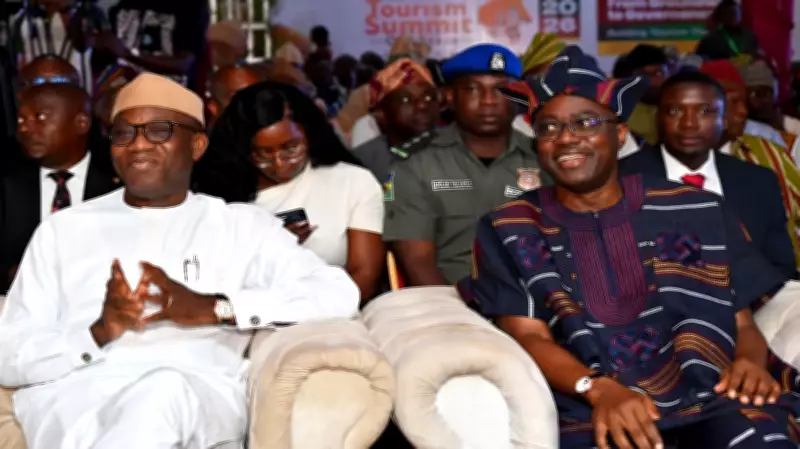
At the recent International Tourism Summit 2026 in Oyo State, themed 'From Groundwork to Governance: Building Tourism That Endures,' participants emphasized that tourism will not thrive until governments create enabling environments for greater private-sector participation. Investors, policymakers, and tourism developers insisted that infrastructure, policy consistency, and governance frameworks are necessary to unlock the sector's economic potential.
Obafela Bank-Olemoh, Managing Director of Whatadeal Africa, said private investors are willing to commit resources when governments create transparent and supportive investment structures. He noted that his company became involved in a redevelopment project in Oyo State after responding to a public advertisement, demonstrating that private investors are ready when opportunities are clearly defined. He added that plans are underway to develop Bower's Tower Heritage into a world-class tourism destination, with the first phase expected to open in December.
Founder of KAP Film Village, Kunle Afolayan, emphasized the need for basic infrastructure to enable tourism and creative investments. He revealed that his film village relies heavily on generators due to unstable electricity, with diesel expenses rising from about N10 million to nearly N19 million monthly. He commended the Oyo State Government for ongoing road construction linking Okaka and Komu, noting that improved access roads benefit tourism investors and host communities.
Structured Investment Frameworks
Folami Tilewa, Director-General of the Oyo State Investment and Public-Private Partnership Agency, stated that the government is working to create structured investment frameworks to attract credible private-sector participation. He explained that the state's tourism development strategy now includes clearly defined investment structures, particularly around the Eleyele tourism corridor project. Detailed surveys and spatial definition processes have been completed to give investors clarity and confidence.
Dr. Sulaimon Olanrewaju, a member of the International Tourism Summit Oyo State 2026, stressed that tourism development without governance direction can weaken investor confidence and create environmental pressures. He argued that tourism should be treated as an integrated economic and governance system requiring long-term planning. He noted that Oyo State is shifting towards a tourism model built around corridors, clusters, anchor assets, and interconnected economies rather than isolated projects.
Way Forward
Olanrewaju maintained that for Nigeria's tourism sector to attract significant investment, governments must prioritize policy continuity, infrastructure development, spatial planning, investor-friendly regulations, and stronger public-private partnerships capable of sustaining projects beyond political administrations. He added, "Over the last two years, Oyo State has gradually begun shifting tourism away from being treated as isolated attractions or occasional events. Instead, the emerging direction is attempting to treat tourism as a long-term governance and economic system."