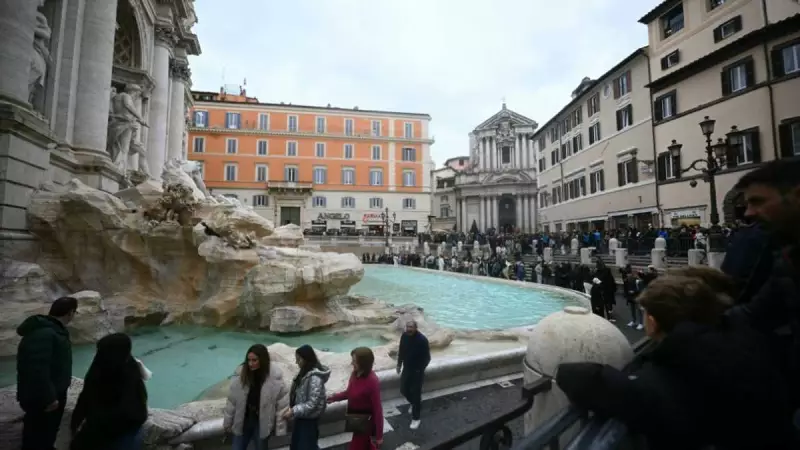
In a significant move to manage overwhelming tourist numbers, the city of Rome has announced it will begin charging visitors for close-up access to its iconic Trevi Fountain. The new policy, set to take effect early next year, marks a shift for one of the world's most famous free public monuments.
New Ticketing System for Rome's Landmarks
Rome's Mayor, Roberto Gualtieri, confirmed the decision at a press conference on Friday, December 19, 2025. He stated that from February 1, 2025, a paid ticket will be required for entry to six key sites across the Italian capital, with the Baroque Trevi Fountain being the most notable inclusion.
Tourists wishing to get near the fountain will need to pay a two-euro entrance fee. However, Mayor Gualtieri emphasised that the monument, located in a public square, will still be visible from a distance for free. The closer access, where visitors traditionally toss coins, will be restricted to ticket holders.
The other five sites included in the new scheme will have a higher entrance cost of five euros each. City officials estimate that the Trevi Fountain ticket alone could generate approximately 6.5 million euros in annual revenue.
Crowds and Tradition Prompt Change
The 18th-century Trevi Fountain, immortalised in Federico Fellini's film "La Dolce Vita," is a non-negotiable stop for millions visiting the Eternal City. The tradition of throwing a coin over one's shoulder into the water is so popular that authorities collect thousands of euros each week, which are donated to the Caritas charity.
This very fame has led to critical overcrowding. Mayor Gualtieri revealed that between January 1 and December 8, 2025, around nine million tourists visited the area immediately in front of the fountain. This staggering figure averages out to about 30,000 people per day, creating crowds so dense that appreciating the Baroque masterpiece becomes difficult.
The congestion has also made the area a hotspot for pickpockets. For years, Rome's administration has debated various methods to regulate the flow of people and improve safety and the visitor experience. The new ticketing system is their chosen solution. Residents of Rome will be exempt from the fee and enjoy free access.
A Growing Trend in Italian Tourism
This initiative is not an isolated case in Italy. Other historically significant sites have recently introduced similar charges to cope with mass tourism and fund preservation efforts.
In 2023, the Pantheon—a church housed in a former Roman temple—began charging visitors for entry. Similarly, the city of Venice introduced a tourist entry fee during peak travel periods last year. The move by Rome's city hall reflects a broader European trend of popular destinations seeking sustainable ways to manage tourist impact while maintaining their cultural heritage.
The introduction of a fee for the Trevi Fountain represents a new chapter for this beloved landmark, balancing its global appeal with the practical needs of preservation and crowd management.