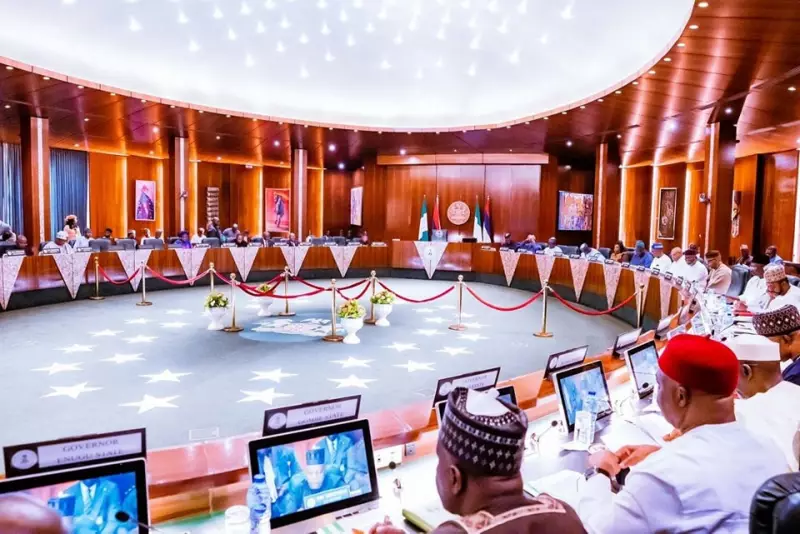
In a significant move to diversify Nigeria's economy, the Federal Executive Council has greenlit four major policy initiatives designed to strengthen the country's intellectual property framework, boost digital trade, and expand service exports.
Four Pillars of Economic Transformation
The policies, presented by Minister of Industry, Trade and Investment Dr. Jumoke Oduwole during Thursday's FEC meeting, represent what her ministry calls a "turning point" in Nigeria's innovation and investment landscape. These initiatives form part of President Bola Ahmed Tinubu's Renewed Hope Agenda and aim to modernize Nigeria's industrial framework while attracting substantial investment.
The four approved policies include: National Intellectual Property Policy and Strategy (NIPPS), Ratification of the AfCFTA Protocol on Digital Trade, Establishment of a National Coordination Mechanism for Services Exports led by NATEP, and Implementation of the Product Authentication and Tracking System (PATS).
Protecting Innovation and Expanding Digital Frontiers
For the first time in Nigeria's history, the country will operate under a unified national framework to protect and commercialize intellectual property rights. The National Intellectual Property Policy and Strategy (NIPPS) creates an ecosystem that connects innovators, creators, researchers, and investors, transforming intellectual property into tradable, bankable assets.
Developed in collaboration with the World Intellectual Property Organisation (WIPO), the policy involved input from over 200 stakeholders across government, academia, and the private sector. It was co-led by the Ministries of Industry, Trade and Investment; Justice; and Arts, Culture, Tourism and the Creative Economy.
In a major digital trade advancement, the FEC ratified Nigeria's participation in the African Continental Free Trade Area (AfCFTA) Protocol on Digital Trade. This protocol establishes the first continent-wide legal framework for e-commerce, cybersecurity, data governance, and digital consumer protection.
President Tinubu, who serves as Co-Champion of the protocol, has been at the forefront of efforts to harmonize digital trade regulations across Africa. Minister Oduwole stated that this ratification will enable Nigeria to "move from participation to leadership" in shaping rules around cross-border data flows, taxation, and digital services.
Boosting Service Exports and Creating Jobs
Recognizing that services account for over 50% of Nigeria's GDP but less than 10% of exports, the Council approved the establishment of a National Coordination Mechanism for Services Exports to be led by the National Talent Export Programme (NATEP).
This mechanism will harmonize existing government programs including:
- The 3 Million Tech Talent (3MTT) initiative
- The Outsource to Nigeria Initiative (OTNI)
- TechPro4Europe
By 2030, the program is projected to achieve remarkable outcomes:
- Create 1 million decent jobs in the service export sector
- Add $10 billion annually to Nigeria's GDP
- Train 10 million Nigerians for global service markets
- Attract over $15 billion in investment to digital and creative industries
Minister Oduwole described these policies as strategic moves to make Nigeria a global outsourcing destination and Africa's service export hub. "These policies ensure that ideas, data, and talent become exportable commodities," she emphasized. "They will deepen industrialization, create jobs, and strengthen Nigeria's non-oil revenue base."
With these approvals, Nigeria is positioned to consolidate its status as a continental leader in innovation and digital trade, ushering in what officials describe as a new era of economic transformation that could reshape Africa's digital economy landscape.