Lagos Hosts Major Trade Event to Boost National Economy
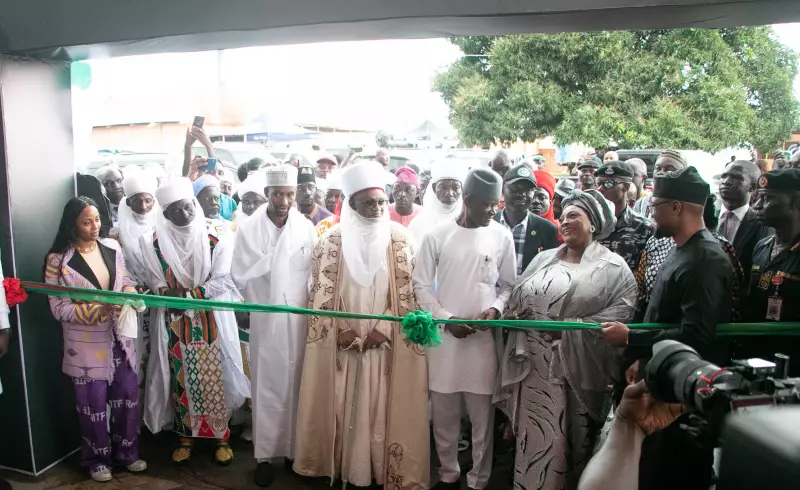
The 2025 Nigeria International Trade Fair officially commenced on Friday, November 22, at the Lagos International Trade Fair Complex, marking a significant moment for the nation's business community. The event, which began at 9:43 AM WAT, was organized by the Lagos International Trade Fair Complex Management Board (LITFCMB) and attracted senior government figures, industry leaders, and exhibitors from across Nigeria.
Leadership Emphasizes Economic Revival and Inclusive Growth
In her opening address, Vera Safiya Ndanusa, the Executive Director of LITFCMB, reinforced the Board's official mandate to organize trade fairs nationwide. She highlighted a renewed commitment to transforming the Complex into a fully functional and nationally significant business hub. Ndanusa explained that the Fairground is undergoing a strategic repositioning to better support enterprise growth, attract investment, and encourage broader participation from all economic sectors.
"Our goal is to create and sustain an environment where trade thrives, businesses can scale, and investment can flow freely," she stated. "A truly vibrant trade ecosystem must be inclusive, and inclusivity begins with access."
The Minister of Industry, Trade and Investment, Dr. Jumoke Oduwole, underscored the Fair's critical role in Nigeria's current economic climate. She described the platform as a key driver shaping the future of trade and business in the country.
"This Trade Fair and this physical space continue to shape the future of trade and business in Nigeria," Dr. Oduwole said. "This is especially vital at a time of global uncertainty, ongoing economic reforms, and an evolving business climate that demands resilience and partnership."
Calls for Strategic Investment and Ministry Support
Former Niger State governor, Mu'azu Babangida Aliyu, pointed to the Ministry of Industry, Trade and Investment as a cornerstone of Nigeria's economic recovery. He argued that many people underestimate its importance, calling it one of the two or three most crucial ministries in the nation.
"The basis, the foundation of our economy," Aliyu emphasized, "is this ministry. If we take this ministry very seriously, I believe that the dead industries in Kaduna, in Kano and in other major areas will come back to life." He stressed that leadership with vision is essential to set goals and revive dormant industrial centers. Aliyu also advocated for increased funding for the ministry, noting that investment should encompass everyone, "from the smallest trader to the biggest trader."
John Owan Enoh, the Minister of State for Industry, was celebrated as a friend of commerce and industry. He reflected on the Trade Fair's long-standing legacy as a symbol of Nigerian enterprise, creativity, and resilience.
"For decades, this trade fair has stood as a symbol of Nigerian enterprise, Nigerian creativity, Nigerian resilience and our yielding spirit about what the possibilities are," Enoh stated. He praised the exhibitors, describing them not just as participants in a marketplace, but as the visionary minds—manufacturers, farmers, digital creators, investors, and small business owners—who form the "engine room of our nation's future."