The New Yam Festival, known as Iri Ji, Iwa Ji, or Ike Ji across various Igbo communities, is one of the most significant cultural events in southeastern Nigeria. It is a celebration that transcends mere feasting, serving as a vital link between generations and a powerful reminder of ancestral roots. Held annually between August and October, the festival marks the end of one farming season and the beginning of another, embodying thanksgiving, reunion, and cultural pride.
Why Yam is Called the King of Crops
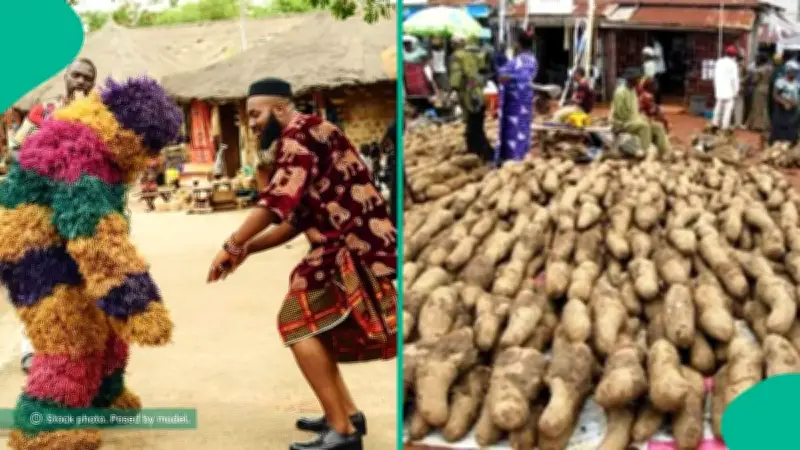
To understand the New Yam Festival, one must first appreciate the central role of yam in Igbo society. For centuries, yam has been revered as the 'king of crops,' symbolizing wealth, hard work, social status, and masculinity. In traditional Igbo communities, a man's success was often measured by the size of his yam barn; the more yams he harvested, the greater the respect he commanded. Growing yam was considered one of the most demanding farming activities, requiring months of clearing land, making mounds, staking vines, and protecting crops from pests and disease.
The importance of yam was famously captured by renowned Nigerian author Chinua Achebe in his classic novel Things Fall Apart. Achebe wrote: 'Yam, the king of crops, was a very exacting king. For three or four moons it demanded hard work and constant attention...' Because of its cultural and economic importance, yam was treated with great respect and could not be eaten casually after harvest. Special rituals had to be performed before anyone in the community was allowed to taste the new crop.
The Ancient Story Behind the Origin of Yam
The New Yam Festival is rooted in oral history and mythology. One of the most popular stories comes from the ancient Nri Kingdom, often regarded as the spiritual cradle of Igbo civilisation. According to local folklore, Igboland was once struck by a devastating famine. Crops failed, food became scarce, and people faced starvation. The people turned to their ruler, Eze Nri, for help. Troubled by the suffering, the king consulted an oracle and was told he would have to sacrifice his own son and daughter to save his people. He did so. Months later, mysterious plants emerged from the burial sites. When the king dug into the ground where his son had been buried, he discovered a large tuber—the first yam, according to the story.
How the New Yam Festival is Celebrated
The New Yam Festival is not a one-day event; in many communities, preparations begin weeks in advance. Families clear out old yams from the previous harvest, symbolically leaving the old season behind. One of the most important traditions is that nobody is permitted to eat the newly harvested yam before the official ceremony. The first yam must be blessed and tasted by the traditional ruler, community elder, or chief priest. During the ceremony, roasted yam is often presented to the ancestors and the gods as a sign of gratitude for a successful harvest. Only after these rites are completed can the community begin eating the new crop. The celebration then transforms into a grand cultural event filled with feasting, ceremonial gunshots, drumming, and visits from neighbouring towns.
Why the Festival Still Matters Today
Despite modernisation, the New Yam Festival remains one of the strongest symbols of Igbo identity. The celebration reminds people of the importance of gratitude, hard work, community, and cultural preservation. As a young Igbo man told Arise News: 'We know about this new yam festival as a yardstick to measure the tradition of a people of our land.' The festival continues to be observed across Anambra, Imo, Abia, Enugu, Ebonyi, and parts of Delta and Rivers states, with towns and villages coming alive with colourful displays.
In a recent example, popular socialite Cubana Chiefpriest visited his hometown of Owerri, Imo State, to celebrate the New Yam Festival, highlighting the enduring relevance of the tradition even among modern Nigerians.