
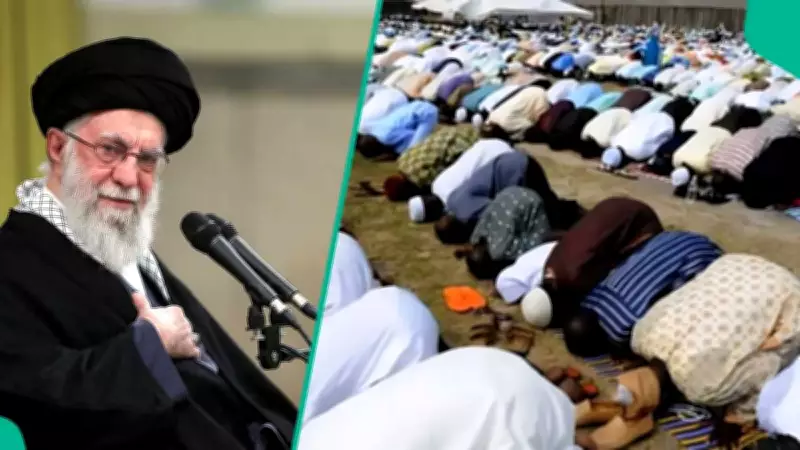
Kano Muslims Conduct Funeral Prayer for Iran's Supreme Leader After Reported Airstrike
In a significant display of spiritual solidarity, dozens of adherents of the Qadiriyya Sufi order gathered in Kano on Monday, March 2, to observe Salatul Ghaib, the Islamic funeral prayer in absentia, for Iran's Supreme Leader, Ayatollah Ali Khamenei. This solemn gathering followed widespread reports that Khamenei was killed in a joint United States and Israeli airstrike over the weekend, an event that has sent shockwaves through the Muslim world and heightened geopolitical tensions.
Prayer Held at Historic Darul Qadiriyya
The special prayer was conducted at Darul Qadiriyya, located in the Kabara quarters of Kano. This residence holds deep historical significance as the former home of the late Sheikh Nasiru Kabara, a revered figure who was widely recognized as a leading proponent of the Qadiriyya movement across Africa until his passing in 1993. The congregation assembled shortly after the Asr prayer, offering fervent supplications for the deceased and beseeching Allah to grant him eternal mercy and blessings in the afterlife.
Sheikh Muazzamu Kabara Leads the Rite
The funeral prayer was led by Sheikh Muazzamu Nasiru Kabara, the eldest son of the late spiritual head of the Qadiriyya sect. Several prominent clerics and dedicated members of the order were in attendance, including Sheikh Musal Qasiyuni Nasiru Kabara. Prior to the gathering, Sheikh Musal Qasiyuni Nasiru Kabara had announced plans for the prayer in a detailed video message shared on his verified Facebook page, urging adherents to participate in honour of the late Iranian leader and to seek divine mercy for his soul.
Understanding Salatul Ghaib
Salatul Ghaib is a traditional Islamic funeral prayer performed for a deceased Muslim whose body is not present, particularly in circumstances where standard funeral rites cannot be conducted at the location of death. This practice has deep historical roots, dating back to the time of Prophet Muhammad, who is recorded to have observed the prayer for Negus, the King of Abyssinia, in what is present-day Ethiopia. The observance in Kano reflects the profound spiritual solidarity expressed by sections of the Muslim community in Nigeria in response to the escalating tensions between Israel and Iran.
Geopolitical Context and Regional Anxieties
The reported airstrike on Saturday, allegedly carried out by American and Israeli forces, has significantly heightened anxieties across various parts of the Muslim world. Religious leaders and followers alike have responded through prayers, calls for calm, and expressions of concern over the potential for broader conflict. Previously, it was reported that former US President Donald Trump emphasised that preventing Iran from acquiring nuclear weapons was a central goal of US operations, citing previous strikes on Iranian nuclear facilities in Natanz, Isfahan, and Bordeaux as necessary measures to halt Tehran's ambitions.
Trump also addressed Iranian civilians directly, urging them to stay sheltered and to seize control of their government. He highlighted that US forces had been reinforced to minimise risk to personnel, describing the mission as "noble" and aimed at protecting future generations from nuclear threats. The situation remains fluid, with global observers closely monitoring developments and the potential implications for international relations and regional stability.