
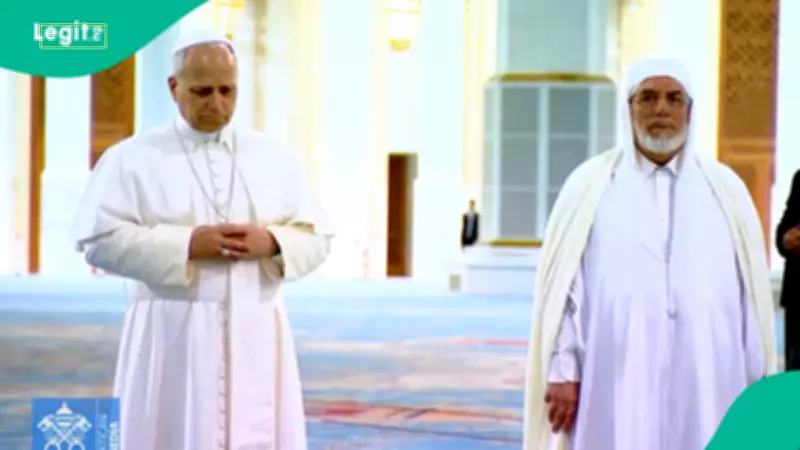
Pope Leo's Historic Visit to Great Mosque of Algiers: A Symbol of Interfaith Unity
In a landmark moment for interfaith relations, Pope Leo XIV visited the Great Mosque of Algiers on April 13, 2026, during his extensive 11-day tour of Africa. The visit to this magnificent Islamic site, also known as the "Mosque of Algeria," represented a powerful gesture of respect and dialogue between Christianity and Islam.
A Gesture of Respect and Spiritual Reflection
Upon entering the mosque, Pope Leo removed his shoes as a traditional sign of respect for Islamic sacred spaces. He paused for silent meditation, acknowledging the spiritual significance of the location. The Pope was warmly welcomed by Rector Mohamed Mamoun al Qasim, who guided him through the impressive complex.
"I thank you for these reflections and for these important words during this visit, from a place that represents the space that belongs to God, a divine and sacred space, where many people come to pray and to seek the presence of the Most High in their lives," Pope Leo expressed to his hosts.
Emphasizing Peace and Human Dignity
The Pope highlighted Algeria as "the land of my spiritual father," referring to Saint Augustine of Hippo, who was born in what is now Algeria. Throughout his remarks, Pope Leo emphasized several key themes:
- The universal search for truth across religious traditions
- Recognition of human dignity in every person
- Shared responsibility for building peace
- Mutual respect and coexistence among different faith communities
"To seek God also means recognising the image of God in every man and woman," the Pope stated, urging greater understanding between religious groups.
The Great Mosque as Spiritual and Cultural Landmark
The Great Mosque of Algiers stands as one of the world's most impressive religious structures, featuring:
- The tallest minaret in the world at 265 meters
- Capacity for up to 120,000 worshippers
- A massive dome measuring 50 meters in diameter and 70 meters high
- Extensive facilities including a library, research center, museums, gardens, and restaurants
Pope Leo noted the mosque's dual role as both a religious center and an intellectual hub, combining traditional Arab architectural motifs with modern design elements.
Papal Prayers and Messages of Unity
Before departing, Pope Leo signed the Book of Honour with the inscription: "May the mercy of the Most High keep the noble Algerian people and the entire human family in peace and freedom." He assured prayers for Algeria and all nations, expressing hope for:
- Lasting peace in conflict regions
- Justice and reconciliation among divided communities
- Forgiveness and healing where needed
Strengthening Christian-Muslim Relations
Father Peter Claver Kogh, rector of the Basilica of Our Lady of Africa, described the visit as a crucial opportunity to strengthen ties between Christians and Muslims. "That is what the world needs now – a world of fraternal living and living in harmony. That will be the utmost importance of this visit for Christians and Muslims who are here, and all those who desire to live in peace and harmony," he remarked.
Context of the African Tour
Algeria represents the only Muslim-majority country on Pope Leo's African itinerary, which also includes visits to Cameroon, Angola, and Equatorial Guinea. The 11-day tour covers over 18,000 kilometers and underscores the Vatican's commitment to interfaith dialogue across the continent.
Upon arriving in Algeria, Pope Leo was welcomed by President Abdelmadjid Tebboune and visited the Maqam Echahid, a monument honoring those who died in Algeria's war of independence. This comprehensive visit demonstrates the Pope's dedication to building bridges between different faith traditions while honoring each nation's unique history and culture.
The historic visit to the Great Mosque of Algiers stands as a powerful symbol of respect, dialogue, and unity in an increasingly divided world. By honoring Algeria's spiritual heritage and emphasizing universal values of peace and human dignity, Pope Leo reinforced his commitment to fostering harmony among diverse communities worldwide.