Easter's Message of Hope: A Beacon in Troubled Times
In the year 2026, the world often appears dominated by negativity, with historical pages filled with tragic events that fuel pessimism. Nations and peoples grapple with daunting challenges in both national and international politics, while the global economic climate grows increasingly harsh. The powerful frequently crush and humiliate the weak, and unnecessary wars leave behind trails of bloodshed, destruction, and death. A significant deficit of justice persists, painting a bleak picture of our current state.
The Core of Easter: Faith and Hope
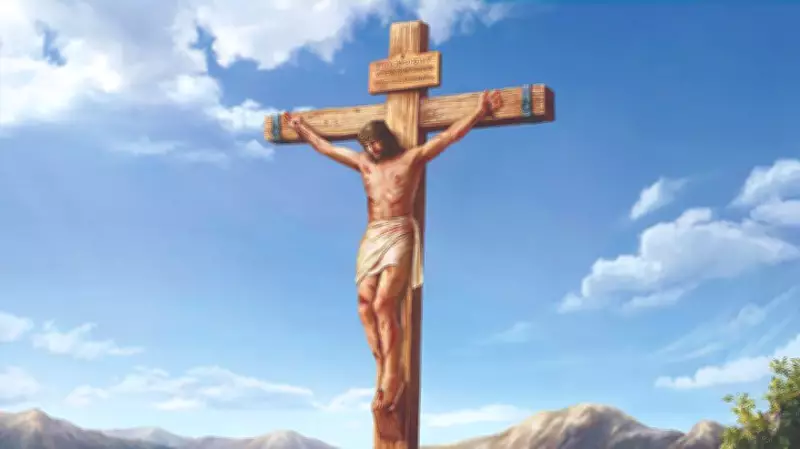
Amidst these unhappy indices, Christians worldwide celebrate Easter, marking their faith in the resurrection of Jesus Christ from death to life after his suffering, crucifixion, and death. This feast carries a message that many find incredible: hope. In the face of cruelty and injustice inflicted upon the weak by the mighty, Easter conveys that negativities do not have the final say. Those who wounded and murdered Jesus believed they had triumphed, relying on the logic of power, command, and control—where might makes right. They thought they had silenced him definitively, but Easter's message of hope, through Jesus rising to new life, unveils their error.
Realism and the Triumph of Life
The message of Easter calls for realism, acknowledging that human existence is a life-and-death struggle, an arena where good and evil confront each other, and a wrestling ring where life and death engage in complex combat. This narrative applies to both individuals and nations. While pessimists argue that every human begins an inexorable march to the tomb from birth, with death as the final destination, Easter proclaims the opposite. Even as death radically contradicts life, life ultimately conquers death. This is not a denial of evil but an acknowledgment that evil will be conquered, with its defeat already initiated.
Negative aspects of life, such as loneliness, diseases, betrayal, wars, economic exploitation, and the hegemony of powerful individuals and nations, still persist. There remains a wide gap between the expectation of succor and the experience of discomfort. However, Easter declares that a journey has begun toward a life where all present negativities will be finally and decisively negated.
Victory and Renewal for Christians and Society
For Christians, Easter represents the victory of Jesus Christ over betrayal, injustice, and the oppression of the innocent and defenseless. These are the negativities over which he, proclaimed as the Lord of life, won a decisive victory. Betrayed, unjustly condemned, abandoned, and dying lonely on the cross, his resurrection assures victory for all who identify with him in the struggle against injustice, falsehood, and oppression. It offers hope to those combating evil in our world and standing up for what is right, including in beloved Nigeria.
Easter challenges and invites us to rise to higher realms in our actions. It calls on Nigerians to emerge from the tomb of ethnic, regional, and religious bigotry, the graveyard of mediocrity, and the cemetery of factors that have hindered the country from taking its rightful place among nations. Both citizens and leaders can improve in managing the country's affairs, as Easter is about renewal of life. Every election presents an opportunity for a nation to rise to new life.
Timely Message for Nigeria's 2027 Elections
With Nigerians set to go to the polls in less than a year, Easter's message is particularly timely. As the 2027 elections approach, it is crucial to admit candidly that Nigeria's democracy is not in good health—it is sick unto death. The spate of defections by politicians with shifting party affiliations signals a descent into a one-party state, where divergent opinions are criminalized and punished in subtle and overt ways, and being different comes at a price.
The message is clear: in 2027, a diverse country like Nigeria may conduct an election where alternative political options are unavailable due to opposition parties weakened by external and internal factors. The National Assembly recently passed an electoral law with provisions that forewarn of an election whose transparency will be in doubt. Its visible defects, denied by potential beneficiaries, and the posturing of politicians across all parties offer little hope, pointing to a country in dire need of new life. It is increasingly doubtful that Nigeria will rise from the tomb of elections lacking transparency, but Easter offers a galvanizing hope.
A Call for Civil Discourse and Unity
Nigerians who embrace this Easter message of hope must avoid the incivility of inter-ethnic profiling and insults prevalent on social media today. We must learn to trade ideas, not insults, and refrain from intolerance and demonization of those with divergent political views. On this feast of hope, we should resolve to talk with, not to, one another, as well as with lawmakers and other political actors, about how our country ought to be governed. This dialogue should focus on collective governance, not personal desires, nurturing the hope that we will not only hear but also listen to each other.