Nigeria has never lacked talent, but it has often lacked the machinery to discover, refine, protect, and project that talent globally. Across literature, music, theatre, film, and popular culture, Nigerian names have traveled far beyond the systems that produced them. Wole Soyinka and Chinua Achebe gave Nigerian writing global authority. Burna Boy, Wizkid, and Davido have carried Nigerian sound to stadiums worldwide. Nollywood has become a symbol of African storytelling, with stars like Funke Akindele and Femi Adebayo building mass audiences across languages and borders.
Yet Nigeria's creative journey remains uneven. Victories are powerful but sporadic. Successes are inspiring but insufficiently institutionalized. Talents are abundant but not always channeled. The market is vast but under-structured. The result is a creative economy that proves its potential without converting it into a predictable growth engine. This is the challenge: how does a nation blessed with culture, youth, stories, and rhythm build a system that turns creative impulse into industry? For Aiye-ko-ooto, the answer begins with creative writing—a foundational discipline often overlooked in policy conversations and investment roadmaps.
The Promise Behind the Market
Nigeria's creative economy is a national asset, carrying the country's identity, exporting its imagination, and shaping its reputation. President Bola Ahmed Tinubu has placed young people at the center of development ambition, promising sufficient jobs with decent wages. A nation of over 200 million people, with a large share aged 15–35, cannot treat youth creativity as decorative—it must treat it as productive capacity. The creative sector has already contributed to economic activity, improved visibility abroad, earned foreign exchange, and projected Nigerian culture globally. The question is no longer whether Nigeria has creative potential—it has been proven—but whether it can build institutions, training systems, incubation centers, financing channels, and distribution platforms to turn that potential into sustained prosperity.
Why the Bedrock Matters
Creative writing is the engine room of theatre, television, film, publishing, comedy, animation, digital storytelling, and cultural archiving. It produces scripts, scenes, characters, dialogue, plots, and narrative memory. Without strong writing, expensive cameras, talented actors, and modern studios struggle to produce lasting cultural value. Aiye-ko-ooto argues that if Nigeria wants to accelerate its creative economy, it must invest in the writing capability of its youth—training them to structure ideas, dramatize stories, and create original works rooted in Nigerian life and universal emotion. History supports this: Nigeria has produced literary giants, theatre pioneers, and television classics. FESTAC '77 proved the country could stage culture at continental scale. The Village Headmaster and The Masquerade showed how local writing could create durable television. Hubert Ogunde, Moses Olaiya, and Ade Love built performance traditions that brought Yoruba culture into homes. Nigeria has champions—but it needs a repeatable system to produce generations of them.
The Cost of Sporadic Success
The danger of relying on individual brilliance is celebration without continuity. A few stars break through, but the wider system remains fragile. In Nollywood, cinematography and production quality have improved, yet many stories remain underdeveloped, scripts lack depth, and projects depend on star power rather than narrative strength. Global competition is intensifying; Hollywood itself faces creative fatigue with remakes and franchises. This should create an opening for Nigeria, a country with hundreds of ethnic groups, languages, and histories. But to seize it, Nigeria must write better—building characters with complexity, dialogue with precision, and plots with momentum. Foreign streaming platforms once raced toward Nigeria's market, but when investor enthusiasm meets weak development pipelines, disappointment follows. Technical ambition alone cannot hold global attention; story is the anchor.
A New Ministry, A Bigger Mandate
The Federal Government's decision to rename and expand the ministry responsible for arts, culture, and the creative economy signaled recognition of the sector's strategic importance. In August 2023, creative economy was added to the arts and culture portfolio; by October 2024, tourism was merged, creating the Federal Ministry of Arts, Culture, Tourism and Creative Economy. The logic is clear: culture feeds tourism, tourism amplifies heritage, heritage inspires content, content creates markets, markets create jobs, and jobs strengthen the economy. The ministry has spoken of roadmaps and ambitious targets for GDP and job creation by 2030. But these require ground-level capability building—from classrooms, workshops, writing clinics, local government areas, campuses, theatres, and digital hubs. That is where Aiye-ko-ooto's intervention becomes significant.
Aiye-ko-ooto's Argument: Start With the Writer
Aiye-ko-ooto's position is direct: Nigeria's creative economy needs a systemic approach, and the most practical starting point is upskilling young people in creative writing. The organization's idea is built on the belief that Nigeria's youth are talented but unchanneled, often unemployed or underemployed, lacking mentors and creative communities. Many have stories but lack craft. The opportunity is both economic and cultural: train the writer, and you strengthen the pipeline for books, plays, films, sitcoms, animation, and digital content. Aiye-ko-ooto created The Cultural Literary Hub, a platform under its broader structure, to deliver practical masterclasses under the AYACHE brand—African Youth Arts, Culture & Heritage Entertainment. The mission is to unlock Nigeria's creative potential in youth.
Inside the Pilot Workshop
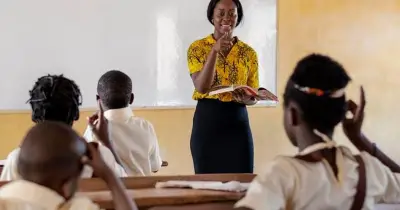
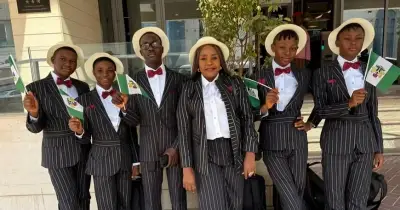
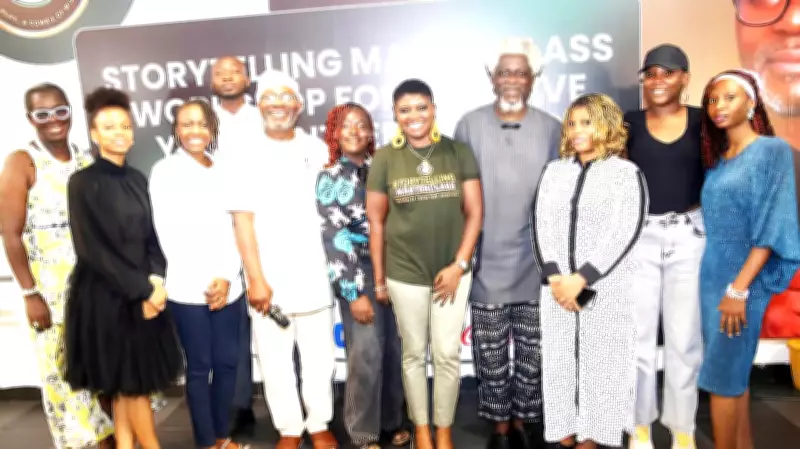
To test the idea, Aiye-ko-ooto launched a pilot workshop titled Creating Riveting Dialogue. This five-day intervention focused on practical learning, exposing participants to 60 devices for improving dialogue writing. Activities included individual tasks, team-building exercises, confidence-building presentations, and clinic sessions to strengthen works-in-progress. The workshop brought together young participants from four institutions: Boys Senior Academy, Sura, Lagos; University of Lagos Faculty of Creative Arts; Lagos State University Faculty of Arts; and Yaba College of Technology's School of Communication and Creative Arts. Participants were aged 15–35, available for the program, and had an existing creative project for the clinic component. The model was active, not passive: students wrote, presented, received critique, and interacted with peers and teachers. Feedback from participants, including those interviewed by Punch, New Nation, Lagos TV, and radio platforms, suggested the intervention challenged their assumptions about writing and transformed their projects. Creative confidence is often the first infrastructure young artists need.
The Community Beyond the Classroom
One of the strongest elements of the pilot was its emphasis on community. Many young creatives work in isolation; a properly designed workshop creates a circle, allowing participants to see that others wrestle with similar fears and ambitions. This sense of community is essential for any serious creative-economy strategy. Talent grows faster when networked; writers improve when they read one another; filmmakers improve when they meet scriptwriters. For Aiye-ko-ooto, the pilot is only a beginning. The larger vision is to build a sustained structure that trains, incubates, and connects young creatives across Nigeria.
The Scaling Challenge
The ambition is large. Aiye-ko-ooto argues that Nigeria needs a grassroots creative-writing movement capable of reaching at least 10,000 young people from local governments every year. If each local government produces at least one distinctive story rooted in its dialect, customs, and history, Nigeria's cultural archive would expand dramatically. But scale requires financing. Without grants, Aiye-ko-ooto and The Cultural Literary Hub may reach only 600–1,000 youths through about 12 interventions annually, depending on corporate social responsibility support. The proposed 2026 programme reflects a more structured ambition, with workshops on story structure, themes, character development, pacing, dramatic situations, rewrites, and edits. The broader curriculum includes dialogue, character roles, diction, catharsis, settings, moral codes, loglines, screenwriting, plays, conflict, and coaching in film ideas, novels, short stories, and poems. This is a curriculum for creative infrastructure.
From Workshop to Incubation Centre
The long-term vision goes beyond temporary workshops. Aiye-ko-ooto wants The Cultural Literary Hub to grow into a faculty of experienced practitioners and a dedicated incubation centre for creative writers, with the possibility of accommodating other competencies in arts, culture, and heritage entertainment. Training is only the first stage; young creatives also need development time, editorial support, intellectual property guidance, production pathways, and market access. A serious creative-economy model must include incubation centres, rights education, copyright support, publishing access, script development labs, production grants, and distribution partnerships. This is especially important in a country where many young people have ideas but lack institutional literacy to protect and commercialize them. The proposed model connects to larger national ambitions such as media cities, film studios, and performance spaces, but physical assets are only meaningful if fed by strong creative content. Buildings do not create culture; people do.
Nigeria, Africa, and the Global Black Market
The continental opportunity is enormous. Africa's creative economy remains underdeveloped relative to its cultural wealth; narratives about the continent are still shaped by external institutions. Nigeria has already shown through Afrobeats that it can shift the global center of African cultural influence. The same can happen in film, theatre, literature, animation, and television drama. With 54 African countries and a vast global Black diaspora, Nigeria's youth creatives can lead a new narrative movement. The market extends to Accra, Nairobi, Johannesburg, London, Toronto, Atlanta, Houston, New York, Paris, and beyond. Diaspora Nigerians and Black communities hunger for stories that reflect identity and cultural pride. If properly developed, Nigerian creative products can travel through festivals, streaming platforms, schools, and cultural institutions. But a global takeover requires institutions, technological support, intellectual property protection, marketing networks, and financing structures that understand creative risk.
The Financing Question
Aiye-ko-ooto's fit-gap strategy recognizes that ambition without funding will not go far. The proposed 2026 budget estimate stands at ₦440 million, with plans to work with federal agencies, state governments, local governments, the Bank of Industry, corporate organizations, trusts, and private-sector networks. The argument is that grants, not loans, should lead the first five years of this leapfrog agenda. Early-stage creative talent often cannot carry debt; loans can crush promising writers before they mature. Grants, scholarships, and development funds are more appropriate for foundational capability building. The Bank of Industry, the Federal Ministry of Arts, Culture, Tourism and Creative Economy, state governments, telecoms companies, media houses, chambers of commerce, and foundations all have roles to play. The private sector should see this not as charity but as long-term market building—today's writing student could become tomorrow's showrunner, novelist, or content entrepreneur.
What Nigeria Gains If It Gets This Right
A properly curated creative-writing and incubation system would convert young people into entrepreneurs with products to sell. A script, book, play, character universe, or animation concept is an asset. The more Nigeria trains young people to create protectable intellectual property, the more it expands the base of future businesses. It would contribute to tax growth as creative workers formalize their enterprises. It would deepen tourism—stories attract people to places; films can make towns visible; books can revive memory. It would help preserve Nigeria's diversity by mining stories unique to each local government's dialects, customs, and myths. It would offer young people a constructive alternative to frustration; unemployment and alienation are social risks, and a creative economy strategy that reaches youth early can redirect energy toward production and enterprise.
What Happens If Nigeria Does Nothing
The cost of inaction is clear: the sector will remain uneven, a few stars will rise but millions will remain invisible, foreign platforms will come and go, government roadmaps will deliver little transformation, youth unemployment will feed frustration, cultural wealth will remain under-monetized, and stories will be told by others or lost entirely. The creative economy's promise will remain just that—a promise.
Partners in Progress
For this model to work, partnership is essential. Government must provide policy support, direct funding, institutional access, and integration with youth employment strategies. The Federal Ministry of Arts, Culture, Tourism and Creative Economy must ensure funding initiatives include early-stage writers, script developers, and youth-led content projects. The Bank of Industry should lead with developmental financing for creative incubation, with grants more useful than loans for earliest stages. The private sector, through organizations like NACCIMA, can adopt programs, sponsor cohorts, fund scholarships, support local creative hubs, and connect emerging talents to markets. Banks, telecoms, media, technology firms, and consumer brands all benefit from a stronger creative ecosystem.
The Real Acceleration
Accelerating Nigeria's creative economy will not come from slogans alone. It will come from building the human system beneath the market—beginning where creativity becomes transferable, commercial, and durable: with the ability to write. Nigeria's youth carry stories of villages, cities, families, markets, and dreams. They need structure, craft, mentorship, and institutions that believe their imagination is a national resource. Aiye-ko-ooto's pilot workshop offers one practical model, modest in scale but significant in meaning. The future of Nigeria's creative economy may not begin with the red carpet or the streaming deal. It may begin much earlier—with a young person learning to build a scene, write a line of dialogue, shape a character, and finish a story. If Nigeria can build that pipeline deliberately, the creative economy will no longer depend on sporadic brilliance. It will become a system. And once it becomes a system, Nigeria will produce not just occasional global stars, but a generation capable of carrying its culture, commerce, and confidence to the world.