Nigerian researcher Obinwanne Bosah has been awarded the prestigious Corning Endowed Doctoral Fellowship for the 2026–2027 academic year. This honor recognizes his outstanding academic excellence, innovative research in clean energy systems, and strong potential for real-world impact in materials science.
Academic Journey and Background
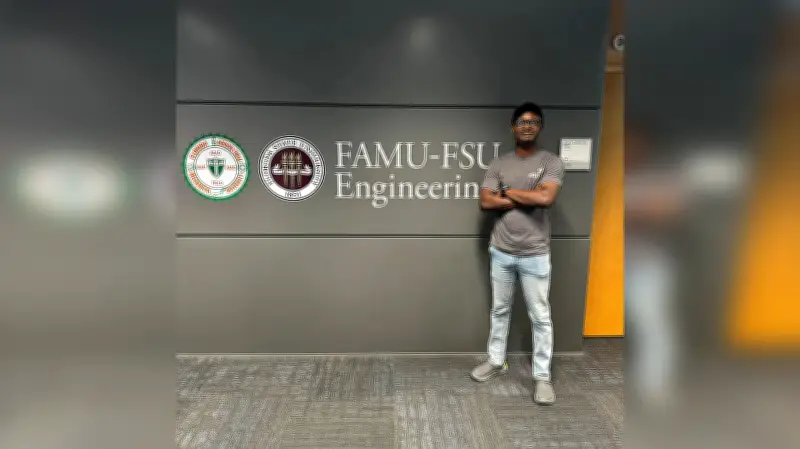
Bosah is a Ph.D candidate at the Florida A&M University–Florida State University College of Engineering in the United States. He was recognized for his contributions to advancing the understanding of durability in electrochemical energy systems, particularly fuel cells and electrolyzers. The Corning Endowed Doctoral Fellowship is a highly competitive program designed to support graduate students pursuing advanced studies in engineering and related disciplines, with emphasis on innovation, scientific merit, and practical applications.
Bosah began his academic journey at Chukwuemeka Odumegwu Ojukwu University in Anambra State, Nigeria, where he graduated with upper honors in Chemical Engineering. During his undergraduate studies, he completed a senior design project on chlorine production via catalytic oxidation of hydrogen chloride, modeled using ASPEN software. He said this experience shaped his research philosophy.
“That project taught me that rigorous modeling can reveal opportunities that laboratory intuition might overlook, and that elegant solutions often emerge at the intersection of theory and practice,” Bosah said.
Professional Experience and Research Focus
He later worked as a Process Engineer at Notore Chemical Industries for two years before proceeding to the United States for his doctoral studies. At FAMU-FSU, Bosah conducts research on membrane electrode assemblies in proton exchange membrane (PEM) fuel cells and electrolyzers. He focuses on how catalyst layers, ionomer networks, interfaces, and operating conditions influence long-term performance.
Working under Dr. Eric, his research explores the coupled chemomechanical mechanisms responsible for degradation in electrochemical systems, with the goal of improving durability and efficiency. His recent work on the use of distribution of relaxation times to guide equivalent circuit modeling of electrochemical impedance spectroscopy was published in the internationally renowned journal Electrochimica Acta.
Bosah’s laboratory is also collaborating with leading U.S.-based clean energy firms, pH Matter and Power to Hydrogen, to investigate catalyst application methods and their impact on long-term performance of fuel cells and electrolyzers.
Motivation and Future Goals
Speaking on his motivation, Bosah said his research is driven by a desire to address global energy challenges, particularly in underserved regions. “Growing up in Nigeria exposed me to the realities of energy poverty. Clean energy must not be a luxury. My work aims to make these technologies more reliable and accessible worldwide,” he said.
He added that his long-term goal is to pursue postdoctoral research and transition into academia, where he hopes to establish an interdisciplinary laboratory focused on fuel cell and electrolyzer durability, while mentoring the next generation of engineers. Bosah also plans to expand his rural STEM tutoring initiative through virtual platforms to support students in underserved communities.
He expressed optimism that the fellowship would provide opportunities to collaborate with industry scientists and contribute to advancements in clean hydrogen technologies and materials engineering. The fellowship offers recipients recognition for academic excellence, support for impactful research, and access to industry collaborations aligned with Corning Incorporated’s strategic focus areas.