In a significant move to address long-standing concerns in the education sector, the Federal Government has established a high-level committee tasked with overhauling the textbook approval and pricing system in Nigerian schools. The initiative, spearheaded by the Minister of Education, Dr. Tunji Alausa, aims to shield parents and students from exploitative practices and ensure access to quality, affordable learning materials.
Reforming a Flawed System
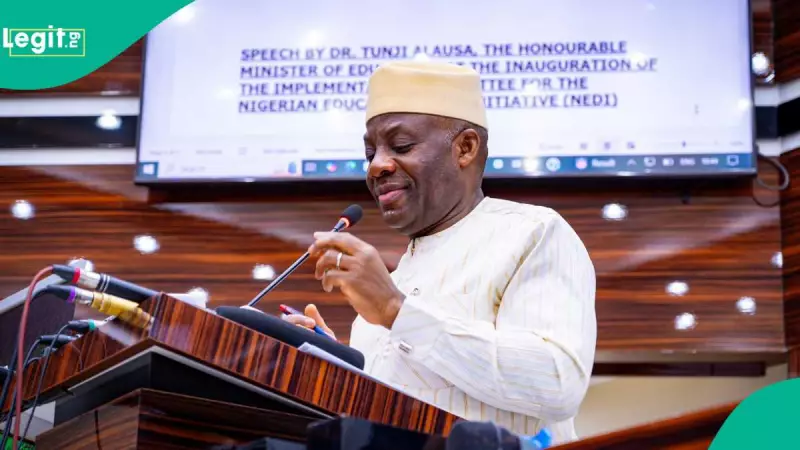
Dr. Alausa inaugurated the committee on Monday, January 19, 2026, in Abuja, highlighting critical failures in the existing framework. He pointed out that the current process lacks proper validation and ranking mechanisms for educational books before they receive approval. This deficiency has led to a chaotic situation where some subjects have as many as 50 different approved textbooks without clear benchmarks to distinguish their quality.
The minister explained that this system not only permits substandard materials to enter schools but also places an excessive financial burden on families. With no cap on numbers or transparent ranking, publishers and some schools have been able to engage in practices that drive up costs unnecessarily.
Mandate of the New Committee
The newly formed committee has been given a strategic and timely assignment to correct these anomalies. Its core responsibilities include:
- Critically reviewing the existing textbook approval frameworks.
- Recommending stronger assessment instruments and objective ranking systems.
- Defining clear, enforceable quality benchmarks for all educational materials.
- Proposing mechanisms to ensure genuine content improvement before new editions are approved.
Furthermore, the committee is expected to tackle specific pain points for Nigerian households. These include ensuring pricing transparency, controlling the frequent release of new editions, separating core textbooks from consumable workbooks, and ultimately protecting learners and parents from unnecessary financial strain.
Broader Context and Public Sentiment
This federal action aligns with growing concerns and similar measures at the state level. Recall that the Anambra State government recently outlawed the practice of writing assignments directly in textbooks, citing concerns over waste and sustainability to promote reusable materials and ease costs for families.
The public sentiment against exploitative practices in schools is also rising. As reported, a Nigerian mother recently voiced strong criticism against private school owners who compel students to do homework in textbooks, making them unusable for siblings and forcing repeat purchases. Authorities have also warned against costly graduation parties in nursery and primary schools, seen as another form of financial exploitation by some proprietors.
The inauguration of this committee under the President Bola Ahmed Tinubu-led administration signals a direct intervention to standardize educational content, restore sanity to the book procurement process, and make quality education more accessible by tackling one of its significant hidden costs.