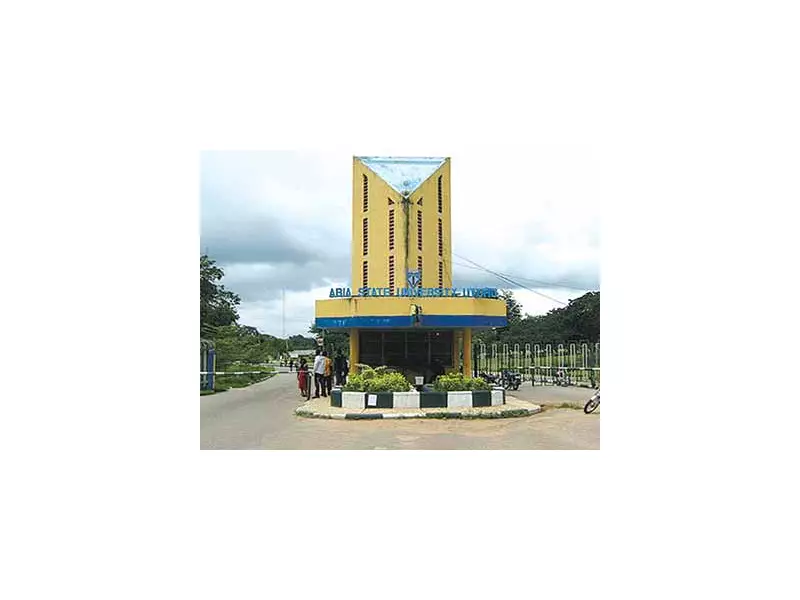
The Governing Council of Abia State University (ABSU) has taken a significant step towards inclusive governance by launching a series of Town Hall meetings with the entire university community. This initiative aims to foster dialogue and collaboratively address pressing issues affecting the institution.
A Forum for Open Dialogue and Problem-Solving
The inaugural meeting, held on Wednesday in the university's Senate chamber, brought together a broad spectrum of stakeholders. These included the management, the Senate, representatives from various staff unions, student leaders, and other key figures. The Pro-Chancellor and Chairman of the Governing Council, Rt Hon. Agwu U. Agwu, a former Speaker of the Abia State House of Assembly, stated that the council is student-centric. He outlined its vision to develop ABSU into an institution where knowledge from diverse fields is harnessed to solve national problems.
Agwu explained that the forum is designed to discuss matters of common interest that impact industrial peace and the university's advancement. It provides a platform to assess progress, identify unfinished tasks, and strategize on solutions. He expressed optimism that these meetings would become a regular avenue for analysing challenges and proffering actionable solutions.
Staff and Student Concerns Take Center Stage
During the open session, union representatives presented several concerns to the council. Comrades Chidi Mba (ASUU), Chika Onuoha (NASU), and Chudi Madukairo (SSANU) raised issues including outstanding salary claims, earned academic allowances, and check-off dues. They also appealed for the re-engagement of staff disengaged in 2023.
In a positive development, the Principal of the ABSU Staff School, Dr. Mrs. Christiana Eze, announced with elation that a complex eleven-year problem affecting the Demonstration and International Schools had been resolved. The staff have now been placed on their correct salary grades.
The Student Union leader, Comrade Ugonna Emma Ugoani, commended the council for instituting the inclusive forum. He described it as a previously missing but vital slot for free interaction between students and the university's leadership.
Council Acknowledges Myriad Challenges and Reports Progress
PC Agwu provided a candid overview of the numerous academic and administrative problems his council inherited upon its inauguration in November 2024. He listed challenges ranging from unmotivated students and staff, decaying infrastructure, and an unhealthy learning environment to insecurity, mounting salary arrears, indiscipline, and declining academic standards.
He reported that while some problems have been addressed, not all could be resolved simultaneously within the council's eleven months in office. The council's strategy has involved mobilizing support from the state government and securing cooperation from management and stakeholders.
Key achievements highlighted include:
- Setting up various committees to handle staff welfare and discipline.
- Interfacing with staff unions to sustain industrial harmony.
- Securing approval from the Governor and Visitor to the university, Dr. Alex Otti, for the recruitment of non-teaching staff to fill vacancies.
- Implementing the approval to recruit no fewer than 200 academic staff.
Agwu, however, noted that resolving all issues is contingent on the availability of funds.
Recognition and Inspection of Projects
The university used the occasion to honor 66 students who excelled at the maiden Abia State Tertiary Education Games in November. The athletes, who won a total of 42 medals (20 gold, 13 silver, 9 bronze), were rewarded with a sum of one million naira (N1m).
Following the town hall, the council inspected major ongoing projects on campus, namely a new students' hostel and the Faculty of Law building. The next day, Thursday, the council held its 159th regular meeting.
The Vice-Chancellor, Professor Ndukwe Okeudo, expressed the university's satisfaction with the leadership provided by the council under Agwu and the support from Governor Alex Otti as Visitor. This new town hall initiative marks a proactive approach by ABSU's governing body to steer the institution toward stability and growth through collective engagement.