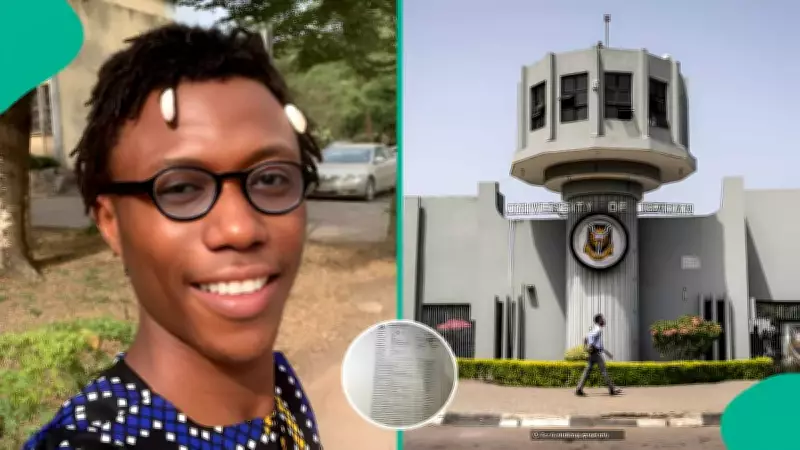
University of Ibadan Master's Student Opens Up on N186,400 School Fees and Personal Struggles
A master's student at the University of Ibadan (UI) has publicly shared his experience, including the payment of N186,400 as school fees and the significant challenges he faced while pursuing his degree. In an exclusive interview, Umoru Ayotunde, a student in the Cultural and Media Studies programme at the Institute of African Studies, provided a detailed account of his academic journey, financial burdens, and personal sacrifices.
Breakdown of School Fees and Additional Costs
Umoru Ayotunde explained that his total school fees for the first session amounted to N186,400, which covered various charges and levies. He initially paid N25,000 for the master's programme application form. However, he noted that additional payments later increased this total to approximately N196,000. For the second session, he is expected to pay around N200,000, bringing the overall cost for the two-year programme to nearly N400,000. He shared a receipt as proof of these payments, highlighting the financial demands of postgraduate education in Nigeria.
Academic and Personal Challenges Faced
The student described facing numerous obstacles during his studies. Academically, he struggled with research writing, citing issues such as inactive supervisors, insufficient materials, and the need for extensive reading. He experienced multiple rejections when submitting papers and abstracts, requiring rewrites based on feedback. On a personal level, Umoru revealed that his family and friends opposed his decision to pursue the master's programme, urging him to work instead to support his family as the first child. This external pressure, combined with financial difficulties, created a stressful environment, but he remained determined to complete his degree.
Self-Funding Through Multiple Jobs
To finance his education, Umoru Ayotunde took on various jobs, receiving minimal support from his parents. He worked as a pharmaceutical sales representative, marketing oncology and prostate drugs across hospitals and pharmacies, while also serving as the course representative for his department. Balancing these roles was challenging, as he often had to attend classes remotely while traveling for work. Eventually, the academic pressure forced him to resign from the sales job. He then focused on writing research projects and assignments for classmates, who paid him for these services, and relied on support from friends to cover his expenses.
Advice for Prospective Students
In his advice to others considering a master's at UI, Umoru emphasized the importance of readiness for the rigours of postgraduate study. He encouraged students to pursue education if they have a genuine passion for learning, despite economic challenges in Nigeria. Regarding fees, he suggested that individuals should start their programmes if they have some initial funds, as financial solutions may emerge along the way. He stressed that education is valuable and rewarding, particularly when aligned with personal interests and career goals.
Role as Course Representative and Programme Insights
As the course representative for Cultural and Media Studies, Umoru adjusted timetables to accommodate both his academic and work commitments. He found the programme transformative, enhancing his understanding of media analysis and cultural studies. Despite the difficulties, he described the experience as fun and enriching, noting that it changed his approach to life and learning. His story sheds light on the realities faced by many Nigerian students striving for higher education amid financial and social constraints.