The World Bank has given a significant boost to Nigeria's efforts to build a skilled workforce in critical sectors by approving additional financing for a key national project. The move follows a highly positive review of the Sustainable Procurement, Environmental and Social Standards Enhancement (SPESSE) project, which has been rated as performing satisfactorily.
A Project Addressing Critical National Gaps
Supported by the Federal Government of Nigeria, the World Bank, and the National Universities Commission (NUC), the SPESSE project was established to solve a persistent problem. For years, both the public and private sectors have struggled with a severe shortage of qualified professionals in the fields of procurement, environmental safeguards, and social standards. The project created structured academic and professional pathways to fill this void.
Its implementation is anchored on a network of six Centres of Excellence located across Nigeria's geopolitical zones. These centres are hosted by Ahmadu Bello University, Zaria; Abubakar Tafawa Balewa University, Bauchi; Federal University of Agriculture, Makurdi; Federal University of Technology, Owerri; University of Benin; and the University of Lagos.
Exceeding Targets and Earning Praise
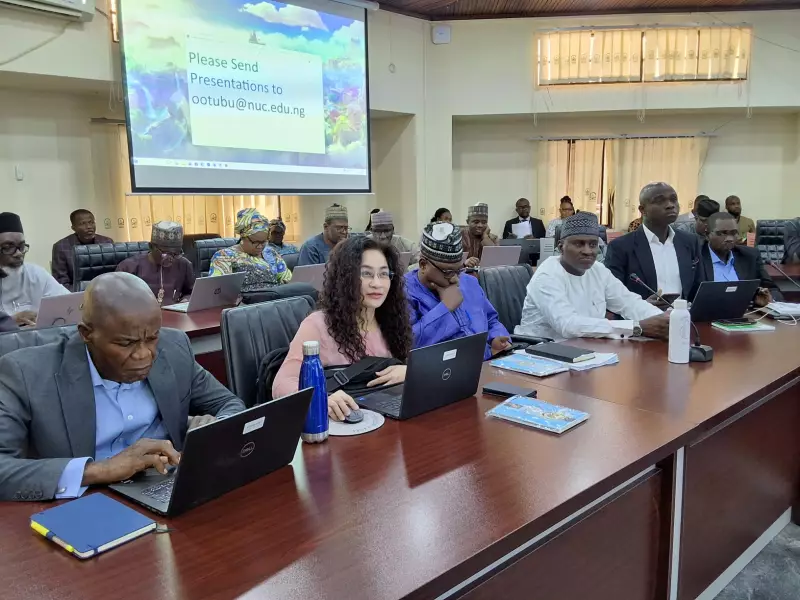
The decision for additional funding was cemented during a recent World Bank Implementation Support Mission (ISM) led by Task Team Leader Ishtiak Siddique and the National Project Coordinator, Dr. Joshua Atah of the NUC. The mission's review found remarkable progress.
The project's Aide Memoire confirmed that all four of its Project Development Objective (PDO) indicators have been fully achieved. Furthermore, an independent verification for the first half of 2025 showed that 12 out of 18 Performance-Based Conditions (PBCs) have been met or exceeded. Five more PBCs are on track for completion by June 30, 2026.
This strong performance is rare for donor-funded programmes at this stage, a point highlighted by Mr. Stanley Nyeso George, Director of the International Economic Relations Department at the Federal Ministry of Finance. He and other stakeholders commended the NUC leadership and Dr. Atah for driving the project's success.
Tangible Results and Widespread Impact
The SPESSE project has delivered concrete outcomes. One of its landmark achievements is the successful administration of professional certification examinations. Between April and June 2025, online portals facilitated exams that produced 3,429 successful candidates. The breakdown includes:
- 2,121 professionals certified in procurement.
- 855 qualified in social safeguards.
- 453 certified in environmental safeguards.
These certifications are just the tip of the iceberg. Overall, more than 85,000 participants have benefited from various SPESSE training programmes across the six centres. The project maintained steady momentum even despite early disruptions caused by the COVID-19 pandemic.
In a major step towards sustainability, the Bureau of Public Procurement (BPP) has initiated plans to make SPESSE courses mandatory for the professional certification of all procurement officers. The Director-General of the BPP, Dr. Adebowale Adedokun, disclosed that the proposal has received preliminary approval from the Head of Service and will be part of a revised circular for the procurement cadre.
The newly approved Additional Financing will extend the project's lifespan until June 2026. This funding is expected to help deepen procurement reforms, expand online training platforms, and strengthen institutional capacity. The ultimate goal, as emphasized by stakeholders, is to translate these training gains into tangible improvements in transparency, efficiency, and inclusiveness within Nigeria's procurement system and broader governance framework.