What does it truly mean to capture a human likeness? Is it different when using sacred earth from a ritual workshop versus lines of code in a Silicon Valley lab? This question lies at the heart of a powerful exploration by Oriiz Onuwaje, connecting the ancient artistic mastery of Ifè to the modern complexities of artificial intelligence.
The Sacred Craft of Ifè: Portraits That Asserted Presence
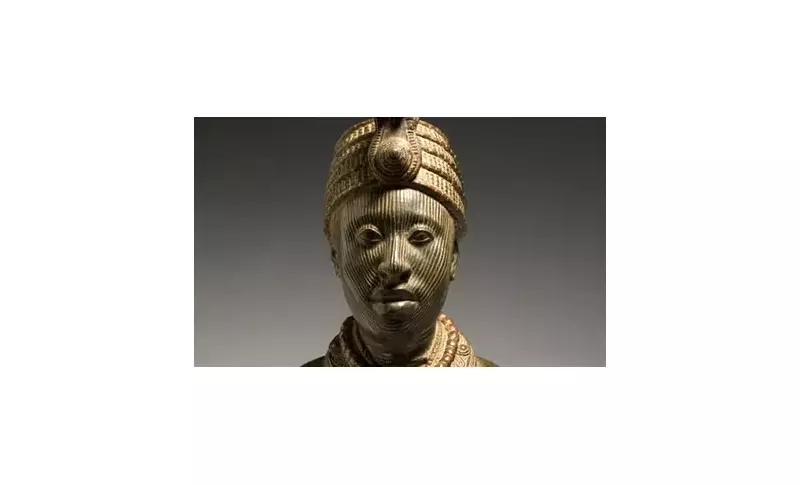
Over a thousand years ago, in what is now Nigeria, artists in the kingdom of Ifè created sculpted portraits in bronze and terracotta of such stunning realism that they confounded early European observers. These were not simple effigies; they were profound assertions of presence and identity. Crafted between the 12th and 15th centuries, these works captured not just facial features but the essence of the individual—their soul, dignity, and humanity.
Imagine a terracotta head, smaller than a clenched fist. The sculptor rendered fine lines for hair, full lips, and eyes possessing a calm authority with such meticulous care that the figure feels alive, a moment frozen in time. This naturalism was deliberate. In a society where sacred kingship bridged the human and divine, a portrait embodied spiritual presence. It made rulers and ancestors tangible, connecting the living to lineage and legitimizing power. To be depicted in such detail meant to be seen, acknowledged, and remembered within the community's worldview.
Algorithmic Eyes: When AI Attempts to Capture Likeness
Today, artificial intelligence pursues a parallel goal: to read, classify, and replicate the human face. Systems powered by machine learning algorithms analyze expressions, verify identities, and even generate synthetic faces. Yet, the process of creating a likeness—whether from sacred clay or complex code—is never neutral. It is loaded with cultural, political, and ethical weight.
The stakes, however, have dramatically shifted. Where Ifè artists worked with ritual intention, much of today's AI is deployed for surveillance, commerce, and social control. An error in an ancient portrait might alter a historical narrative, but a flaw in a facial recognition system can threaten a person's freedom, opportunity, or safety.
The Politics of Being Seen: From Inclusion to Erasure
Portraiture has always been political. In Ifè, bronze and terracotta faces affirmed belonging, ancestry, and authority, securing one's place in the social fabric. In contrast, the "eyes" of many AI systems are trained on datasets that frequently exclude or misrepresent African faces, leading to a digital form of erasure.
Research consistently shows that facial recognition technology is significantly more likely to misidentify people of African descent compared to those of European heritage. This is not merely a technical glitch; it is a modern reverberation of historical exclusion. When an algorithm fails to recognize you, the systems it powers effectively deny your full humanity and right to be seen.
Materials, Memory, and Hidden Bias
The materials used tell their own stories. Ifè artists shaped earth, metal, and fire with their hands to forge enduring vessels of memory, treating their mediums as sacred. Modern engineers build AI from code, silicon, and electricity—invisible yet immensely powerful materials.
A dataset is never a neutral snapshot. It reflects existing power structures, amplifying certain narratives while silencing others. Consequently, an algorithm often inherits the biases and blind spots of its creators. The foundation of much AI is not bronze but hidden prejudice, which, if unchecked, produces likenesses that reinforce societal unfairness.
Reclaiming and Transforming: AI as a Tool for African Futures
Despite the perils, this new medium holds transformative potential. Just as Ifè portraits preserved identity across centuries, contemporary artists across Africa and its diaspora are using AI to reinterpret traditional forms, envision ancestors, and challenge colonial archives.
In a powerful fusion of past and future, Afrofuturist creators employ generative models to produce portraits that blend Ifè's naturalism with imaginative new styles—skin gleaming like liquid metal, headdresses with geometric patterns, faces containing whole worlds. These works defiantly reject the idea that African innovation is confined to the past. They carry Ifè's legacy of realism forward, proving that technological creativity is a living, evolving tradition.
The Enduring Question: Who Owns a Likeness?
The core struggle remains one of ownership and agency. In ancient Ifè, the authority over likeness was communal, rooted in shared cultural meaning. Today, that power often rests with corporations and governments. The fight for a fair and just likeness is, therefore, a fight for self-determination, recognition, and the fundamental right to exist and be seen accurately.
From the calm, striking faces of Ifè to the digital visages generated by neural networks, an unbroken thread connects the human desire to preserve identity. It urges us to approach every likeness—whether molded in clay or coded in silicon—with intention, integrity, and an unwavering aim: that representation always confers dignity, never erasure.
Oriiz Onuwaje, a Griot, Curator, and Culture Architect, makes this 8000-year journey of knowledge accessible, linking deep history to pressing contemporary questions.