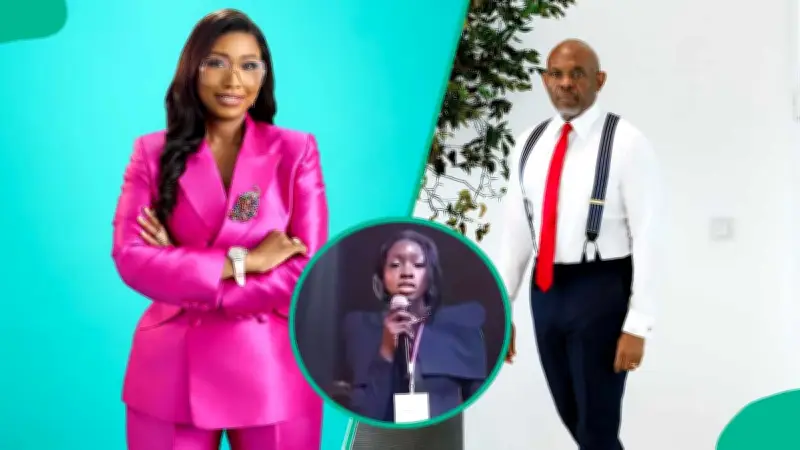
Media personality Morayo Brown has weighed in on the viral video of billionaire Tony Elumelu and a graduate trainee, attributing the controversy to what she calls an uncritical adoption of Western professional culture by Nigeria's middle class. In an Instagram reel posted on Friday, 21 August 2026, Brown argued the young woman was likely influenced by workplace norms imported from abroad without being filtered through Nigerian values.
Brown Criticises Middle Class for Cultural Erosion
Brown contended that Nigerians who travel abroad or work in international corporate environments often return with practices absorbed wholesale, without considering their appropriateness in the Nigerian cultural context. She illustrated her point with a personal story about her older sister returning from the UK and asking to be called by her first name, a habit that was eventually corrected. The talk show host described this as a predictable but correctable phase many Nigerians go through.
She also recalled an incident from her time on Your View, where a fellow panellist addressed a guest, Honourable Abike, by her first name out of journalistic convention. Brown said she understood the professional reasoning but felt it clashed with local cultural expectations around respect for elders and authority figures.
New-Generation Banks 'Started the Nonsense'
Brown was pointed in identifying who she believes enabled this cultural shift, saying new-generation banks and Silicon Valley-influenced companies operating in Nigeria opened the door to stripping away traditional forms of deference in the name of modernity. She argued that unlike countries such as India, Japan, and France, which maintain their cultural identities even within multinational corporate settings, Nigeria has largely allowed foreign workplace cultures to overwrite local ones without resistance.
When Brown launched The Morayo Show, she deliberately called veteran broadcaster Agatha Amata "Auntie Agatha" despite being corrected on air. She held firm, explaining that on her own platform, cultural respect takes precedence over media convention.
Fans React to Brown's Take
On the graduate trainee specifically, Brown said she sincerely doubted the young woman acted out of disrespect, suggesting instead that someone within that professional environment had taught her that informal address was the accepted norm. "Professionalism does not have to mean abandoning culture. Modernity does not have to mean disrespect," Brown said.
Fans largely agreed with her perspective. @damilolaogunsi wrote: "Well spoken, Sis. No matter the trends we import from the West, it must still be subject to the culture of our clime. And you're right about Nigerians and wanting to play woke for classism. The Japanese don't forsake their cultures, the Chinese don't, the French won't, Italians will never, but it is always Black Africa." @hrm_queentobi responded: "Very well said ma, saying 'Aunty Agatha' often times when I courtesy and say ma to some people, some people tell me 'you don't have to' I'm like, that's my upbringing. I simply find it hard to call anyone 5yrs older than me by name."
@seyidanielogundipe commented: "The fact she knows that He is the Owner of the Bank should be enough for her. She doesn't even need to call his name. Just use SIR!" @jimmytjfawehinmi said: "Well spoken, Morayo, for me is her body language and not even apologising, please let leave class out of this conversation. All she could have said is Mr. T. Shikena." @tosinolarinde wrote: "Well said. At this point, my main concern is how she's feeling and the effect this may have on her mental wellbeing. Whoever released that clip has been extremely irresponsible. I really hope she has a strong support system around her and isn't facing this alone."
Sowore Also Reacts to the Saga
Legit.ng had reported that human rights activist and politician Omoyele Sowore weighed in on the controversy in a post on X, directing attention to Elumelu and the broader issue of how power and wealth influence relationships in Nigerian society. Sowore's comments generated further debate, with Nigerians divided over whether he was right to call out the situation or was simply seeking attention from a viral topic.
The discussion also expanded beyond the individuals involved, raising questions about workplace hierarchy, professional etiquette and whether social status should determine how people interact with one another.