As Nigeria prepares for the 2027 general elections, a prominent academic has highlighted the emerging political trends that provide rich material for creative writers to address the nation's democratic challenges.
The Playwright as Political Prophet
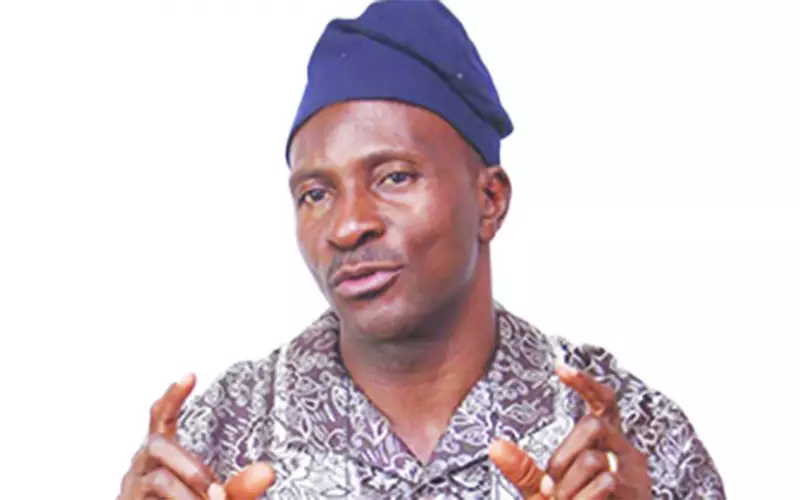
Professor Emmy Idegu, Dean of the Faculty of Arts, Social and Management Sciences at Hensard University in Toru-Orua, Bayelsa State, believes the country's gradual movement toward a one-party system represents what he calls "an avoidable tragedy" that playwrights should lampoon while offering solutions.
Drawing from his personal experience, Professor Idegu revealed how his 2022 play "Beloved Atanegoma Kingdom" remarkably predicted elements of the 2023 presidential elections. "Everything about the election took place in the dark in my play, and if you can remember, the 2023 presidential election result was announced at night," he noted during an interview with Bridget Chiedu Onochie.
The professor emphasized the prophetic nature of creative writing, pointing to specific dialogues in his play where characters questioned whether the system would allow the best candidate to emerge - a concern that resonated deeply with the actual electoral process.
The Enduring Relevance of Playwrights
Despite the apparent decline in live theatre culture, Professor Idegu maintains that playwrights continue to play vital roles in Nigeria's socio-political development. He traced the significance of playwrights back to Greek times and highlighted Nigeria's first Nobel Prize, which came through literature and theatre rather than sciences.
"The playwright has occupied a very sensitive, dynamic and powerful position even from the Greek period till date," he asserted, noting the multiple platforms available to modern playwrights including stage productions, radio scripts, and screenwriting for the booming Nollywood industry.
The academic also highlighted the economic impact of creative industries, pointing out that Nollywood has become the second largest film producer globally and contributes significantly to Nigeria's Gross Domestic Product while providing substantial employment opportunities.
Addressing Contemporary Challenges
Professor Idegu acknowledged the challenges facing theatre arts in an era dominated by science and technology, but remained optimistic about the discipline's adaptability. He suggested that while changing nomenclature might help attract students, the essential content of theatre education remains valuable regardless of name.
Regarding technological advancements, particularly Artificial Intelligence, the professor expressed cautious optimism. "AI is here to assist but one way that we can curb the excesses of its influence on playwriting is to give students topics that are indigenous," he advised, suggesting assignments based on local festivals or recent political events that AI hasn't fully captured.
On the state of live productions, Professor Idegu acknowledged some decline but emphasized that stage performances continue within academic institutions across Nigeria. He stressed that live theatre experience remains crucial for developing complete actors, noting that "anybody involved in film that didn't have the experience on stage is an incomplete metamorphosis of an actor."
The professor also introduced his concept of "Creative Conscience," emphasizing the playwright's responsibility to maintain integrity rather than becoming a mouthpiece for powerful interests. He elaborated on his theoretical framework called Experiential Testimonial Creativity (ETC), which distinguishes between writing about collective experiences versus personal experiences.
As Nigeria approaches another electoral cycle, Professor Idegu's insights highlight the continued importance of creative writers in shaping political discourse and holding power accountable, proving that the playwright's pen remains mightier than perceived in our digital age.