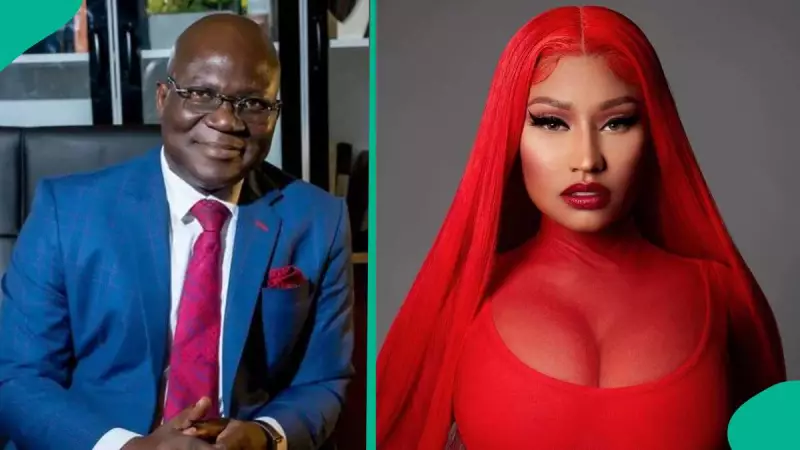
Nigerian media personality Reuben Abati has sparked a heated debate after publicly challenging American rapper Nicki Minaj over her planned United Nations speech about alleged Christian persecution in Nigeria.
The former presidential aide strongly criticized Minaj's involvement in the sensitive matter during a recent appearance on Arise News, suggesting the Trinidad-born artist should focus on her music career instead of commenting on Nigerian affairs.
Abati's Strong Opposition to Foreign Celebrity Involvement
Reuben Abati did not mince words when addressing Nicki Minaj's scheduled appearance at the United Nations alongside U.S. Ambassador Mike Waltz. The broadcaster questioned the rapper's qualifications to speak on Nigeria's complex religious landscape.
"Nicki Minaj is a rapper from Port of Spain, Trinidad and Tobago," Abati stated firmly. "She should concentrate on her Anaconda music, her rap career and her Barbs."
Abati expressed skepticism about Minaj's motivations, suggesting that her sudden interest in Nigeria's religious issues might be more about attracting attention than genuine concern. He emphasized that the rapper was stepping into matters she likely understands poorly.
Proposing a Nigerian Counter-Response
Rather than allowing foreign celebrities to dominate the narrative about Nigeria, Abati proposed an assertive counter-strategy. He recommended that Nigeria deploy its own entertainment heavyweight to present an alternative perspective.
"If I were to advise, when Nicki Minaj is speaking, Nigeria should put Tiwa Savage on national television to express her patriotic opinions," Abati suggested.
The media personality argued that in today's global landscape, where celebrity influence often rivals political authority, nations must strategically use their cultural ambassadors. He stressed that Nigeria possesses its own influential figures who can defend the country's image internationally.
The Changing Face of Global Diplomacy
Abati highlighted the evolving nature of international relations, noting that diplomatic discussions are no longer confined to traditional government channels. The power of entertainment, social media, and celebrity culture now significantly shapes how countries are perceived worldwide.
"We also have influencers here," Abati emphasized. "We can have Tiwa Savage or others defend their country, whatever their beliefs are."
This perspective reflects growing recognition of soft power in international affairs, where cultural figures can influence public opinion as effectively as political leaders. Abati warned that Nigeria must adapt to this new reality and be prepared to engage on multiple fronts.
Public Reaction and Social Media Response
The debate has generated significant discussion on social media platforms, with many Nigerians expressing mixed reactions to Abati's comments.
One social media user, @iOccupyNigeria, questioned the comparison between Minaj and Tiwa Savage's global influence: "If Nigeria really want match Nicki influence for narrative control, na Davido, Burna Boy or Wizkid you call — people wey dey sell out arenas worldwide. Tiwa no be that calibre."
Another user, @FaotuHappy, expressed disappointment in Abati's stance: "I never expected Reuben, a journalist who claims to defend free speech, to say this. He cannot compare Nicki and Tiwa in terms of fame."
The discussion has expanded beyond the initial controversy to address broader questions about celebrity activism, national sovereignty, and who has the right to speak on behalf of nations facing complex challenges.
Nicki Minaj's planned UN speech comes amid ongoing international attention on Nigeria's religious dynamics. The American rapper had previously shown support for Nigerian artists, including Davido, whom she acknowledged during a recent performance in Portugal.
As the November 2025 UN meeting approaches, the conversation sparked by Abati's comments continues to evolve, highlighting the intersection of celebrity culture, international diplomacy, and national representation in the digital age.