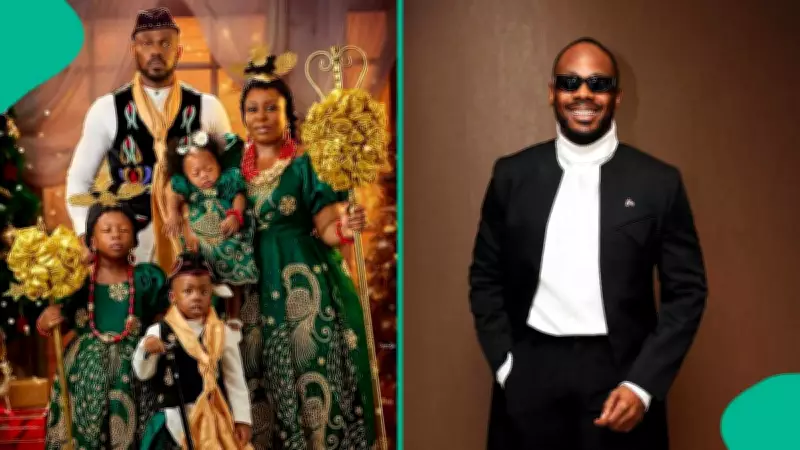
Nollywood Actor's Family Love Hierarchy Sparks Widespread Debate
Nigerian actor Daniel Etim-Effiong has generated significant online discourse after openly discussing his family love priorities during a recent interview. The entertainment figure made headlines when he revealed that he loves his wife more than his children, a statement that has divided opinions across social media platforms.
Candid Admission About Marital and Parental Love
During a conversation about family relationships, Etim-Effiong was asked whether the love he feels for his wife represents the highest form of affection he has experienced, particularly when compared to his feelings for his children. The actor responded with surprising candor, stating unequivocally that his wife occupies the primary position in his emotional hierarchy.
"I would say yes. I don't think I've ever loved my children... I love my wife more than I love my children," Etim-Effiong declared during the discussion. This straightforward admission has since circulated widely across Nigerian social media, prompting intense conversations about traditional family dynamics and modern relationship values.
Mixed Reactions Flood Social Media Platforms
The actor's comments have elicited diverse responses from netizens, with many expressing strong opinions about his perspective on marriage and parenting. Some users have defended Etim-Effiong's position, arguing that maintaining a strong marital bond creates a stable foundation for the entire family unit.
One social media user commented, "Very true, my dad keeps saying he loves our mom more than he loves us. He always emphasises that he knew our mum before he knew us so we shouldn't expect him to love us more." This sentiment reflects a growing acceptance of prioritizing spousal relationships within certain family structures.
However, other reactions have been more critical, with some questioning whether such open declarations might negatively impact children's emotional security. The debate has expanded to include broader discussions about gender dynamics in parenting, with one user noting, "Men love their wives better than their children and women love their children more than they love their husbands."
Context of Previous Family-Related Controversies
This is not the first time the Etim-Effiong family has found themselves at the center of public discussion. Earlier this year, Toyosi Etim-Effiong, the actor's wife, expressed frustration about how her interview with Toke Makinwa was portrayed by various media outlets. She specifically criticized Instablog for what she described as misleading coverage that resulted in negative online reactions.
The couple, who have been married for eight years, has maintained a relatively public presence regarding their family life. Toyosi previously advised her followers to watch the complete interview on Toke Makinwa's YouTube channel to understand her authentic perspective on marriage and family matters.
Broader Implications for Celebrity Family Dynamics
The intense reaction to Etim-Effiong's comments highlights the ongoing public fascination with celebrity family relationships in Nigeria. As social media continues to provide platforms for personal revelations, public figures increasingly find their private beliefs subjected to widespread scrutiny and debate.
This incident also reflects changing attitudes toward traditional family structures in contemporary Nigerian society. While some applaud the actor's honesty about his emotional priorities, others question whether such transparency serves the best interests of family privacy and children's wellbeing.
The conversation has expanded beyond the specific case to address broader questions about:
- The appropriate balance between spousal and parental love
- The impact of public declarations on family relationships
- Cultural expectations regarding family hierarchy in Nigerian society
- The role of social media in amplifying personal family matters
As the discussion continues to evolve online, it remains clear that Daniel Etim-Effiong's candid remarks have touched upon deeply held beliefs about family, marriage, and parenting in contemporary Nigeria.