X User's Genotype Puzzle: 'My Dad is AA and My Mom is AA but I'm AS'
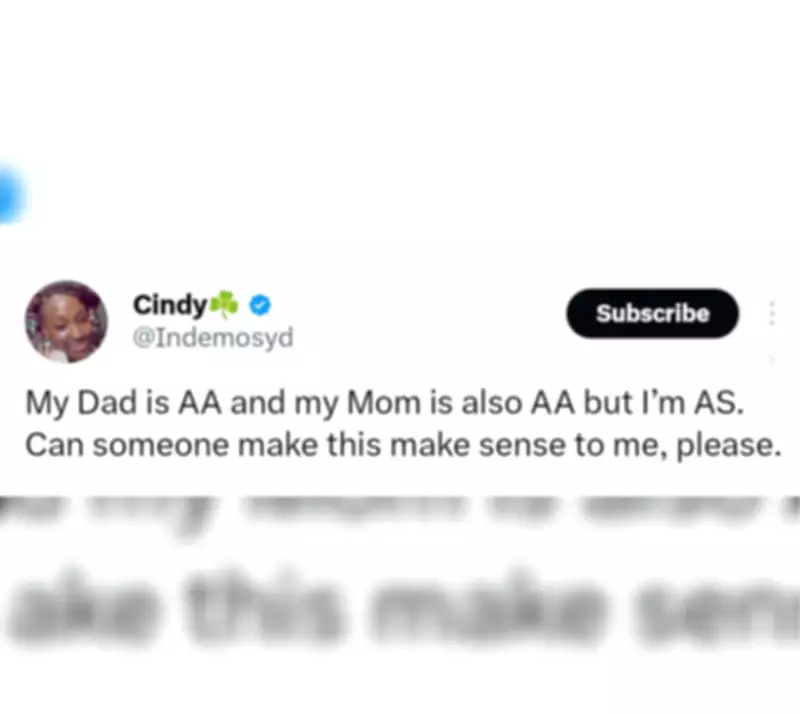
An X user has triggered a widespread online conversation after expressing confusion about their genotype results. In a post that quickly gained traction, the user wrote: "My Dad is AA and my Mom is also AA but I'm AS. Can someone make this make sense to me, please." This simple yet perplexing statement has drawn numerous reactions from other users attempting to clarify the principles of genotype inheritance.
Understanding Basic Genotype Inheritance
Many respondents pointed to fundamental genetics, explaining that if both parents are genuinely AA, their child should typically inherit the AA genotype. This is because each parent can only pass on the "A" gene, making it biologically expected for the offspring to be AA as well. The scenario described by the user contradicts standard Mendelian inheritance patterns, where the AS genotype requires one parent to contribute an "S" gene.
Possible Explanations for the Discrepancy
Several theories emerged from the discussion. Some users suggested that the confusion might stem from a testing error in the original genotype assessments. They noted that inaccurate or outdated tests could have mislabeled one or both parents' genotypes. Others proposed that one parent might not have been accurately tested, perhaps due to laboratory mistakes or misinterpretation of results.
Recommendations for ClarificationIn response to the user's dilemma, many advised taking practical steps to resolve the confusion. Key recommendations included:
- Repeating the genotype test at a reputable and reliable laboratory to confirm the current result.
- Encouraging both parents to undergo retesting to ensure accuracy in their genotype classifications.
- Consulting with a genetic counselor or medical professional for expert guidance on inheritance patterns and potential anomalies.
Broader Implications and Online Engagement
The post has highlighted public interest and sometimes misunderstanding of genetic concepts. It has sparked debates not only about genotype inheritance but also about the reliability of medical testing and the importance of accurate health information. The online community's engagement shows a collective effort to educate and support individuals facing similar genetic queries.
This incident underscores the need for clear communication in health-related matters and the value of community input in addressing personal health concerns. As discussions continue, it serves as a reminder of the complexities in genetics and the critical role of precise testing in understanding one's health profile.