Nigeria's Sickle Cell Epidemic Worsened by Inaccurate Lab Results
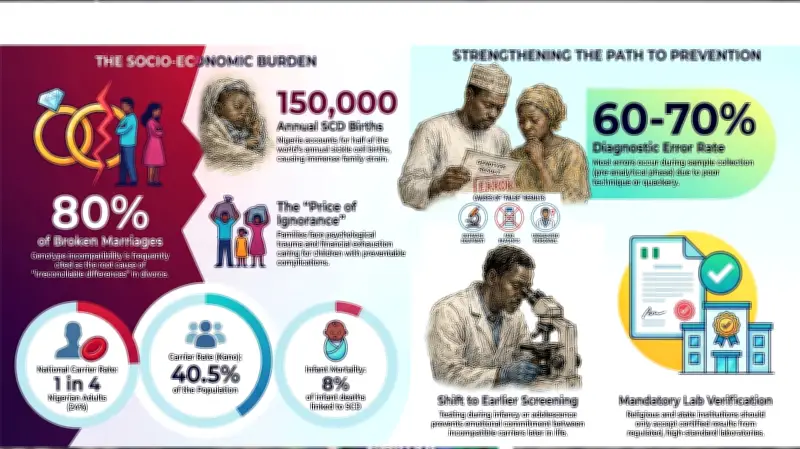
As the world marks World Sickle Cell Day, Nigeria's health community is raising alarm over the high rate of inaccurate and falsified genotype test results, which are exacerbating the country's already severe sickle cell disease (SCD) burden. With an estimated 150,000 babies born with SCD annually and 40 million Nigerians carrying the sickle cell trait, the nation ranks highest globally in SCD prevalence.
Stakeholders report that despite increased education and awareness about genotype pairing, many couples continue to have children with SCD due to diagnostic failures. They attribute this to outdated testing methods, lack of expertise, fraudulent practices, and individuals bribing technicians to alter results.
Personal Tragedies Highlight the Crisis
Kawthar Abdulazeez, a mother of two, is considering legal action against a laboratory that incorrectly reported her genotype as AA 13 years ago. Married to an AS partner based on that result, both daughters were later diagnosed with SS. Another case involves Adewole, who was initially told he had AS but later discovered he had SC, allowing him to make informed reproductive choices.
Mrs. Korie narrowly avoided having children with SCD after a second test corrected her initial AA result to AS. She considers herself fortunate to have three healthy children.
Expert Opinions on the Root Causes
Professor Aisha Kuliya-Gwarzo, Clinical Director of Haematology at AMCE Abuja, emphasises that SCD is 100% preventable through informed reproductive choices. She notes that limited access to reliable screening, cultural influences, and lack of premarital counselling contribute to the high incidence.
Professor Obiageli Nnodu, Director of CESRTA at the University of Abuja, points out that poor quality assurance in laboratories is a key driver of the SCD burden. She advocates for universal newborn screening and testing at various life stages.
Dr. Casimir Ifeanyi, President of AMLSN, highlights that Nigeria has become a dumping ground for substandard testing materials. He notes that of over 30,000 laboratories, fewer than 10% are regulated by MLSCN, and many lack qualified staff.
Dr. Annette Akinsete, Coordinator of the Sickle Cell Foundation, laments that most patients pay out of pocket for treatment, which is unsustainable. She calls for stronger regulation of laboratories and integration of SCD care into health insurance schemes.
Call to Action
Experts urge the government to strengthen laboratory oversight, standardise testing protocols, and launch targeted awareness campaigns. They also recommend repeat testing at certified centres and premarital genetic counselling to prevent further tragedies.