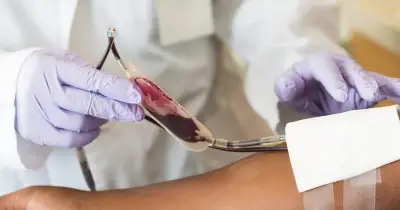
The Lagos University Teaching Hospital (LUTH) has unveiled the IH-500 Fully Automated Immunohematology System, a cutting-edge blood-testing platform that promises to transform transfusion safety in Nigeria. The machine, the second of its kind in West Africa, was introduced during World Blood Donor Day 2026 activities at the hospital's Idi-Araba campus.
Precision and Speed in Blood Testing
The IH-500 system performs ABO grouping, Rh typing, antibody screening, and crossmatching with high precision using column agglutination technology and high-resolution camera-based reading. It can process up to 96 samples simultaneously, delivering results in under 45 minutes. The system digitally records every result, creating an audit trail that strengthens quality control and reduces human error.
According to LUTH's Chief Medical Director, Prof. Wasiu Adeyemo, the machine represents a decisive leap in transfusion safety. He emphasized that safe blood should depend on science, not chance. The hospital requires between 20,000 and 25,000 units of blood annually for obstetric emergencies, accident victims, cancer patients, and children with blood disorders.
Building a Culture of Voluntary Donation
Since January 2025, LUTH has recruited over 2,500 new voluntary donors through partnerships with corporations, faith-based groups, and tertiary institutions. The hospital aims to increase donor retention from 10% to 60% within two years through a loyalty program encouraging repeat donations.
Associate Professor and Consultant Haematologist, Dr. Ann Ogbenna, stressed the importance of the invisible infrastructure behind transfusion safety. In her presentation titled "From Arm to Vein: Without a Misstep — Precision Transfusion Testing in the Modern Era," she described every transfusion as an "invisible chain of critical checks" where a gift can become a danger without accuracy.
Advanced Automation Features
The IH-500 can process 120 to 200 samples per hour, read reactions at 256 grayscale levels, and operate continuously. Samples are barcoded at collection, records are retrieved through the laboratory information system, and reactions are interpreted digitally. Dr. Ogbenna called this the "precision trifecta" of modern transfusion science: volume, image, and timing.
The system's ability to detect Weak D antigens reliably reduces the risk of misclassification. In trauma care, type-and-screen time can drop to under 15 minutes, compared to 30-45 minutes manually. Prof. Titilope Adeyemo, Head of Haematology and Blood Transfusion, noted that the machine symbolizes world-class care built into everyday public healthcare.
Challenges and Future Outlook
While the IH-500 is a significant advancement, its sustainability depends on maintenance, trained personnel, consumables, and steady funding. LUTH appeals to government, corporations, philanthropists, and the media for support. Prof. Wasiu Adeyemo stated, "The significance of the IH-500 machine at LUTH is not only about fast delivery, it also embodies a larger ambition: to place science more firmly between danger and the patient."