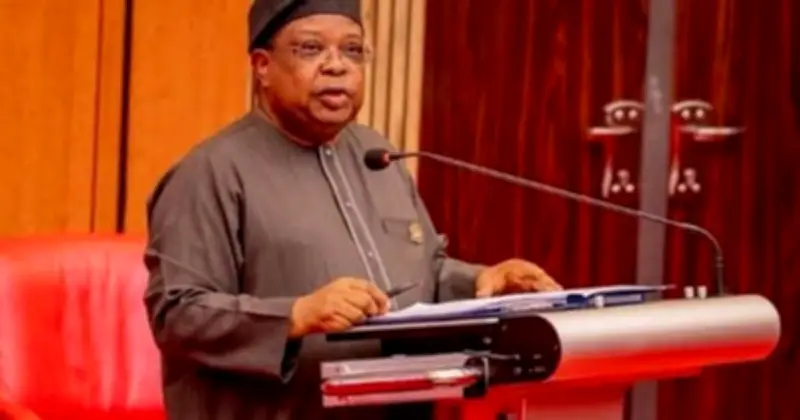
Nigeria's Minister of Power, Joseph Tegbe, has stated that the Federal Government cannot continue to cover electricity tariff shortfalls indefinitely while also aiming to provide power to every Nigerian. Speaking at an energy conference organized by the Harvard Business School Association of Nigeria in Lagos on Friday, October 9, Tegbe highlighted the financial strain on the sector and the urgent need for market reforms.
“We can’t keep covering tariff shortfalls and think we’ll give power to every Nigerian,” the minister said. He argued that the government must move away from a market structure where public funds continually bridge the gap between electricity costs and revenue collected from customers. Instead, he proposed greater use of bilateral electricity agreements, allowing power producers to supply distribution companies or customers under agreed commercial terms.
Shifting Stance on Subsidy Removal
Tegbe’s comments add a new layer to the ongoing debate over electricity subsidies, especially given his previous statements on the matter. On July 31, he announced plans to phase out electricity subsidy payments from 2027 to address the sector’s growing debts and establish a sustainable funding structure. “I promise you, next year, by God’s grace, we will put a stop to this so-called subsidy in the power sector,” he said during a media interaction, while assuring Nigerians that ending the subsidy would not mean depriving consumers of electricity or immediately increasing their bills.
However, on September 21, Tegbe appeared to distance himself from that position, denying reports that the government intended to withdraw the subsidy the following year. He insisted there was no plan to remove the subsidy or increase tariffs, and later reiterated that the government had no immediate plans to raise electricity tariffs. These conflicting statements have left questions about the government’s precise timeline and approach to subsidy reform, though his latest remarks indicate a desire to reduce financial exposure to tariff shortfalls without announcing a definitive end to subsidies in 2027.
Mixed Signals on Power Supply Improvements
The minister’s comments come weeks after he drew attention for saying some Nigerians had asked him to slow down because their freezers were freezing due to improved power supply. Speaking at the commissioning of a solar hybrid power project at Yakubu Gowon University (formerly the University of Abuja) on September 16, Tegbe noted that some areas with prolonged outages were now receiving up to 18 hours of electricity daily. “Some areas called me to say, look, I should slow down, that everything in their freezer is freezing. That is what freezer is meant to do. Let it freeze the food that needs to be frozen,” he said.
While the remark was presented as positive feedback, it was not evidence of nationwide reliability, and the minister has acknowledged that many Nigerians still face unreliable power. In a statement on September 22, Tegbe said he understood the frustration of consumers who had not experienced improvements, adding that he would not pretend the sector’s problems were resolved.
Debt, Metering, and Bilateral Agreements
The challenges remain significant. Tegbe cited poor revenue collection, inadequate metering, mounting debts to power generation companies, and losses across the electricity value chain. He put the outstanding debt to generation companies at approximately ₦3.3 trillion, with plans to complete payments by 2027. He also revealed a metering gap of about 40 per cent, with intentions to deploy 7.5 million meters over the next two to three years.
The proposed shift toward bilateral agreements aims to make electricity supply more directly dependent on payment, reducing the government’s role in covering sector shortfalls. However, the impact of these changes will depend on implementation and the protection of vulnerable consumers. For now, Tegbe’s latest statement signals a push for a more financially sustainable electricity sector, but it does not confirm an immediate tariff increase or establish a new deadline for ending subsidies.