Nigeria's flagship nutrition programme, the Nutrition 774 Initiative (N-774), has moved to reduce dependence on foreign donor support by adopting a domestic financing framework to close an estimated N500 billion nutrition funding gap and ensure sustainable investments in child and maternal nutrition across the country.
Vice President Kashim Shettima declared yesterday that the country's next phase of economic expansion would be driven largely by the ability of state governments to properly document their assets, attract investments, expand tourism and transform local potential into jobs and shared prosperity. He said while the Federal Government would continue to provide policy direction, infrastructure support and diplomatic engagement, the states remain the true drivers of inclusive economic growth.
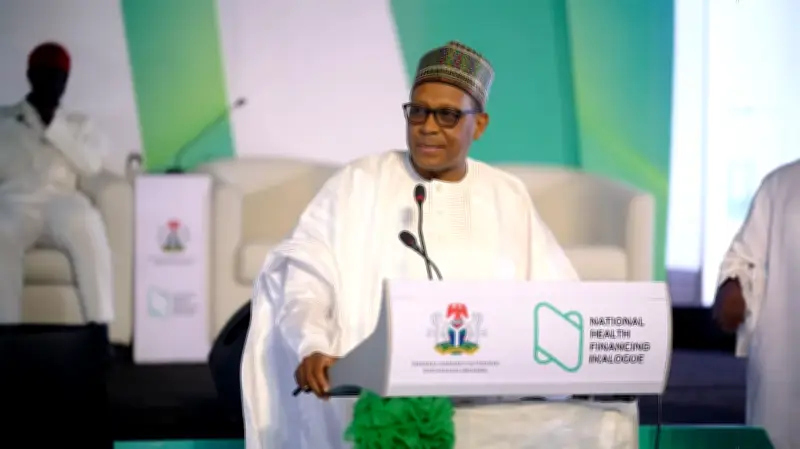
The decision to reduce foreign dependence was taken yesterday at the second High-Level Strategic Board meeting of N-774 Initiative, chaired by Shettima at the Presidential Villa, Abuja. As part of the new financing strategy, the board directed the Federal Ministry of Finance and other key stakeholders to immediately commence broad stakeholder engagements to activate existing funding instruments, including the Presidential Nutrition Intervention Fund (PNIF) and the ring-fenced Sugar-Sweetened Beverage (SSB) levy, as dedicated financing streams for nutrition interventions nationwide.
The board also intensified efforts to deepen nutrition governance at the sub-national level, with Shettima urging the remaining 26 states yet to establish their State Councils on Nutrition to do so without delay. He called on the Nigeria Governors' Forum (NGF) and the Association of Local Governments of Nigeria (ALGON) to facilitate the establishment of local government committees on food and nutrition in the remaining 304 local councils where such structures are yet to be inaugurated.
The VP said the era of relying indefinitely on foreign aid to fund critical nutrition programmes was coming to an end, warning that Nigeria must urgently build a sustainable domestic financing architecture to protect vulnerable children and families. “The domestic financing architecture must be activated now, in this administration, within this governance cycle, and under the accountability of this board,” he said.
According to him, nutrition interventions cannot afford bureaucratic delays, particularly during the critical first 1,000 days of a child's life. “While we deliberate, children across this country are within a window of growth that cannot be recovered once lost,” he noted.
Shettima stressed that “nutrition is not solely a health-sector responsibility,” saying ministries responsible for agriculture, finance, education, water resources, women affairs, humanitarian services and social protection all have crucial roles to play in combating malnutrition. He consequently urged sub-national governments to move beyond documentation and focus on implementing practical measures that would unlock the economic potential of their respective states.
This was disclosed in Abuja at the Sub-National Government Economic and Tourism Information Roundtable and the launch of the National Compendium on the Economic and Tourism Profiles of the 36 States and the Federal Capital Territory. Represented by his Special Adviser on Economic Matters, Dr Tope Fasua, the VP described the newly unveiled compendium as a major national instrument for investment promotion, economic planning and tourism development, noting that it aligns with President Bola Tinubu's Renewed Hope Agenda by placing states at the centre of Nigeria's growth strategy.
According to a statement issued by the Senior Special Assistant to the President on Media and Communications, Office of the Vice President, Stanley Nkwocha, the VP said the country possesses abundant resources and opportunities but must do more to organise and present them in ways that attract investors and development partners. “Nigeria is rich in assets, talent, culture, enterprise and natural endowments. What we must do is organise these assets, document them properly, present them credibly, and connect them to capital, markets, technology and investors,” he said.