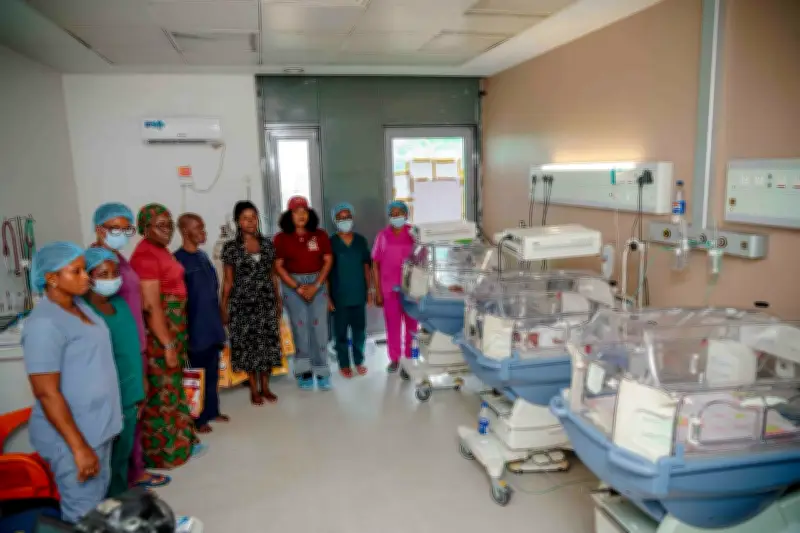
A preterm baby girl delivered at just 25 weeks of pregnancy and weighing 750 grams at birth has been discharged from Ibom Multi-Specialty Hospital after spending six months in the Neonatal Intensive Care Unit (NICU). The hospital describes the infant as the smallest baby it has successfully managed to discharge.
WHO classification and Nigerian context
The World Health Organisation (WHO) defines preterm birth as babies born alive before 37 completed weeks of gestation. It categorises preterm births into three groups: extremely preterm (less than 28 weeks), very preterm (28 to less than 32 weeks), and moderate to late preterm (32 to less than 37 weeks). The 750-gram birth weight is roughly equivalent to a standard loaf of bread.
Nigeria records approximately 774,100 preterm births annually, ranking third-highest globally after India and Pakistan. The WHO notes that complications from preterm birth remain a leading cause of death among children under five years old worldwide.
Milestone discharge
The infant, delivered in January, left the hospital on 9 June weighing 2.1 kilograms after six months of intensive neonatal care, according to the hospital's Chief Medical Director, Ini Etukudo. For the state-owned tertiary hospital, the discharge represents more than a medical success; it marks another milestone in the institution's gradual recovery after years of operational setbacks.
“It is a remarkable achievement to manage a 750g baby to achieve a weight of 2.1kg,” Mr Etukudo told PREMIUM TIMES. The hospital first announced the milestone in a Facebook post, prompting further inquiry.
Months of complications
Mr Etukudo said the baby survived several life-threatening complications commonly associated with extreme prematurity. “The thing to be proud of is that, despite the complications, we appropriately managed to get the baby to 2.1kg.” He explained that babies delivered at 25 weeks inevitably face enormous medical challenges.
“When you deliver a baby at 25 weeks weighing 750g, you know you're going to pass through a lot of booby traps. It is not going to be a smooth ride. You're going to manage infections, respiratory distress, and all sorts. So, your capacity to be able to manage all of them and still get the baby surviving is what you should be proud of.”
Respiratory distress and infections were among the major clinical hurdles because the baby's lungs were still far from fully developed. “The lungs are far from fully developed, so respiratory issues would be a challenge. You're going to have issues with infection. All of those issues are what we had expected, and the neonatal team offered what they needed to ensure that they will manage when the issues arise.” He confirmed that the hospital had the equipment, consumables, and specialist personnel needed for such delicate cases.
Question of viability
Mr Etukudo described the case as unusual in Nigeria, where babies born this early often face extremely poor survival chances. “The cardinal thing you should know about 25 weeks is the age of viability in Nigeria. In Nigeria, the age of viability is actually 28 weeks. If a baby comes out before 28 weeks, that baby is supposed to be seen as non-viable. It might be seen as an abortus—miscarriage.”
He added: “We provided all necessary interventions and neonatal care to ensure the baby pulled through. It is not very common to survive at that age.”
Hospital discounted treatment bill
Although Mr Etukudo declined to disclose the total cost of treatment, he acknowledged that caring for the infant required significant financial resources. “As a matter of fact, it was a whole lot. The parents were allowed to go with a lot of money to pay, which we had to discount for them.” He said the parents paid part of the bill, while the outstanding balance was waived.
The Golden Initiative for All (GIFA), the signature project of the Office of the First Lady of Akwa Ibom State, coordinated by Helen Obareki, also visited the family during the baby's admission and presented gifts to the mother. “GIFA also came in to see the baby. They gave some gifts to the mother. For the bill, the parents paid some of the bills, and what they could not pay, we had to let them go.”
A hospital rebuilding confidence
The latest achievement comes nearly a decade after Ibom Multi-Specialty Hospital experienced one of the most turbulent periods in its history. Built at a reported cost of N41 billion, the hospital was conceived as a modern referral centre to reduce medical tourism and improve access to specialist healthcare in Akwa Ibom. Although commissioned by then-Governor Godswill Akpabio in May 2015, the facility only commenced full clinical operations about six months later because specialist equipment was still being installed and medical personnel recruited.
Barely two years later, the hospital was plunged into crisis after its private managers, Cardiocare Medical Services Limited, withdrew from its management agreement following disagreements with the Akwa Ibom State Government over funding and contractual obligations. The dispute led to the suspension of clinical services, raising concerns about the future of what had been promoted as one of Nigeria's most advanced specialist hospitals.
Yet, even amid those operational difficulties, the hospital played a crucial role after the collapse of the Reigners Bible Church building in Uyo in December 2016, treating victims with severe injuries requiring specialist care. The Akwa Ibom State Government later paid about N300 million to hospitals that treated victims of the disaster, including Ibom Multi-Specialty Hospital.
Since then, the hospital has gradually rebuilt its services, strengthening emergency medicine, surgery, radiology, intensive care and neonatal services. The successful discharge of the 750g baby is seen as another indication of its growing capacity to manage highly complex medical cases.
Growing neonatal capacity
Mr Etukudo said the case should reassure the public that babies born at extremely low gestational ages can survive when specialist care is available. “In our facility, we have the equipment and the manpower to get this extremely premature baby to survive.” He added that although the hospital remains a referral centre, members of the public can also access specialist services directly. “Unlike before, when it was seen as a strictly referral centre. Of course, we are still a referral centre, but you can walk into the hospital for care at a modest cost.”
An emotional homecoming
The hospital's Facebook page captured the emotional discharge ceremony in a video posted on 11 June, showing staff members forming a guard of honour as the baby's mother walked through the hospital carrying her daughter. Amid songs of thanksgiving and applause, the baby's father thanked the doctors, nurses, the Akwa Ibom State Government and the Office of the First Lady for supporting the family throughout the six-month admission. “Many people never believed it could happen. It has never happened before. A child born at that age to survive.” The baby's mother also expressed gratitude: “God has done mighty things for me. He has satisfied me with happiness. God made me leave this facility with a baby.”
Rare, but not unprecedented
Although Ibom Multi-Specialty Hospital says the infant is the smallest baby it has discharged, it is not the first documented case of a Nigerian hospital successfully managing a baby born at 25 weeks. In October 2019, Lagos-based Reddington Hospital announced the discharge of a baby girl delivered at 25 weeks and weighing about 800g after more than two months in intensive neonatal care. Hospital officials attributed the outcome to specialised expertise, advanced life-support equipment and multidisciplinary care. In 2021, TVC News reported that a baby born at 24 weeks weighing 600 grams survived after receiving specialised care at the Federal Medical Centre, Ekiti.
Medical experts say babies born this early remain at high risk of respiratory distress, overwhelming infections, feeding difficulties and other complications. However, advances in neonatal intensive care are gradually improving survival rates in a growing number of specialist hospitals across Nigeria. The Akwa Ibom case stands out because the baby weighed just 750 grams at birth—smaller than the Reddington infant—and survived six months of intensive care before being discharged at 2.1 kg, underscoring the increasingly sophisticated neonatal care now available at the state-owned hospital.