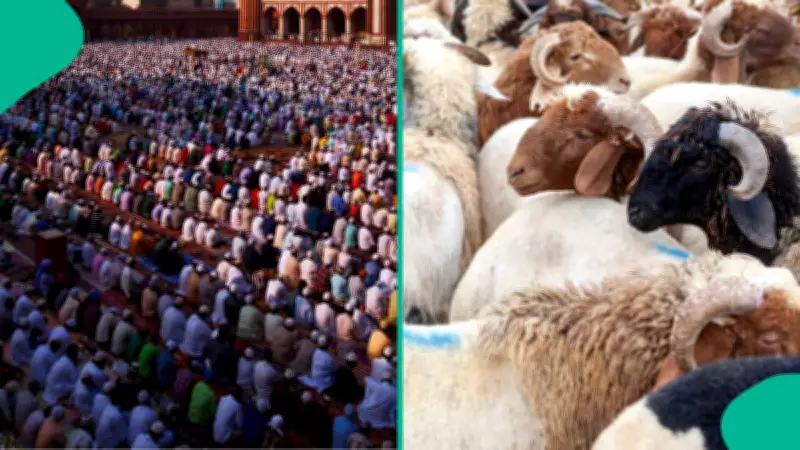
Eid al-Adha and Eid al-Fitr are two of the most cherished Islamic festivals, celebrated with prayers, charity, and joyful gatherings. While they are recognized as public holidays in many Muslim-majority nations, several countries do not grant official holiday status for these occasions. This report highlights notable nations where Eid is observed privately but not marked as a national public holiday.
United Kingdom
In the United Kingdom, public holidays are referred to as bank holidays, a term rooted in the closure of banks on designated days. Eid al-Adha and Eid al-Fitr are not recognized as bank holidays, meaning they are not part of the official calendar. Nevertheless, Muslims across England, Scotland, Wales, and Northern Ireland celebrate these festivals with great devotion. They gather in mosques for prayers, engage in charitable acts, and share festive meals with family and friends. The lack of official recognition does not diminish the cultural and spiritual importance of Eid for the Muslim community in the UK.
United States
The United States does not recognize Eid al-Adha and Eid al-Fitr as public holidays, yet Muslims are free to celebrate them. Across the country, communities organize prayers in mosques and open spaces, followed by acts of generosity and family gatherings. The festivals are marked by a spirit of unity and joy, even though they do not carry official holiday status. This reflects the broader American approach to religious diversity, where celebrations are respected but not necessarily enshrined in the national calendar.
Russia
Russia has a diverse religious landscape, with the majority of its population adhering to Russian Orthodox Christianity. Eid al-Adha and Eid al-Fitr are not recognized as official public holidays, but Muslim communities in regions such as Tatarstan and Dagestan observe them with devotion. The celebrations include prayers, charitable giving, and family meals, highlighting the resilience of cultural traditions in a country where Islam is a minority faith.
Australia
Australia does not recognize Eid al-Adha and Eid al-Fitr as national public holidays, despite having a significant Muslim population. In cities like Sydney and Melbourne, where Muslim communities are concentrated, local celebrations and cultural events are common. These gatherings often include prayers, feasts, and community festivals, reflecting the multicultural character of Australian society. The absence of national recognition does not prevent Muslims from celebrating Eid with enthusiasm and pride.
France
France is home to one of the largest Muslim populations in Europe, yet Eid al-Adha and Eid al-Fitr are not recognized as public holidays. Muslims in France observe these festivals through private celebrations, mosque prayers, and community gatherings. The celebrations often take place in family homes and community centers, reinforcing bonds of faith and family. Despite the lack of official recognition, Eid remains a cornerstone of cultural identity for Muslims in France.
Italy
Italy, with its predominantly Roman Catholic population, does not grant official holiday status to Eid al-Adha and Eid al-Fitr. Muslims in Italy celebrate these festivals within their communities, often gathering in mosques and cultural centers. The celebrations are marked by prayers, charitable acts, and festive meals, underscoring the importance of Eid in maintaining cultural and religious traditions.
Canada
Canada prides itself on being a multicultural society, yet Eid al-Adha and Eid al-Fitr are not designated as national public holidays. Muslim communities across the country celebrate through prayers, feasts, and cultural events. In cities such as Toronto and Vancouver, large gatherings take place, reflecting the diversity of Canadian society. The absence of national recognition does not diminish the significance of Eid for Muslims in Canada.
Brazil
Brazil’s rich religious and cultural landscape is dominated by Christianity, with Islam being a minority faith. Eid al-Adha and Eid al-Fitr are not recognized as public holidays, but Muslim communities celebrate them with devotion. The festivals are marked by prayers, family gatherings, and charitable acts, reflecting the universal values of Eid despite its minority status in Brazil.
Argentina
Argentina, with its predominantly Roman Catholic population, does not officially recognize Eid al-Adha and Eid al-Fitr as public holidays. Muslims in Argentina celebrate these festivals within their communities, often gathering for prayers and family meals. The celebrations highlight the cultural diversity of Argentina, even though Islam is practiced by a small minority.
South Africa
South Africa has a significant Muslim population, particularly in Cape Town and Durban, yet Eid al-Adha and Eid al-Fitr are not national public holidays. Muslims celebrate within their communities, organizing prayers, charitable activities, and festive meals. The celebrations reflect the vibrancy of South Africa’s multicultural society, even without official recognition.
Netherlands
In the Netherlands, Eid al-Adha and Eid al-Fitr are not recognized as public holidays. Muslims observe these festivals through private celebrations, mosque prayers, and community events. The celebrations reinforce cultural identity and community bonds, highlighting the importance of Eid in a country where Islam is a minority religion.
Switzerland
Switzerland’s religious landscape is diverse, with Christianity being the predominant faith. Eid al-Adha and Eid al-Fitr are not recognized as public holidays, but Muslim communities celebrate them with devotion. The festivals are marked by prayers, family gatherings, and charitable acts, reflecting the enduring significance of Eid in Swiss society.