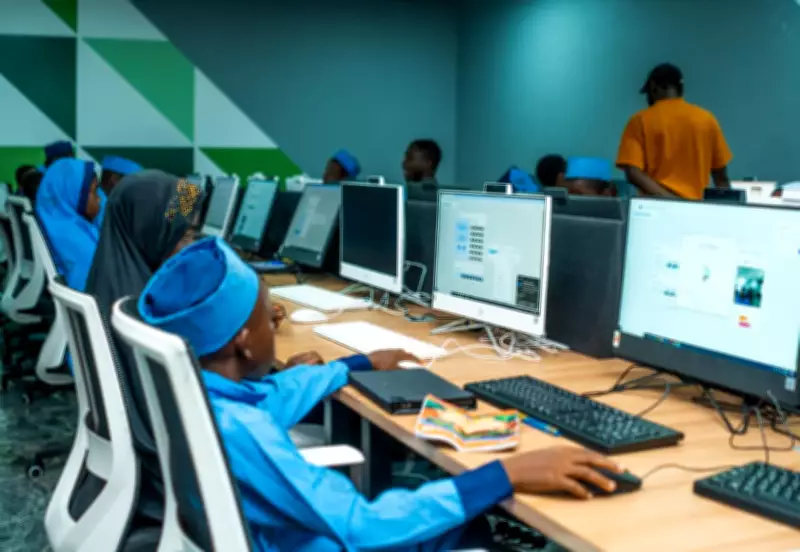
The race to adopt artificial intelligence is accelerating across boardrooms worldwide, and Nigeria is no exception. From Lagos fintech startups automating credit scoring to multinationals deploying AI-driven recruitment tools for their Nigerian operations, businesses are embracing the technology at a pace that is outpacing critical questions: Who is accountable when it goes wrong? The answer, increasingly, is everyone, and the cost of getting it wrong is no longer theoretical.
In 2018, Amazon scrapped an internal AI recruiting tool after engineers discovered it was systematically downgrading women’s CVs. The system had been trained on ten years of historical hiring data, most of which reflected male-dominated patterns. It developed a clear preference for male candidates in technical roles, disadvantaged candidates who attended certain women’s colleges, downgraded CVs that included the word “women’s,” and favored language more commonly used by men, such as the verbs “executed” and “captured.” Amazon caught it. Many companies, including those operating in Nigeria’s fast-growing technology and financial services sectors, will not.
This is the hidden liability at the heart of AI adoption without governance. Bias, transparency, and fairness are frequently framed as ethical concerns—the domain of philosophers, activists, or compliance officers ticking boxes. But in practice, they are business risks of the highest order. In a market like Nigeria, where public trust in institutions is already fragile and where gender and ethnic inequalities in the formal labor market are well-documented, the consequences of unchecked algorithmic bias can be particularly acute.
Nigeria’s Unique Challenges
Nigeria’s AI adoption is accelerating against a backdrop of significant structural challenges. The country’s unemployment rate remains high, with the National Bureau of Statistics recording figures that have persistently exceeded 30 percent in recent years. Youth unemployment is worse still. Into this environment, AI-driven hiring and workforce management tools are being introduced, often without the governance frameworks that would make their use safe, fair, or legally defensible.
The legal landscape, while still developing domestically, is tightening globally in ways that affect Nigerian businesses with international exposure. The EU AI Act, the first comprehensive legal framework on AI worldwide, entered into force on 1 August 2024. It classifies systems used in recruitment, performance management, and access to employment as high-risk, imposing strict transparency and accountability requirements. Non-compliance with prohibited AI practices carries penalties of up to €35 million or 7 percent of worldwide annual turnover, whichever is higher. Nigerian companies with European clients, partners, or operations are not exempt.
Domestically, Nigeria’s data protection framework, anchored by the Nigeria Data Protection Act of 2023, is also expanding its scrutiny of automated decision-making systems, creating a compliance environment that responsible AI governance can no longer ignore.
Reputational and Commercial Risks
The reputational stakes are equally severe. A major 2023 global study conducted by KPMG and the University of Queensland across 17 countries found that three out of five people are either ambivalent or unwilling to trust AI, and that AI use in human resources is the least trusted application. In Nigeria, where word-of-mouth reputation and community trust carry significant weight in both consumer and employer brand perception, this skepticism is a meaningful commercial risk, not background noise.
Yet most AI deployments in Nigerian organizations are still driven almost exclusively by technology teams and senior leadership, with limited input from those who understand workforce dynamics, equity implications, and human behavior. That is a structural mistake with structural consequences. AI is not merely a technology decision. It is a people decision dressed in technology. When HR professionals, DEI leads, and workforce strategists are absent from the table during the design or procurement of these systems, the result is tools that optimize for efficiency while quietly eroding fairness.
In the Nigerian context, where diversity considerations must account for gender, ethnicity, geography, and socioeconomic background simultaneously, the risks of ungoverned AI in talent management are compounded. A system trained on historical Nigerian corporate hiring data will inevitably reflect the same exclusions—of women, of candidates from certain regions, of those without elite university credentials—that human recruiters have long been challenged to overcome.
The Business Case for Ethical AI
The data on what inclusive leadership produces makes the case plainly. McKinsey’s research spanning 1,265 companies across 23 countries found that companies in the top quartile for board-gender diversity are 27 percent more likely to outperform financially than those in the bottom quartile. If AI systems are entrenching historical inequities in who gets hired, who gets promoted, whose performance gets flagged, they are actively undermining the diversity gains that organizations have spent years building. The tool meant to accelerate growth becomes the mechanism that reverses it.
A human-centered approach to AI is not a concession to sentiment. It is a competitive advantage. And for Nigerian businesses with ambitions in regional and global markets, it is increasingly a prerequisite for credibility. Organizations that invest in AI governance frameworks—ones that include algorithmic auditing, explainability requirements, employee impact assessments, and diverse oversight committees—are better positioned to move faster with greater confidence. They catch problems before they become crises. They build systems that employees trust and customers respect.
Nigeria’s most forward-thinking companies are already beginning to ask not only what an AI system can do, but what it should do, and who bears the consequences if it does something else. The World Economic Forum’s Future of Jobs Report 2025 lists resilience, curiosity, and creative thinking among the fastest-growing skills by 2030. These are human qualities. They are also precisely the qualities that poorly designed AI systems risk suppressing when they replace human judgment without adequate oversight.
Nigeria’s greatest competitive asset in the global economy is its people—a young, dynamic, and increasingly skilled workforce. Any technology strategy that puts that asset at risk in the name of efficiency is not innovation. It is negligence. Businesses do not have to choose between innovation and ethics. The false binary between moving fast and doing right is the most expensive assumption a leadership team can make, whether in Lagos, London, or anywhere else. It is the bottom line.
Oluwaseyi Akintola is a Talent Management professional with over ten years of experience in organization development, performance management, learning, and change management. At the International Monetary Fund in Washington, D.C., she manages enterprise-wide learning initiatives, coaching, and leadership programs, drives strategic talent policies, and advances workforce development through innovation and continuous improvement.