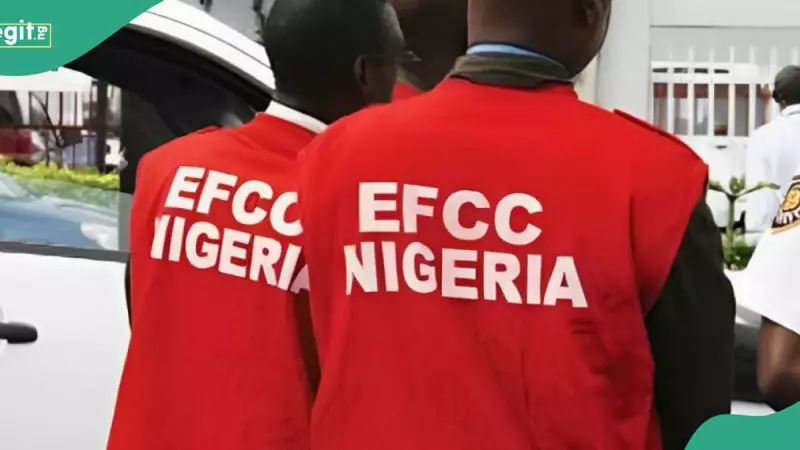
The Economic and Financial Crimes Commission (EFCC) is facing intense scrutiny over its proposed spending plan for the 2026 fiscal year, which includes a staggering allocation of over N3.2 billion for items such as meals, cleaning, fumigation, and energy costs.
Breakdown of the Controversial Allocations
According to the 2026 Appropriation Bill documents currently before the National Assembly, the anti-graft agency has earmarked specific funds for various recurrent expenses. A detailed look reveals the commission plans to spend N278.6 million on cleaning and fumigation services. Furthermore, a sum of N722 million is designated for refreshments and meals.
The most significant portions of this allocation, however, are for energy-related costs. The EFCC proposed N1.02 billion for motor vehicle fuel and another N1.2 billion for fuelling generators. These figures, combined, push the total for these specific line items well beyond the N3.2 billion mark.
These allocations are found within the Presidency section of the federal budget proposal presented by President Bola Ahmed Tinubu to a joint session of the National Assembly on 19 December.
Additional Recurrent Spending and Expert Concerns
The budget document outlines further substantial recurrent expenditures for the EFCC. These include N170.5 million for drugs and medical supplies, N376.5 million for vehicle maintenance, and N46 million for office furniture upkeep. A hefty N1.5 billion is proposed for maintaining office buildings and residential quarters, with an additional N159.8 million set aside for office and IT equipment maintenance.
Public affairs analysts have raised alarms over these figures, describing them as symptomatic of a broader culture of profligacy within government ministries, departments, and agencies (MDAs). Comrade Debo Adeniran, Executive Director of the Centre for Anti-Corruption and Open Leadership (CACOL), criticized the repetitive nature of such budgets.
"We have always been complaining that the system we are operating is bad because of its penchant for profligacy," Adeniran stated. "That is why the same items on the budget keep repeating themselves. They have to renovate houses and offices every year and buy a new set of furniture. MDAs repeat the same budget line year in, year out."
Warnings of Waste and Impact on National Deficit
Adeniran further warned that such excessive recurrent spending creates fertile ground for the diversion of public funds, suggesting that officials craft budgets to prioritize their comfort. This sentiment was echoed by political scientist Dr. Kabiru Sa'id Sufi, who criticized the ballooning size of overheads in government expenditure.
"The assessment people are making about the budget is that overhead is increasingly taking a large chunk of the money, which shouldn't be," Dr. Sufi noted. "We need to cut down on unnecessary expenditure. The budget sometimes appears to be a recycled document with few adjustments."
This controversy unfolds against the backdrop of a wide national budget deficit. The 2026 Appropriation Bill proposes total spending of N58.18 trillion, with projected revenue at N34.33 trillion, leaving a deficit of N23.85 trillion to be financed through borrowing. As lawmakers continue their review, the EFCC's budget, along with those of other agencies, is expected to face rigorous questioning.
In a related subnational development, Kano State Governor Abba Kabir Yusuf recently signed the state's N1.477 trillion amended 2026 budget into law on Tuesday, December 30, pledging its full implementation to improve living standards.