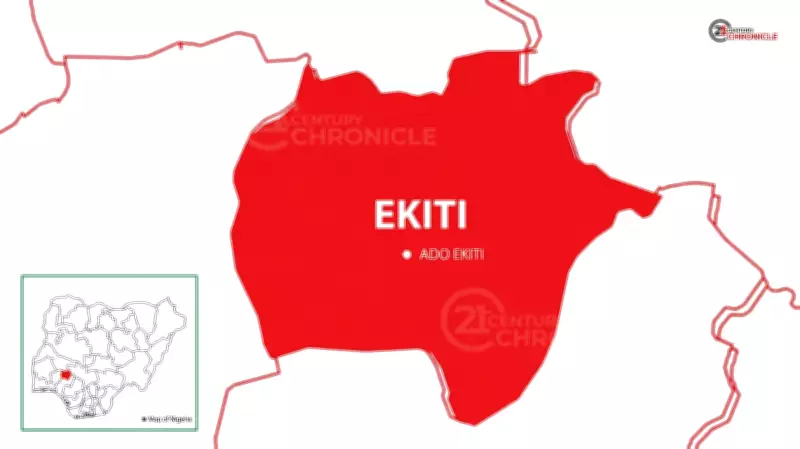
Ekiti State Emerges as Leader in Nigeria's Public Finance Transparency Index
The 2025 Subnational Audit Efficacy (SAE) Index, released by the Paradigm Leadership Support Initiative (PLSI), has ranked Ekiti State as the top-performing state in Nigeria for transparency and public finance management. This annual scorecard, unveiled in Abuja on Tuesday, evaluates public finance management and policy implementation practices across all 36 states through an assessment of public audit systems and key actors in the audit cycle.
Ranking Highlights and State Performances
According to the report, Ekiti State led the ranking with an impressive score of 72 per cent. Gombe and Yobe states followed closely, placing jointly in second position with scores of 68 per cent each. In stark contrast, Abia and Rivers states were ranked at the bottom, both scoring a mere nine per cent and sharing the 36th position.
PLSI, a civic organization dedicated to promoting public accountability, noted that the 2025 index adopted a modified methodology. For the first time in six years, it included public audit functions at the local government level. The assessment weighted state performance at 80 per cent and local government performance at 20 per cent, utilizing data from the 2024 financial year.
Modest Recovery Amidst Persistent Challenges
During the presentation of the report, PLSI Executive Director Olusegun Elemo highlighted that gains achieved under the $1.5 billion World Bank-assisted States Fiscal Transparency, Accountability and Sustainability (SFTAS) Programme from 2018 to 2022 have not been sustained in subsequent years. He explained that while the 2022 assessment indicated stagnation or reversal, the 2023 index revealed a deeper decline and erosion of reforms, with 2024 recording further weakening of accountability systems.
However, Elemo pointed out that the 2025 index signals a modest recovery. The average score across states rose to 34.5 per cent from 29.47 per cent in 2024, representing a 5.03 percentage point increase. He emphasized that this improvement reflects renewed momentum among subnational accountability actors but cautioned that its impact would depend on whether it translates into better service delivery and more equitable resource allocation.
Persistent Gaps in Fiscal Governance
The report also uncovered significant gaps in fiscal governance across Nigeria. Only five states have implemented financial autonomy for audit institutions, while just 12 states have established administrative independence for the Office of the Auditor-General. Furthermore, 18 states failed to publish audit reports on state accounts, and 21 states did not publish reports on local government accounts during the 2024 financial year.
Elemo urged state governments and relevant agencies to deepen accountability by fully implementing financial autonomy for audit institutions, ensuring timely release of funds, and establishing audit service commissions to guarantee independence.
Positive Shifts and Recommendations
The report noted a gradual shift towards performance-based accountability, with three states producing standard performance audit reports in 2025, compared to none in 2023. It also highlighted improvements in public access to financial information, with 18 states publishing Citizens’ Accountability Reports in 2024, up from 11 in 2023 and eight in 2022.
PLSI recommended several measures to enhance transparency, including:
- Mandatory and timely publication of audit reports
- Expansion of performance and value-for-money audits across key sectors
- Stronger legislative oversight through effective Public Accounts Committees
The organization noted that only three states currently have fully functional Public Accounts Committees, underscoring the need for improved legislative engagement in fiscal oversight.