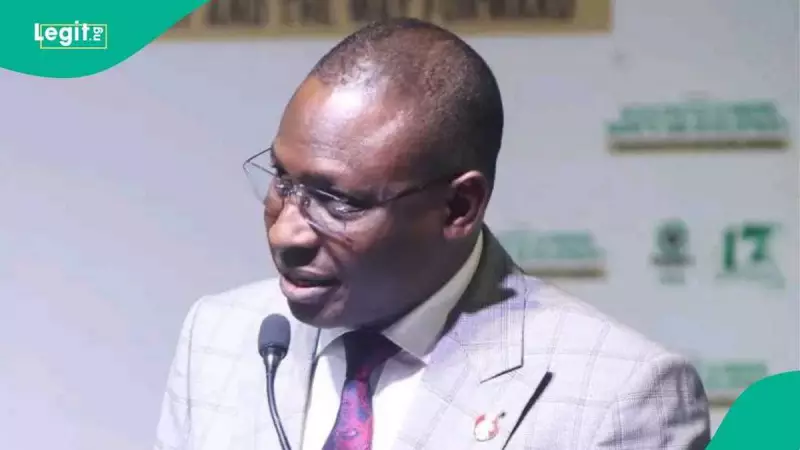
In a dramatic turn of events, a former minister under the immediate past administration has publicly called for the head of Nigeria's primary anti-corruption agency to step down from overseeing his case.
Malami's Allegations of Bias and Vendetta
Abubakar Malami, who served as the Attorney General of the Federation and Minister of Justice under President Muhammadu Buhari, has formally requested the chairman of the Economic and Financial Crimes Commission (EFCC) to recuse himself from the ongoing investigation into his tenure. Malami, through a press statement released by his media aide, Muhammad Doka, on Monday, December 15, 2025, leveled serious accusations against the anti-graft agency's leadership.
He alleged that the probe is not a legitimate law enforcement action but is driven by "deep-seated historical animosity" and constitutes a personal vendetta and political prosecution. The former minister directly linked the investigation to his recent defection from the ruling All Progressives Congress (APC) to the African Democratic Congress (ADC).
The Basis of the Conflict
Malami anchored his argument on a past event from his time in office. He referenced the Justice Ayo Salami Judicial Commission of Inquiry, which was constituted by the federal government to probe allegations of corruption and abuse of office within the EFCC itself. This historical context, Malami suggests, has fostered a bias that makes a fair investigation under the current EFCC leadership impossible.
He insisted that the agency's actions against him amount to "illegal detention, media harassment and procedural abuse." Malami stated unequivocally that he has "been clearly pre-judged and cannot receive a fair, objective or lawful investigation under the current leadership of the EFCC."
Implications for Anti-Corruption Efforts
This public clash between a former high-ranking government official and the nation's foremost anti-corruption body raises significant questions about the perception of the EFCC's independence and impartiality. Malami's call for the chairman to step aside challenges the agency's procedural integrity and puts its methods under intense public scrutiny.
The development adds a new layer of political tension to Nigeria's anti-graft war, highlighting how investigations can become entangled with allegations of political motivation, especially following a key figure's change in party affiliation.