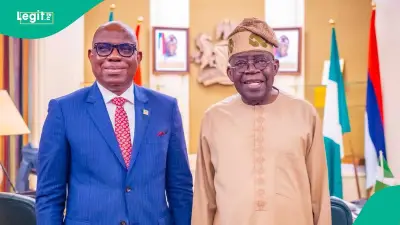
Minister of Finance and Coordinating Minister of the Economy, Taiwo Oyedele, has assumed a pivotal role in steering Nigeria's fiscal direction at a time when public finances are strained, policy coordination is weak, and confidence in government budgeting has significantly eroded. The expectation surrounding his office is not routine but corrective, as the country's fiscal structure has become weighed down by inconsistencies spanning budget planning, execution, and coordination between key economic institutions.
Disconnect Between Ambition and Implementation
One of the most persistent challenges is the disconnect between fiscal ambition and implementation capacity. Successive budgets have been characterised by unrealistic projections, delayed approvals, and poor execution rates that leave capital projects unfinished while obligations accumulate. This pattern has contributed to a cycle where budgets exist more as policy documents than as practical tools for economic delivery. Restoring discipline to the budgeting process will therefore be central to any meaningful reform agenda.
Fiscal-Monetary Policy Tension
Closely linked to this is the ongoing tension between fiscal and monetary policy. While monetary authorities tighten liquidity conditions in an attempt to manage inflation, fiscal operations continue to rely heavily on borrowing at high cost. The result has been increasing debt servicing pressure, which continues to consume a significant share of national revenue and limits investment in critical sectors. Analysts argue that this imbalance weakens economic stability and reduces the effectiveness of both policy arms. Stronger coordination between fiscal and monetary institutions is therefore essential if Nigeria is to achieve sustainable macroeconomic stability.
Liquidity Management and Resource Utilisation
Another concern is the management of liquidity within the financial system. Large idle balances within the banking framework, alongside rising debt obligations, have raised questions about efficiency in resource utilisation. Economists have long argued that better deployment of available financial buffers could ease borrowing pressures and support productive investment.
Tax Reform Challenges
Beyond revenue generation, attention is also shifting to Nigeria's tax structure, where reforms have been positioned as a major tool for expanding the fiscal base. However, the success of such reforms depends heavily on implementation quality, administrative trust, and the ability to avoid overburdening citizens and businesses already facing economic strain. Experts caution that tax policy must be carefully balanced to ensure compliance is driven by confidence in governance rather than coercion. Without this, reforms risk losing public acceptance before achieving measurable gains.
Expenditure and Project Prioritisation
On the expenditure side, concerns remain around capital budget execution and project prioritisation. Delays in fund releases, overlapping budgets, and weak monitoring systems have continued to undermine development outcomes. Strengthening transparency and improving tracking mechanisms are seen as essential steps toward addressing these inefficiencies.
Debt Sustainability and Financing Strategy
Debt sustainability also remains a central issue. With a large portion of national revenue now committed to debt servicing, fiscal flexibility has narrowed significantly. This has renewed calls for a shift in financing strategy that prioritises long-term productivity over short-term borrowing. Policy observers maintain that Nigeria's fiscal challenge is not solely about revenue shortage, but about structural inefficiencies in spending, project selection, and accountability systems. Addressing these gaps is considered critical to improving economic performance.
The Execution Imperative
Ultimately, the success of Nigeria's current fiscal direction will depend on execution rather than policy design. The country has consistently produced reform frameworks, but implementation has remained the weakest link. The challenge ahead is therefore not the absence of ideas, but the discipline to enforce them. For Nigeria's economic managers, this moment represents less of a policy exercise and more of a test of institutional resolve.