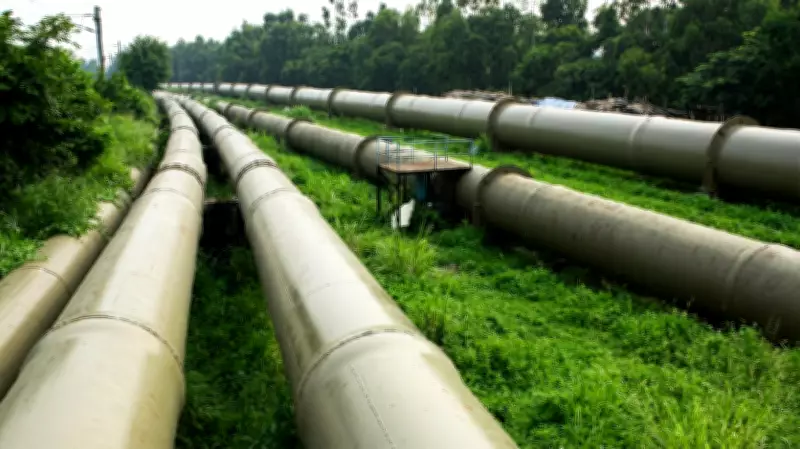
Pipeline Contract Dispute: Legal Action and Protests Erupt Over Surveillance Renewal
The leadership of the Peoples Wellbeing Association (PWA) has announced its readiness to initiate legal action at a High Court in Abuja to halt the renewal of the pipeline surveillance contract. The group is also advocating for the division of the contract among multiple stakeholders, arguing that such a move would enhance efficiency, transparency, stability, and inclusiveness across affected states.
Legal Challenge and Calls for Decentralization
The Head of the Legal Unit of PWA, Aliyu Sadiq, made this known in a statement issued yesterday in Abuja. Sadiq described the planned lawsuit as a last resort aimed at preserving peace and stability in the Niger Delta, which, he said, is being threatened by attempts by a few individuals to monopolise the surveillance contract through exclusionary practices.
According to him, the principle of inclusion, central to the Niger Delta amnesty programme, is being undermined by efforts to concentrate the benefits of the region’s struggle in the hands of a few, to the detriment of others. This legal move underscores growing tensions over resource management and equity in the oil-rich region.
Protests in Defense of Current Contract
Meanwhile, protesters under the aegis of concerned Niger Delta stakeholders, yesterday, stormed the National Assembly, opposing calls to decentralise the pipeline surveillance contract currently handled by Tantita Security Services Nigeria Limited. The protesters described the agitation for a review of the contract framework as self-serving, warning that any attempt to alter the arrangement could reverse the security gains recorded in the region.
The demonstrators displayed placards during the protest carrying inscriptions such as “Nigeria cannot afford setbacks in oil security,” “Don’t destroy Niger Delta peace for self-interest,” “Nobody can threaten 2027 election based on pipeline contract,” and “Say no to disruption of national security efforts,” among others.
Historical Context and Economic Impact
Speaking on behalf of the protesters, Duduke Ebitimi, recalled that before the engagement of Tantita, the Niger Delta was plagued by widespread criminality, including pipeline vandalism, oil theft, kidnappings, and sea piracy, which significantly reduced crude oil output and undermined the national economy.
He said: “The national economy collapsed following increasing unchecked activities of oil thieves and pipeline vandals. In fact, production vices were reported to be high, resulting in daily production output hovering between 800,000 and 900,000 barrels per day. These local and international oil thieves almost shut down the country, whose survival depends solely on oil flowing from the Niger Delta.”
Allegations and Denials Involving Traditional Institutions
However, the former Ijaw Youth Council (IYC) President, Udengs Eradiri, has accused the Palace of the Amanyanabo of Okochiri Kingdom, King Ateke Micheal Tom, of becoming a meeting ground for discussions opposing the Federal Government, particularly on the decentralisation of pipeline surveillance contracts. Eradiri had released a video backing his allegation.
The claims, which quickly gained attention in regional circles, suggested that certain actors were working behind the scenes to disrupt existing arrangements. However, in a strongly worded response, the media aide to the monarch, Ifeanyi Ogbonna, dismissed the allegations as not only misleading but potentially dangerous, warning that such narratives risk deepening divisions in an already sensitive region.
For the palace, according to Ogbonna, the issue goes beyond a disagreement over facts; it is about preserving the sanctity of a revered traditional institution. This adds another layer of complexity to the ongoing debate over pipeline security and regional stability.