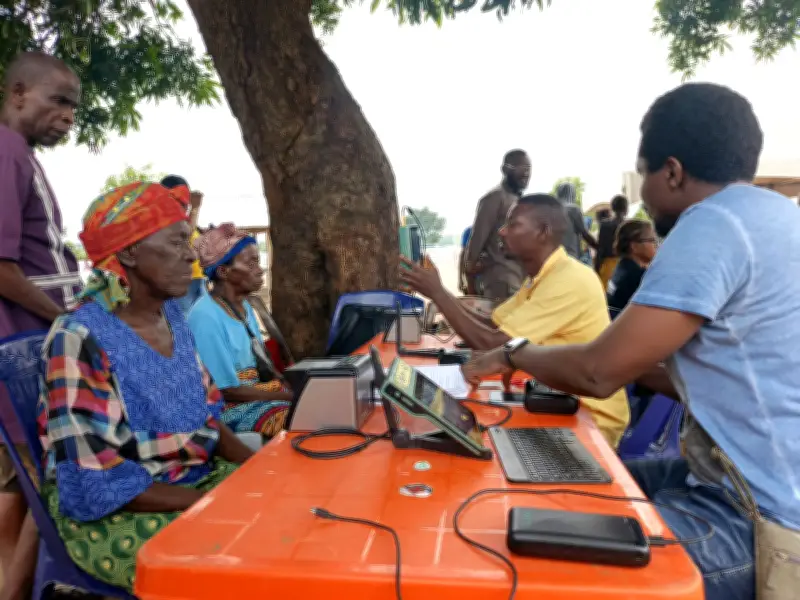
TAF Africa, a disability rights organization, in collaboration with the Independent National Electoral Commission (INEC), has initiated a voter registration campaign at the Mega Internally Displaced Persons (IDP) Camp in Agan, Makurdi, Benue State. The effort aims to ensure that individuals displaced by insecurity are not excluded from the electoral process. The organization emphasized that displacement should not deprive citizens of their constitutional right to vote.
Campaign for Inclusive Democracy
Terfa Tyokase, TAF Africa’s senior monitoring and evaluation officer, stated, “Displacement does not mean their right to vote is denied. Democracy is inclusive only when every voice is heard. Everybody, irrespective of their condition or status, whether internally displaced or living with disability, should be given the opportunity to vote.” The exercise is intended not only to register displaced persons but also to highlight gaps in voter access across Benue’s camps.
According to Mr. Tyokase, the Mega Camp exercise is just the beginning. “We have over 50 camps in Benue, even though only about 10 are officially recognised. This is a model we want the media to amplify so that every displaced person knows it is their right to register and vote,” he said. He urged displaced residents to take advantage of the Continuous Voter Registration (CVR) before it closes on 10 July, adding that TAF Africa is working with INEC to bring registration closer to affected communities.
Challenges in Registration
TAF Africa targeted at least 300 registrations during the outreach. However, many displaced persons at the camp reported that they had voter records but lost their Permanent Voter Cards (PVCs) while fleeing attacks. “Many fled their homes without their PVCs. Others had them destroyed when their villages were attacked. We are helping them replace those cards so they can vote,” Mr. Tyokase explained.
The exercise revealed operational challenges. At the time of a visit by Premium Times, only two INEC officials were registering thousands of potential applicants, resulting in long queues and uncertainty about whether everyone would be attended to before the deadline. When asked about the adequacy of officials, Mr. Tyokase said staffing decisions rest with INEC but expressed hope that the commission would respond to the turnout. “INEC is here now and can see the opportunity. If they cannot finish today, it should be their responsibility to continue until everybody in this camp is registered,” he stated.
INEC’s Assurance
INEC confirmed that it had already been conducting registration in several camps before TAF Africa’s intervention. Adeniji Abubakar, Head of Voter Education at INEC’s Benue office, said officials had visited other camps across the state and promised that eligible displaced persons would not be excluded. “Nobody will be left out. It is their right as Nigerian citizens. Everyone who presents themselves for registration will be attended to,” he said.
Mr. Abubakar noted that the commission would continue registration in camps where necessary before the exercise ends. Regarding demands for special polling units inside camps during elections, he stated that the decision would depend on policies to be announced later by the commission. INEC’s 2018 Regulations for Voting by Internally Displaced Persons allow the commission to establish dedicated IDP voting centres in recognised camps, and provide for voter registration, PVC distribution, and election-day voting for displaced persons within their states of origin.
Voices of the Displaced
For many residents, obtaining a voter card represents more than participation in an election; it is tied to hopes of returning home after years of displacement. Nancy Iorundu, a displaced resident, said she lost her voter card when attackers burnt her village. “Many of us lost our voter cards because our homes were burnt. We appreciate this opportunity. I am registering so I can vote for leaders who will help take us back to our village,” she said.
Patricia Orshio welcomed the exercise but warned that too few registration officials could prevent many from participating. “Everything in my community was burnt. This is an opportunity to register and vote for people who can stand for us as internally displaced persons. We want to go home. The challenge is that only two people are doing the registration while thousands are waiting. Government should extend the deadline and deploy more officials,” she said.
Kingsley Igbadoo, another displaced resident, had waited for hours without being attended to. “If you don’t have a voter card, you don’t have a say in who leads you. I have been here since morning, and my number is still above 200. We need more hands because many people still want to register,” he said.
Broader Context of Displacement
The concerns raised by displaced residents mirror broader warnings by humanitarian organisations over the scale of displacement in Benue. Government officials estimate that as many as 1.5 million people have been displaced by years of attacks linked to the farmers-herders conflict, although humanitarian agencies have officially documented more than 500,000 internally displaced persons across the state. Amnesty International recently warned that repeated attacks have left hundreds of thousands living in overcrowded camps with inadequate food, healthcare, water and sanitation, describing the situation as a looming humanitarian disaster. The rights group said many communities continue to flee violence, with thousands displaced after the June attacks on Yelewata, further increasing pressure on existing camps.
Researchers have also documented long-standing challenges affecting displaced persons, including the loss of identity documents, destruction of homes, limited access to education and healthcare, and difficulties replacing official records. The voter registration exercise highlights another concern: while INEC’s regulations provide for registration and voting in recognised IDP camps, humanitarian workers say many informal settlements across Benue remain undocumented, raising fears that displaced people outside officially recognised camps could struggle to access registration services before the deadline.
For residents like Ms. Orshio, the issue goes beyond elections. “We want to vote, but we also want to be seen, heard, and eventually return home,” she said.