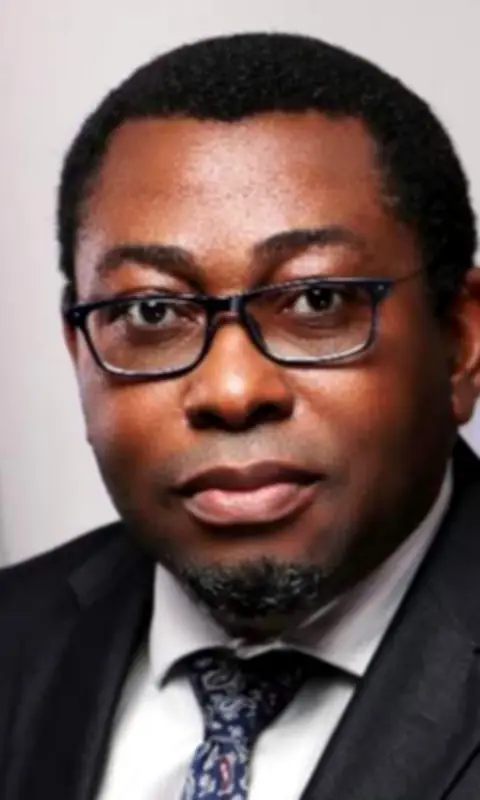
Dipo Baruwa, in a thought-provoking opinion piece, contends that Nigeria operates less as a cohesive nation and more as a dysfunctional organisation. He argues that the country's persistent challenges—ranging from economic stagnation to social unrest—stem from a fundamental misalignment between its structure and purpose.
Nigeria as a Failed Organisation
Baruwa draws a parallel between Nigeria and a corporation that has lost sight of its mission. He notes that while nations are built on shared values and collective identity, Nigeria's post-colonial construct has prioritised elite interests over national cohesion. This, he says, has resulted in a system where institutions are weak, leadership is self-serving, and citizens are treated as subjects rather than stakeholders.
The author cites specific examples: the country's inability to provide basic amenities like electricity and security, despite decades of oil wealth. He points out that Nigeria's GDP per capita has barely grown in real terms since independence, while inequality has widened dramatically. According to World Bank data, over 40% of Nigerians live below the poverty line, a figure that has worsened in recent years.
The Flawed Federal Structure
Baruwa criticises Nigeria's federal system as a 'hybrid monstrosity' that concentrates power at the centre while starving states of resources. He argues that the current revenue allocation formula—where the federal government takes the lion's share—undermines local accountability and initiative. States, he writes, have become 'beggar provinces' dependent on monthly allocations from Abuja.
He calls for a restructuring that devolves more powers to the regions, allowing them to compete and innovate. This, he believes, would foster a sense of ownership and reduce the zero-sum competition for central power that has plagued Nigerian politics.
Leadership and Citizenship
The piece also takes aim at the quality of leadership in Nigeria. Baruwa laments that many leaders view public office as a path to personal enrichment rather than a call to service. He quotes former President Olusegun Obasanjo, who once said, 'The problem with Nigeria is simply the failure of leadership.' Baruwa argues that this failure is systemic: the political system rewards mediocrity and punishes competence.
On the citizen side, he notes a pervasive sense of entitlement and a lack of civic responsibility. He calls for a new social contract where citizens demand accountability and contribute to nation-building, rather than merely complaining about the government.
The Way Forward
Baruwa concludes with a call for a 'national conversation' that addresses the fundamental questions of identity, governance, and purpose. He advocates for a constitutional conference that would redesign the country's political architecture. Without such reforms, he warns, Nigeria risks remaining a 'geographical expression' rather than a true nation.
The article ends on a note of cautious optimism: 'Nigeria has the potential to be great, but only if we are willing to reimagine it as an organisation that serves its people, not just its rulers.'