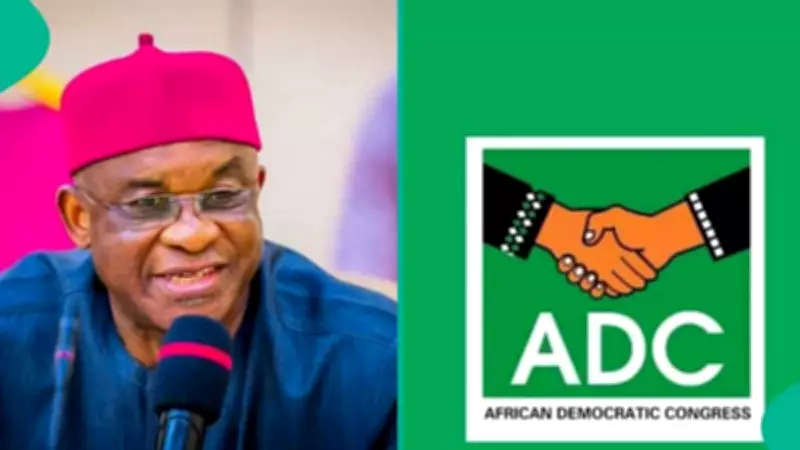
ADC Leadership Crisis: 4 Critical Options for Opposition Party Before 2027 Elections
Nigeria's African Democratic Congress (ADC) is currently navigating a severe political crisis following the Independent National Electoral Commission's (INEC) decision to withdraw recognition of its top leadership officials. With the party's national convention scheduled for April 14, 2026, and crucial deadlines for the 2027 general elections rapidly approaching, the opposition party finds itself at a critical crossroads that could determine its future viability in Nigerian politics.
Return to Court for Legal Resolution
The Court of Appeal has already issued a directive ordering the Federal High Court in Abuja to expedite its determination regarding the authentic chairman of the African Democratic Congress. Former Vice President Atiku Abubakar has confirmed that the party's legal team has returned to court, expressing confidence in obtaining a favorable ruling that could potentially restore stability to the embattled political organization.
"We are not disturbed by the judgement. We have already returned to the trial court, and we believe the court will decide the case as soon as possible, perhaps even before we begin our congresses," Atiku stated. However, this legal approach faces significant time constraints as INEC's election timetable continues to advance without pause, creating additional pressure on the party's leadership.
Potential Party Defection and Alliance Building
Some political analysts and observers have suggested that ADC leaders might consider abandoning their current political platform to join another established party. This strategy could potentially resolve the immediate leadership crisis but carries substantial risks, including the potential waste of years of careful coalition building and grassroots mobilization efforts.
Atiku Abubakar has publicly dismissed this option, emphasizing that the ADC represents a carefully constructed political coalition that should be preserved rather than abandoned. The decision to defect would require careful consideration of both short-term political survival and long-term strategic positioning within Nigeria's complex political landscape.
Mobilizing Public Pressure Against INEC
The African Democratic Congress has launched an aggressive media campaign accusing INEC of deliberately attempting to frustrate its chances in the upcoming 2027 elections. Party spokesperson Bolaji Abdullahi has alleged that the electoral commission is planting what he describes as "land mines" designed to block ADC candidates from participating in the electoral process.
The party's youth wing has escalated this pressure campaign by issuing a 74-hour ultimatum to INEC, demanding the restoration of David Mark's name as party chairman and threatening nationwide civic action if their demands remain unmet. This confrontational approach seeks to leverage public opinion and media attention to force institutional compliance.
Continuing Political Activities Despite INEC Opposition
Former ADC chairman Ralph Nwosu has proposed a more radical approach, suggesting that the party should simply ignore INEC's position and continue with its planned political activities. Nwosu argues that government institutions ultimately belong to the Nigerian people and that transparency can be maintained through alternative means if necessary.
"If INEC truly belongs to the Nigerian people, then the ADC will not be deterred. He said that any submissions the party makes, if rejected by INEC, will instead be published across national newspapers and broadcast on radio stations. This way, Nigerians can see that the party is following a transparent process, even if the electoral body refuses to acknowledge it," Nwosu explained.
This bold strategy could potentially maintain the party's visibility and momentum but carries significant risks of disqualification if INEC refuses to accept its candidates for the 2027 elections. The party's leadership must carefully weigh the potential benefits of continued political engagement against the very real possibility of electoral exclusion.
The African Democratic Congress faces a complex decision-making process that will require careful consideration of legal, political, and strategic factors. With the 2027 elections drawing closer each day, the party's choices in the coming weeks could determine whether it emerges as a viable opposition force or fades into political irrelevance. The situation represents a critical test of Nigeria's democratic institutions and the ability of opposition parties to navigate institutional challenges while maintaining political momentum.