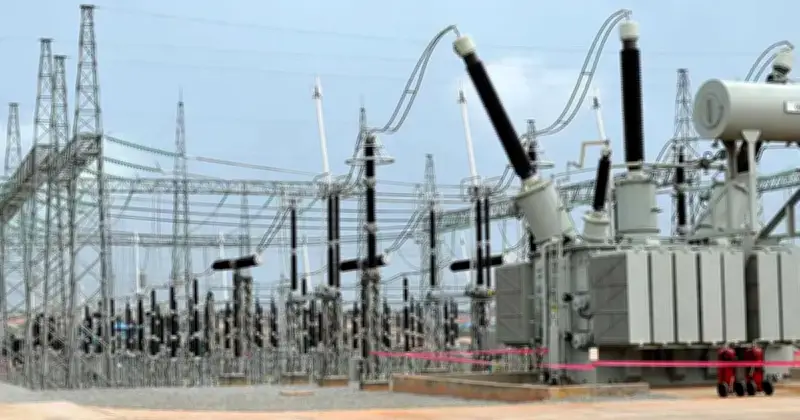
Nigerian electricity distribution companies (DisCos) generated nearly ₦600 billion in revenue during the first quarter of 2026, even as millions of consumers continued to grapple with erratic power supply and prolonged blackouts across the country.
Revenue Performance Amid Crisis
Latest industry data released by the Nigerian Electricity Regulatory Commission (NERC) showed that the 11 power distribution companies collectively collected ₦597.55 billion between January and March 2026. The figures indicate that the companies earned an average of about ₦199.18 billion monthly despite ongoing challenges in the country's power sector, including gas shortages, load shedding and infrastructure constraints.
A breakdown of the data shows that the DisCos collected ₦204.74 billion in January, ₦196.68 billion in February and ₦196.13 billion in March. The revenue performance came at a time when many Nigerians complained about high electricity tariffs and poor service delivery, with several parts of the country experiencing frequent power cuts during the quarter.
Billions Lost in Unpaid Electricity Bills
NERC's commercial performance factsheets revealed that while collections remained strong, the distribution companies were unable to recover all billed revenue. In January, the DisCos issued electricity bills worth ₦268.20 billion but recovered only ₦204.74 billion, leaving an outstanding balance of ₦63.46 billion. Billing efficiency stood at 79.72 per cent, while collection efficiency was 76.34 per cent.
Performance improved slightly in February. Total billings dropped to ₦242.29 billion, while collections reached ₦196.68 billion, leaving ₦45.61 billion uncollected. Billing efficiency rose to 87.44 per cent, while collection efficiency increased to 81.17 per cent. In March, the companies billed customers ₦246.43 billion but recovered ₦196.13 billion, resulting in another ₦50.30 billion revenue gap. Billing and collection efficiencies were recorded at 83.89 per cent and 79.59 per cent respectively.
The regulator's report also highlighted significant volumes of energy supplied but not billed, a long-standing challenge affecting the financial health of the sector.
Eko, Ikeja Lead Revenue Recovery
Among the distribution companies, Eko Electricity Distribution Company and Ikeja Electric remained among the strongest performers in revenue collection and recovery. Eko DisCo particularly stood out in February, recording a recovery efficiency of more than 100 per cent, suggesting it recovered revenue from outstanding bills in addition to current collections.
On the other hand, some operators continued to struggle. Kaduna Electric and Jos Electricity Distribution Company posted some of the weakest recovery rates during the review period. Kaduna DisCo, for example, recorded a recovery efficiency of just 41.20 per cent in February.
The NERC reports track critical commercial indicators, including energy received, energy billed, total customer billings, revenue collections and recovery efficiency, offering insight into the operational and financial performance of the privatised electricity distribution companies.
Gas Shortage Worsened Power Crisis
The strong revenue figures came against the backdrop of a severe power generation crisis caused largely by inadequate gas supply to thermal power plants. According to operational data from the Nigerian Independent System Operator, thermal plants require about 1,629.75 million standard cubic feet of gas per day to operate optimally. However, as of February 23, 2026, actual gas supply stood at only 692 million standard cubic feet per day, less than 43 per cent of the required volume.
The shortage forced several generating plants to shut down or reduce output, causing national electricity generation to fall from roughly 4,000 megawatts to below 2,000 megawatts at certain periods during the quarter. With available electricity supply dwindling, the Transmission Company of Nigeria resorted to load shedding, distributing limited power among the various DisCos. Distribution companies repeatedly informed customers through public notices that the outages were largely linked to inadequate gas supply and generation shortfalls.
Consumers Demand Better Service
Despite the near-₦600 billion revenue haul, consumer groups and electricity users have continued to call for improvements in service quality, metering and network infrastructure. Many customers argue that higher tariffs introduced under recent electricity pricing reforms should translate into more reliable power supply.
Stakeholders have also urged stronger enforcement against energy theft, accelerated metering programmes and improved customer service to help boost collections and reduce sector losses. While supply challenges persisted for much of the first quarter, some consumers have reported noticeable improvements in electricity availability in recent weeks as generation levels gradually recovered.