ADC Outlines Consensus Strategy for 2027 Presidential Candidate Selection
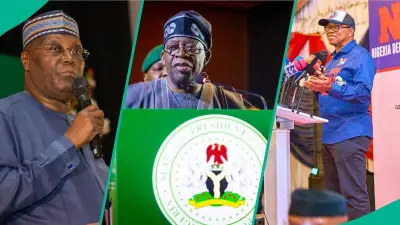
The African Democratic Congress (ADC) has publicly disclosed its intention to employ a consensus approach in selecting its presidential candidate for the 2027 general elections. This announcement comes amid declarations from prominent political figures, including former Vice President Atiku Abubakar, 2023 Labour Party presidential candidate Peter Obi, and ex-Rivers State Governor Rotimi Amaechi, who have all expressed their ambitions to contest the upcoming presidential race.
Consensus as a Practical and Cost-Effective Option
Bolaji Abdullahi, the ADC National Publicity Secretary, emphasized that the consensus method is viewed as the most practical and financially viable option for the party. He explained that the ADC has limited its candidate selection processes to direct primaries and consensus, following recent amendments to the Electoral Act that eliminated indirect primaries as a viable alternative.
Abdullahi made these remarks during an appearance on Arise TV's One-on-One programme on Saturday, March 28, 2026. He stated, "We are trying as much as possible to adopt the consensus approach because that is the least costly for us. For us, the best case scenario is to be able to engineer consensus, and that's what we are working on."
Criticism of the APC's Cohesion
In his commentary, Abdullahi launched a critique against the ruling All Progressives Congress (APC), arguing that the party's unity is predominantly sustained by President Bola Tinubu's political influence. He asserted, "If you take power out of APC, APC is actually nothing. I know the party well. Post Bola Tinubu, they will unravel quickly, that even they would be surprised. He is the glue holding the party together."
Abdullahi further described the APC as a "special purpose vehicle" primarily designed to facilitate the presidential ambitions of the late Muhammadu Buhari and Bola Tinubu. He contended that the party has largely fulfilled this purpose and lacks substantial ideological depth beyond it.
Opposition Dynamics and Internal Challenges
The ADC's strategy unfolds against a backdrop of political analysis regarding the 2027 election. Senator Ali Ndume has previously commented on the dynamics, suggesting that the ADC lacks innovative ideas to effectively challenge the APC. Ndume also highlighted internal disunity among opposition figures such as Atiku, Obi, and Amaechi, which could impact their electoral prospects.
Meanwhile, the Nasarawa State Government has responded to allegations of a secret meeting between Governor Abdullahi Sule and Atiku Abubakar during the lesser Hajj in Mecca, Saudi Arabia. The government denied these claims, refuting suggestions that Governor Sule pledged financial support to oust President Tinubu in the 2027 elections.
Broader Political Context
This development is part of a larger narrative surrounding the 2027 presidential election, with various prophecies and analyses emerging about potential outcomes. The ADC's focus on consensus reflects a strategic move to consolidate opposition forces and present a unified front against the incumbent administration.
As the political landscape evolves, the ADC's ability to engineer consensus among its potential candidates will be crucial in determining its competitiveness in the upcoming election. The party's approach underscores a shift towards more collaborative and cost-effective methods in Nigerian politics, aiming to challenge the dominance of established parties like the APC.