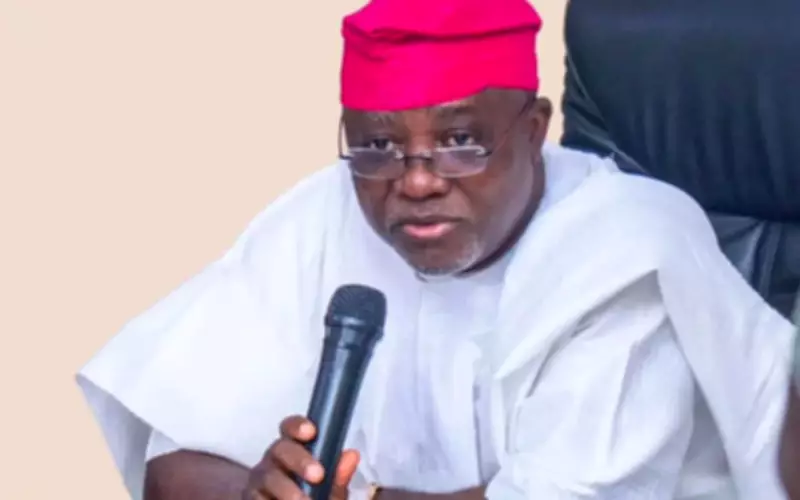
APC Chieftain Declares Nigeria Technologically Unprepared for Real-Time Election Results
Biodun Ajiboye, a prominent chieftain of the All Progressives Congress (APC), has asserted that Nigeria is not technologically equipped to implement real-time transmission of election results due to significant infrastructure deficiencies. Ajiboye made these remarks during an interview on Arise TV on Monday, February 9, emphasizing the challenges posed by the country's current technological landscape.
Infrastructure Deficiencies Highlighted
Ajiboye pointed to several critical issues that hinder the feasibility of electronic result transmission in Nigeria. He questioned the capability of telecom operators to support such a system, noting the insufficient infrastructure and frequent power outages that plague the nation. "Do the telecom operators have that capability? Do we have enough electricity to undertake that responsibility in Nigeria?" he asked, underscoring the practical obstacles.
He further referenced the vulnerability of existing systems, mentioning that during the last election, the Independent National Electoral Commission (INEC) server was attacked over a million times. "So what they're saying is that we should put the electoral process within the vulnerability of hijackers, causing a lot of confusion," Ajiboye warned, expressing concerns about security risks.
Manual Processes Remain Essential
According to Ajiboye, manual processes continue to play a central role in Nigerian elections. He explained that after votes are cast and counted at polling units, party agents sign the result sheets, which can then be scanned and transmitted as needed. "There are manual parts of election. And what can happen, like it has always happened, is you vote, and they count the votes there, the party agents append their signatures on the paper, the paper can then be scanned and transmitted anyhow you want," he noted, advocating for a hybrid approach rather than full automation.
Comparisons and Warnings
Ajiboye drew comparisons with other countries, stating that even the United States does not employ real-time transmission of election results. He highlighted the disparity in technological access within Nigeria, pointing out that many rural communities lack basic telecom services and electricity. "We don't even have telecom provided for some rural communities. Some rural communities don't even have electricity. You're trying to disenfranchise a lot of people by pushing for what is not possible," he argued.
In his concluding remarks, Ajiboye insisted that Nigeria currently lacks the capability for electronic voting or real-time transmission. "A man is only able to do what he is capable of. We have no capability to do electronic voting or real-time transmission at this time," he stated firmly. He cautioned against pressuring the Senate and National Assembly into adopting systems that could lead to complications, urging a more realistic approach to electoral reforms.